








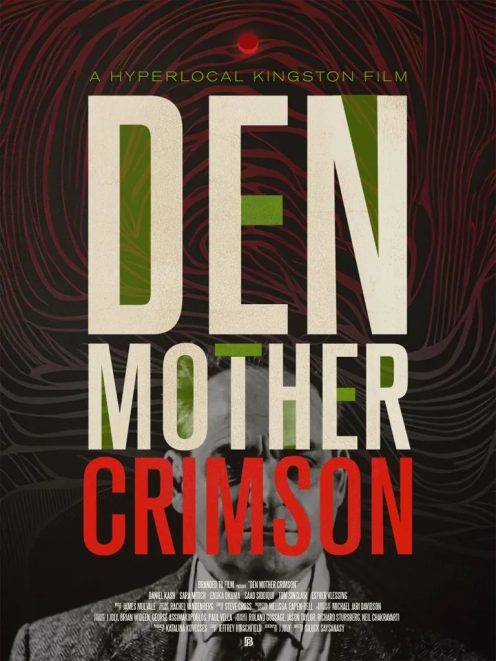
Life in the indie film world is not easy, but these smaller-budget films have given us some wonderful movie experiences over the years. We talked with writer and producer Jason Joly about the sci-fi thriller Den Mother Crimson, the challenges of low-budget filmmaking, and life as a CEO of a production company called Branded to Film, in Kingston, Ontario.
Horror Geek Life: This is your first feature film as a writer. Where did the idea for this film come from?
Jason Joly: I was looking for a potboiler script, something set in one room. If it was going to be location-heavy, where we were going to do a lot of set moves, people would just lose their minds. It’s like you are in triage the whole time. I wanted a really good backbone of a script that could fit into this production model, which included training 60% of the locals.
We shot it in linear, which you almost never do, so we began at page one and shot right through to page 90. We had found this script from another writer, and there was a lot of great stuff in it, but we wanted to compartmentalize it down. Originally, it was a horror script, and the little twist was still in there, but I saw AI coming, and I said, “Why not increase the stakes, make it about ethics and morality?”
I’ve always believed that low-budget horror movies were subtexts for other things. Your favorite horror movies, especially the John Carpenters and George Romeros, they are all hippies and actually talking about something completely different. I thought this was a great platform to take the same characters.
We shrunk the number of characters, but take the story and make it into this fun little potboiler that we could shoot for a certain amount of money, that we could achieve our goals with what we call hyperlocal filmmaking, to use that as a revenue-generating training platform, making a movie while throwing people into the deep end.
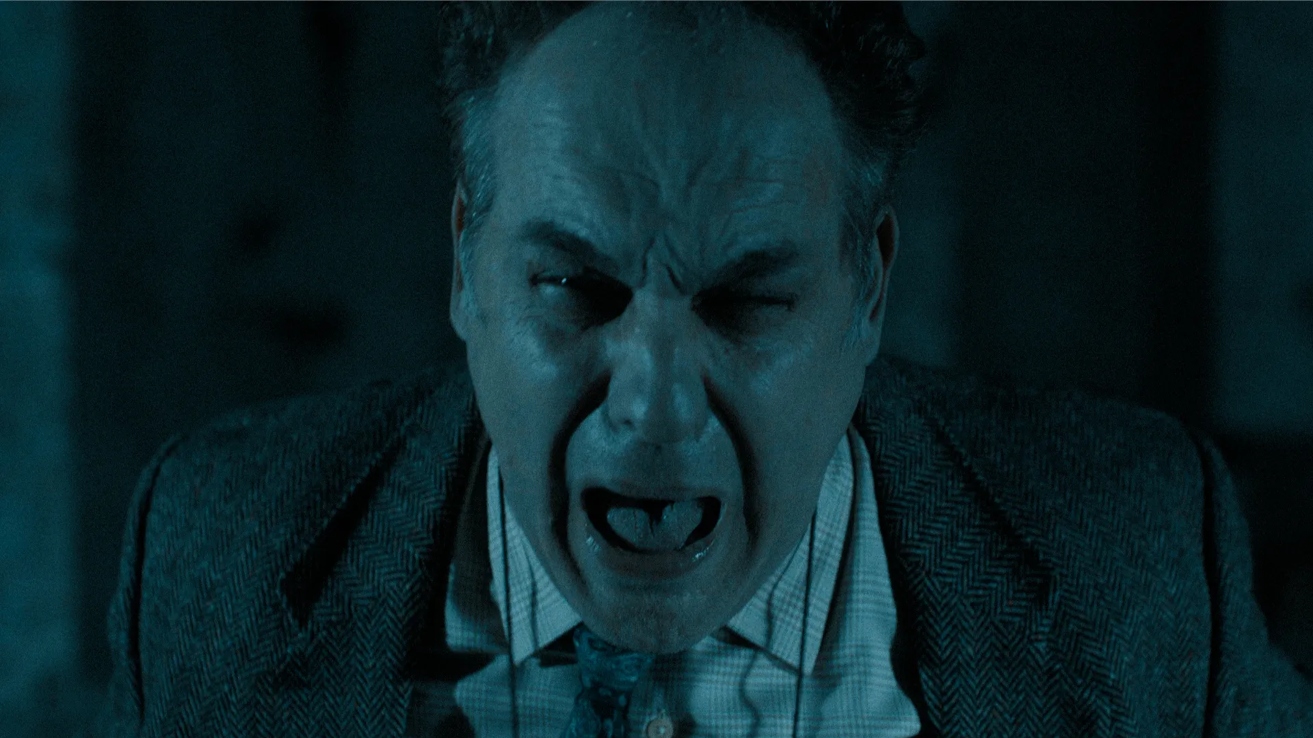
HGL: You mentioned shooting in one location, basically in one room. For this film, the space then becomes a character of its own. How do you design it on the page to create the dread and atmosphere on the screen?
Jason Joly: That’s a great question. On the page, it was me as a writer trying to find the dread, trying to take it and figure it out. The stuff that wasn’t in the first script was all the… I’m going to say family stuff that was revealed in the background, the two creators of this AI, obviously there is this big subterfuge going on, but one of the many reveals is the family connection, and the kind of angst that brings.
A24 kind of does that with films like Hereditary, where it’s really about the levels within the family and personal connections, so part of it was on the page to create the dread, was creating this potboiler type of movie, and I’ve always loved that kind of psychological aspect. Something we were trying to capture was making an old-fashioned movie that has this paranoid dread within it and where the action is really between just two people, and there are these series of revelations, these tiny revelations in the dialogue that slowly kind of breadcrumb you along.
You know, when you are watching All the President’s Men, it’s just two guys in front of a typewriter talking on phones, but what they are slowly doing without big explosions and action is making it incredibly tense and creating a lot of drama, and as a writer, that’s what I was trying to do with this film, so you’re intrigued to find out what happens next.
Related: ‘Den Mother Crimson’ Review: A Riveting AI Sci-Fi Story
HGL: What scenes changed the most for you, going from script to screen?
Jason Joly: I’m very old school; I really love the idea of collaboration. I like the old Hollywood system where there’s a writer, an editor, and a director, and then there’s the actors and all the creatives that come together during the production process. One of my old friends, Siluck Saysanasy, who directed the film, and George Assimakopoulos, my partner, the three of us got together, and when you start collaborating, things happen.
For instance, Melissa (Eapen), the production designer, she’s local and her business is an escape room company, and when I saw her work, and I thought, “Wow, this is a production designer.” I gave her the script and asked her to come up with something, and so that room that you see is all her design. What I love about being a filmmaker, is with all these creatives coming in, is when you give them the script, it can take on a life of its own.
I believe you need to trust the people you bring in to be collaborators, and to your question, we got there from all of these people making creative decisions, especially the actors, so some of it was on the page and some of it was how it was interpreted.
HGL: You mentioned the actors, it’s a solid cast. Can you talk about how they brought your characters to life in the film?
Jason Joly: Yeah, absolutely. We were really lucky, had a great casting director, and there was really juicy dialogue for each of them. As actors, all of them were on stage all the time, and during a table read and stuff like that, its always fascinating to watch what is in black and white on the script take life. What was wonderful about each of them is how sensitive, how wonderful, and meaningful their interpretations were that they brought to the characters, things I would have never thought of.
When we were casting, I had just given the most basic descriptions. I just wanted them to go and find the best actors they could so when we put them in that room, it created a different atmosphere. When you see Daniel Kash in the room when the movie opens up, as an audience you make a decision about this person. When you see Saad’s character come in, and as you see these people come in and interact, you make different decisions. We were also writing and changing things as we went on; you see the characters evolve as the film goes on so we’d change or switch the dialogue accordingly.
Related: ‘Iron Lung’ Review: A Horror Success Far Beyond the Box Office
HGL: This is a film with heavy dialogue and some interesting ideas. With you changing things as the film progressed, did that ever get intimidating, or do you view it more as a challenge?
Jason Joly: I describe filmmaking as you’re going to war; we’re at war. You’ve got 30 people, we’ve got to get 50 shots a day, we’ve got 10 hours to do it, so I can only create during a certain time. There has to be a reasonable amount of time for the actors to get together and relearn the lines for the next day so we all get in a rhythm.
You look back and you think, “How the hell did we do that?,” but when you are in the moment doing it, it’s its own little beast. I think in hindsight it looks very intimating, but when you are doing it, it’s more about just survival.
HGL: You’re the CEO of a production company, a producer, and a writer. What advice would you have for someone who wants to get into this business?
Jason Joly: I think Canada is a wonderful place for innovation, it really is. I always tell folks, look, life is very short, but it can also be very long, so make sure you do what you want to do and take big risks, be brave. If you have an idea for a movie, go and do it. Even if you fail, it’s ok because you know what? you do it.
A lot of people talk about it. I’m going to make a movie, but don’t talk about it, go get some friends and go do it. One of the things that has never changed for me is my desire to make a movie, and the love for the inside of a movie theater. I grew up during the 1970s and ’80s, got to see Star Wars, some iconic movies, and I’ve always been a fan of movies under 90 minutes. I recently saw The Lost Boys again and what that movie does in 90 minutes is jaw-dropping, that movie is so efficient.
My advice to filmmakers is don’t be precious, be brave, and just do something, and what I will say is make sure your first film is a genre film, that’s what makes careers. Get your friends together, spill some blood, make something that will offend your parents, and I’m telling you, you’ll probably get noticed.
Horror Geek Life would like to thank Jason Joly for taking the time to talk with us. You can follow Joly’s work on Branded to Film, and see Den Mother Crimson on Hollywood Suite.