








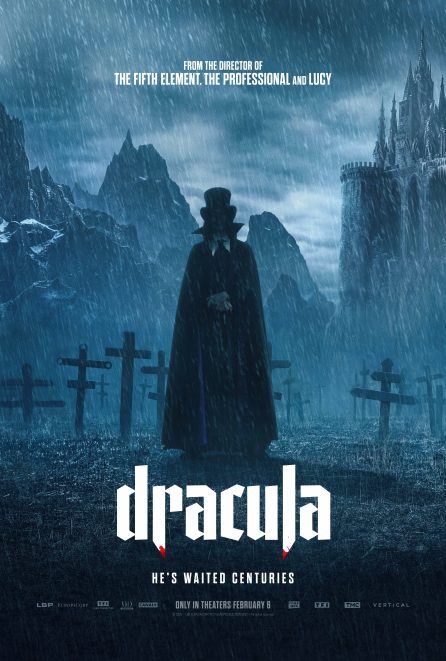
Throughout Luc Besson’s extensive career, he has explored various genres and brought epic stories to the screen. He directed movies such as The Fifth Element (1997), The Messenger: The Story of Joan of Arc (1999), Lucy (2014), and more. Besson’s latest film focuses on one of cinema’s oldest characters: Dracula.
Based on Bram Stoker’s 1897 novel, Dracula stars Caleb Landry Jones (X-Men: First Class, Get Out) as Dracula alongside Zoë Bleu (The Institute, Gonzo Girl) as Mina Murray. Legendary actor Christoph Waltz (Inglourious Basterds, Guillermo del Toro’s Frankenstein) stars as Priest, the film’s version of Van Helsing.
In anticipation of Dracula’s theatrical release on Friday, February 6th, we spoke with Luc Besson about bringing his version of the classic monster to life.
HGL: When you approached such a well-known character, how did you bring a fresh perspective to the story?
Luc Besson: I try not to think about it (laughs). I’m a big fan of Caleb Landry Jones, and what I love about Dracula, when I read it again, is it’s a love story about a man who waits 400 years because he wants to see his wife again. Everything starts from that. I want Caleb playing this character in this love story, so all the rest — Dracula, the blood, the vampire — were elements I tried to play with a little bit. But it’s definitely not a horror film; it’s really a dark romantic movie.
I love to play with the elements, but not be too faithful. For example, the priest talks about garlic, saying, “I heard garlic works, but I don’t think so”. Or when Jonathan, the young man with the torch, goes down and sees the bed of Dracula, and it opens with a loud creak, a classical horror moment, but as soon as he opens it, Dracula says, “You shouldn’t have come.” That’s the kind of humor I like, to play with the symbol.
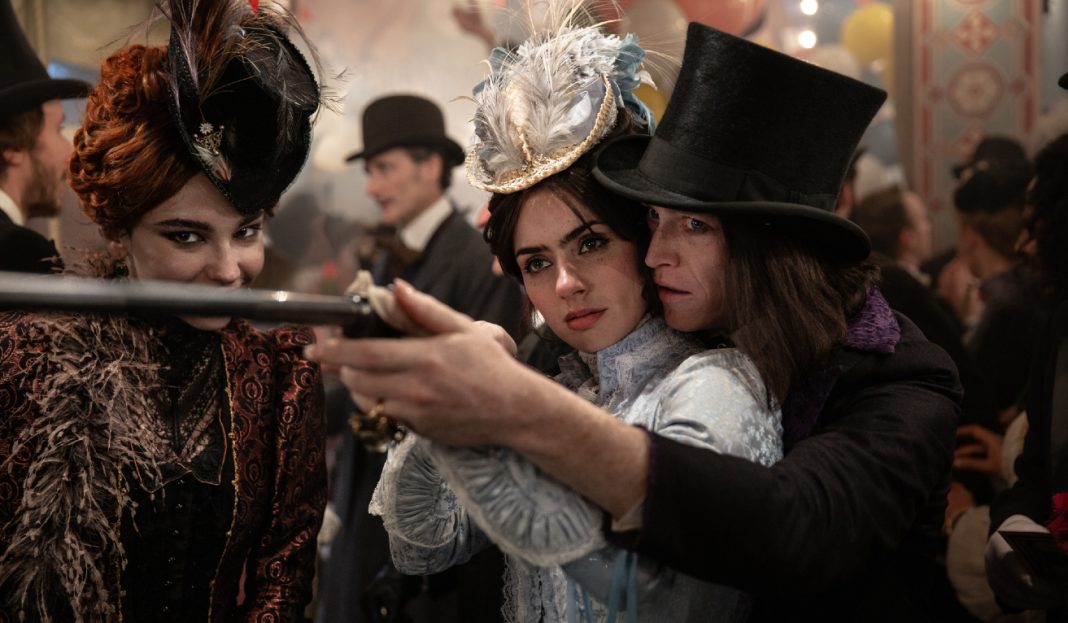
HGL: What do you think are the most important elements that Caleb Landry Jones and Zoë Bleu brought to their characters?
Luc Besson: I want to show pure love because I think it’s something that we’ve forgotten in society today, especially maybe the younger audience, they’re scared now. I have kids, and I can see how they are scared of loving someone now. They are very careful because the world is difficult and hard.
It’s a way to remind everyone that the most beautiful thing is love, because we all come from that. If we have to put some money on Wall Street, we should put it on love, buy some shares (laughs).
RELATED: Jacob Elordi’s ‘Frankenstein’ Casting Explained by Guillermo Del Toro
HGL: Dracula explores different emotions, such as horror, romance, and tragedy. Was it a challenge to balance them all in the film?
Luc Besson: Yeah, it’s always a challenge to do that, and you can’t do that in one day. You are going from the script to the rehearsal, the way we play, and the editing. You can still correct some things during mixing by bringing the volume of the music up or down, changing the caliber of the emotion. So you have to be very careful and cautious all the time.
There was a director, a long time ago when I first started, who said to me, ” It takes two years to make a good film and two minutes to fuck it up,” and he was right. In most of my movies, a couple of weeks before the opening, they were not good. However, by the end, you take out a little scene, you put something there, you bring the sound up, and it becomes something different, better. It’s almost like surfing, catching a wave; it’s hard, but when you catch the wave and the movie is good, it’s a miracle.
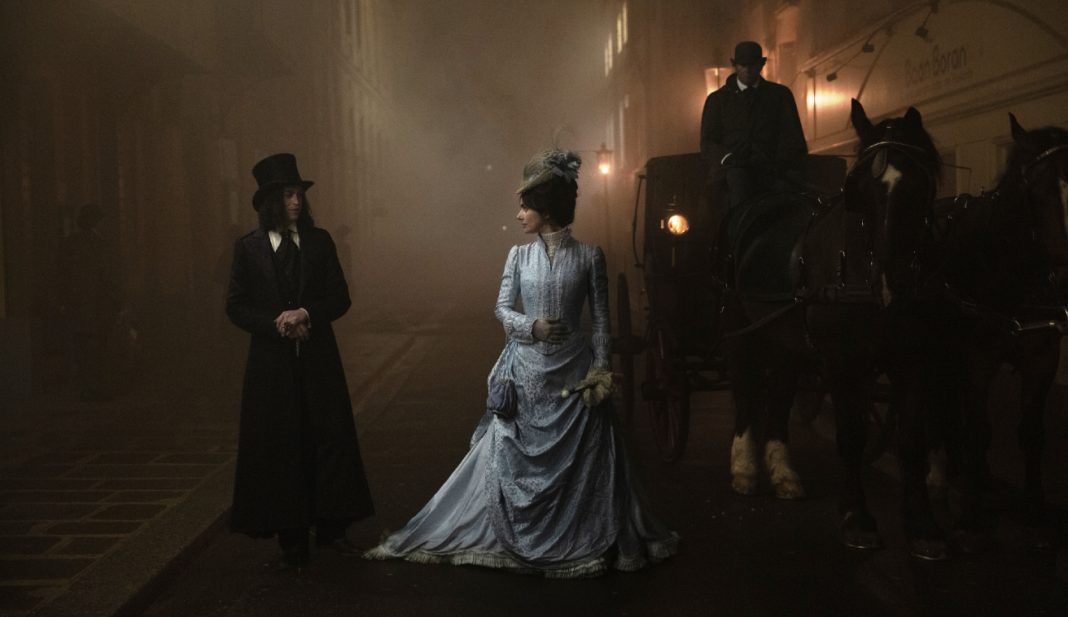
HGL: What was the most challenging scene for you to shoot?
Luc Besson: The most difficult one was the battle in the snow, -20° with horses, canons… yeah, that’s tough. Also, the sun goes down at 4 PM, so that was challenging. You have to be careful, going shot by shot. Sometimes it’s sunny, sometimes it was snowing so it could be a nightmare.
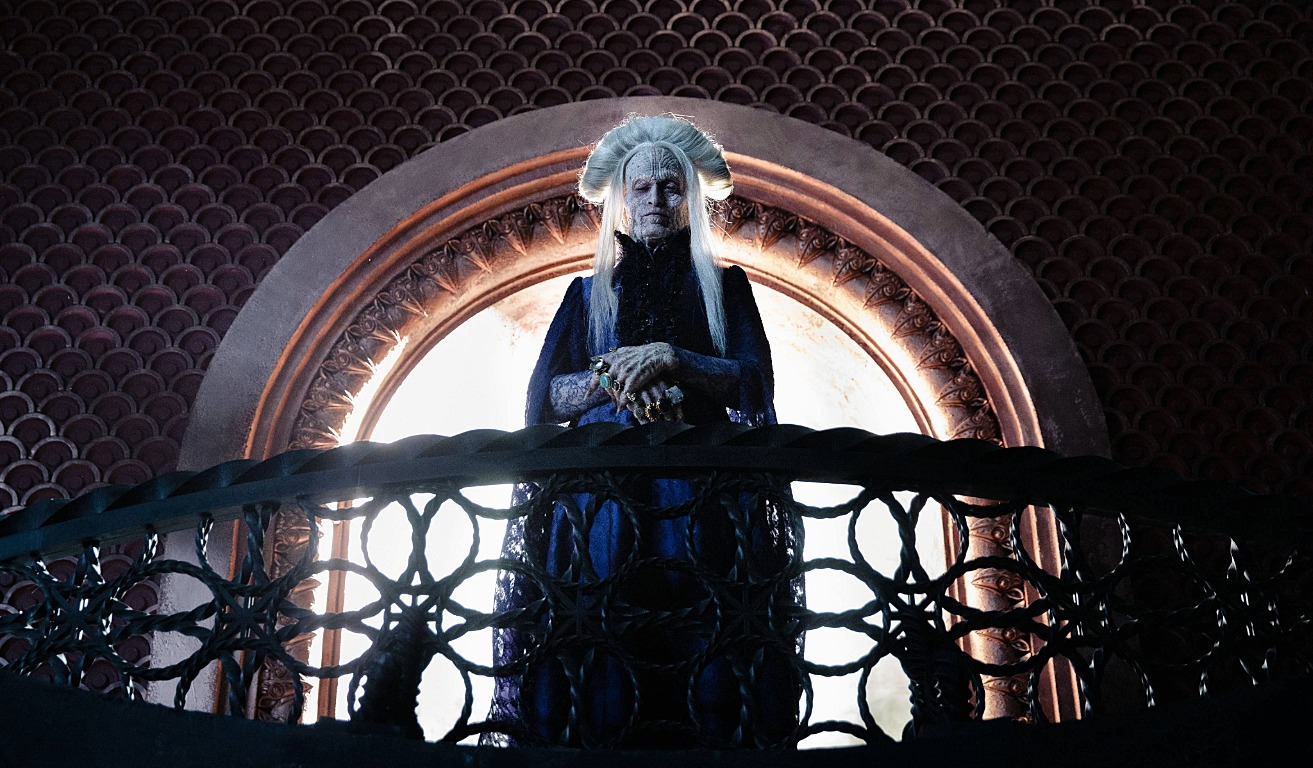
The other scene that was difficult was with the nuns, when they do the pyramid. It’s really like a ballet, and it was hard to do; it took three days to shoot and a month of preparation. It’s like cooking: you cook for six hours, put it on the table, and they eat it up fast. Two minutes later, it’s over.
HGL: There have been numerous interpretations of the King of the Vampires over the years. Is there a particular one that inspired you?
Luc Besson: No, I didn’t watch any of them. I think it’s the last thing to do. It’s the same story, but an interpretation of each of us. We are all artists; sometimes you want to make it funny, sometimes dramatic, but that is my interpretation.
If you’re a cook and I’m a cook and we’re both going to make a cheeseburger, well, I’m French, mine will taste different. Not the same thing at all. I will put on some French cheese (laughs), so it’s not the same at all. What’s interesting is the interpretation of one artist.
RELATED: ‘Texas Chainsaw Massacre’ Set for TV Reboot at A24
HGL: What do you hope audiences will take away from your vision of Dracula?
Luc Besson: You know what I learned over the years? It’s been over forty years now, don’t even think about it, because you have no clue about what is going to happen. You’re going to show the movie to a 60-year-old woman in Arizona and a 15-year-old girl in Korea, you don’t know, and don’t think about it. Offer your movie to people and hope they will like it, and really, that’s it.
I met this guy in Korea the other day, and he has a red Mohawk. He was talking about a movie I did a long time ago called Subway. It was his favorite movie, and he was only 16, so he wasn’t even born yet.
Look at the book, for example, some people read the book now, and it was written 200 years ago, so that’s the principle of art. It’s something for eternity. I really stopped thinking about it. I do what I have to do with my brain and my soul, and give the best of me.