









It’s hard to believe there was a great need from audiences for yet another retelling of the classic Dracula tale. It’s been done so many times, and in so many different mediums, you’d think there was no new story to tell. Enter Luc Besson, who delivers a version of Dracula that, in some ways, might actually be a tad different. However, this cheesy, bloated, and downright strange take swings and misses far too often, with Besson throwing in scenes that, at times, make you wonder why they didn’t end up on the cutting room floor.
Besson the romantic takes center stage here, in this gothic romance version of Bram Stoker’s beloved 1897 novel. It would be difficult to classify this film as an entry in the horror genre; it is more fitting as a Gothic love child of a twisted yet real romance that spans 400 years. Besson has stretched his creativity throughout multiple genres over the years, hitting sci-fi with The Fifth Element, and action pieces such as The Transporter and Taken, and now with Dracula, he has constructed his ultimate love story, dialing back the blood and going full-on love-struck vampire, with very mixed results.
The film begins in 1480, when Vlad the Impaler, aka Count Dracula (Caleb Landry Jones,) is torn away from his true love, Princess Elisabeta (Zoë Bleu,) to head to battle, only to see her killed when she is forced to run for her life. This was a startling beginning, from the bear traps out in the open snow to watching Vlad go insane with grief and murder a priest for not protecting her, condemning him to immortality for his sins. A very quick but entertaining beginning that would tip off Besson’s plan to take many large liberties with the source material and start jumping all over the place.
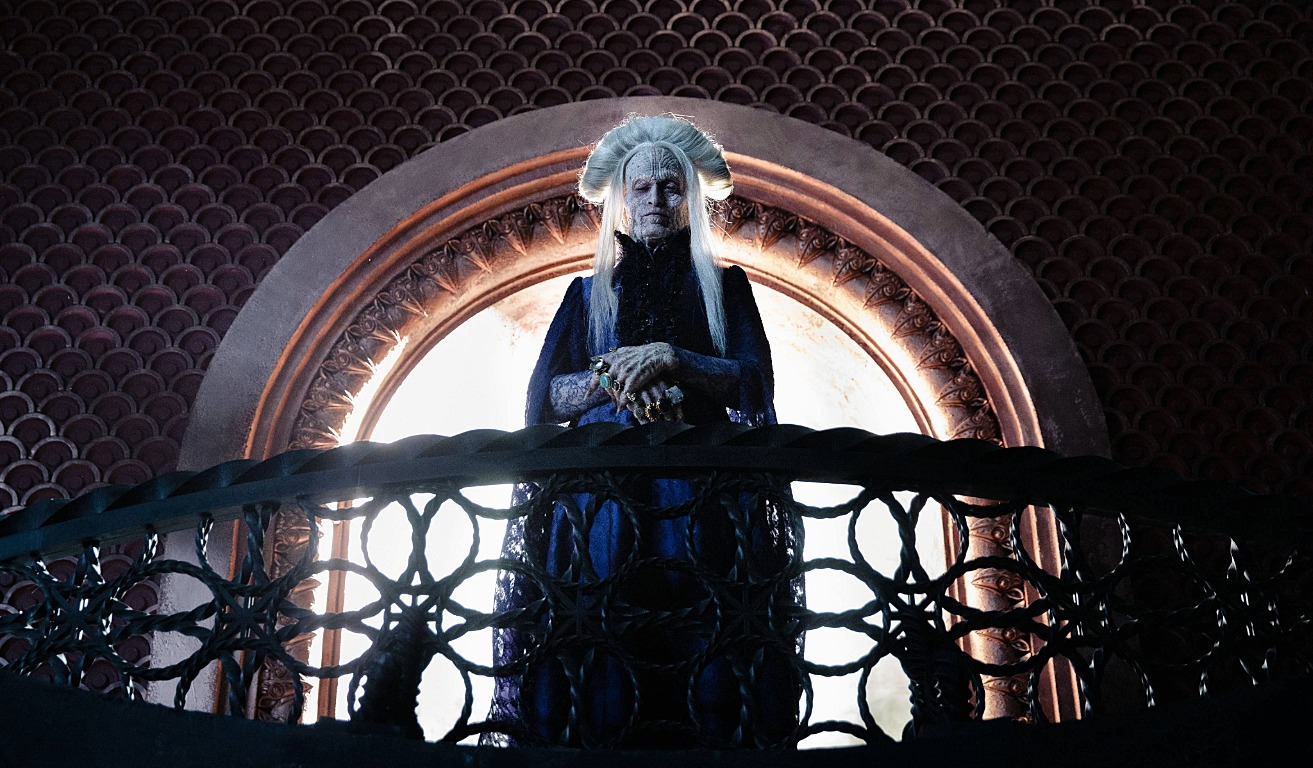
We jump centuries ahead to Paris, where we meet a priest (Christoph Waltz), who has been dispatched to deal with the vampire infestations. Waltz feels wasted here at times, but he does sneer and joke his way through some scenes that at least got a chuckle, albeit at times for the wrong reason.
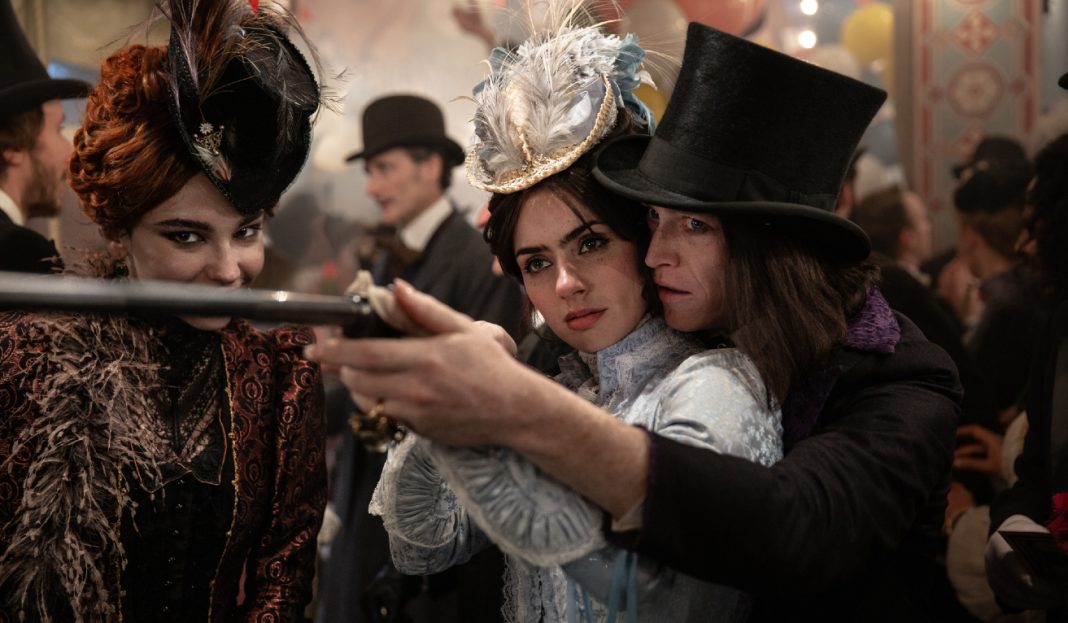
It’s at this point, and right through to the end, that Besson decides to add his own ideas to the mix, giving us some strange, outlandish, and downright bizarre scenes that make very little sense and seem as if they were chosen at random. The pyramid of nuns scene is different, but gives way to cheesy CGI gargoyles, and a sequence with multiple time jumps that has Jones making women through the centuries swoon thanks to his homemade concoction of perfume.
I’ll say this for Caleb Landry Jones: he did his best with this role, and at times, he was solid. He is forced to make so many costume changes, and wear so much makeup, yet he delivers the best he can through some outright cheesy moments. Zoë Bleu, playing the dual roles of Mina and Elisabeta, is hard-pressed to keep up with him but makes a go of it.
These two actors are responsible for most of the chemistry that Besson is pushing in this twisted romance, but at times, they just seem overwhelmed by the sheer absurdity of what they are doing. Embracing the absurd is pretty much the mantra to survive this film, and that, unfortunately, is not enough.
Related: ‘It’s a Beautiful Thing’: Caleb Landry Jones & Zoë Bleu Talk Luc Besson’s ‘Dracula’ (Exclusive)
It’s strange to watch this film unfold. The real guts of the romance don’t take place until much later in the movie, along with a few other things, so the last 30 minutes seem incredibly rushed and stuffed with just about everything you can think of. It’s basically the formula of kiss, fight, kiss some more, sword fight, gush over love, die, the end.
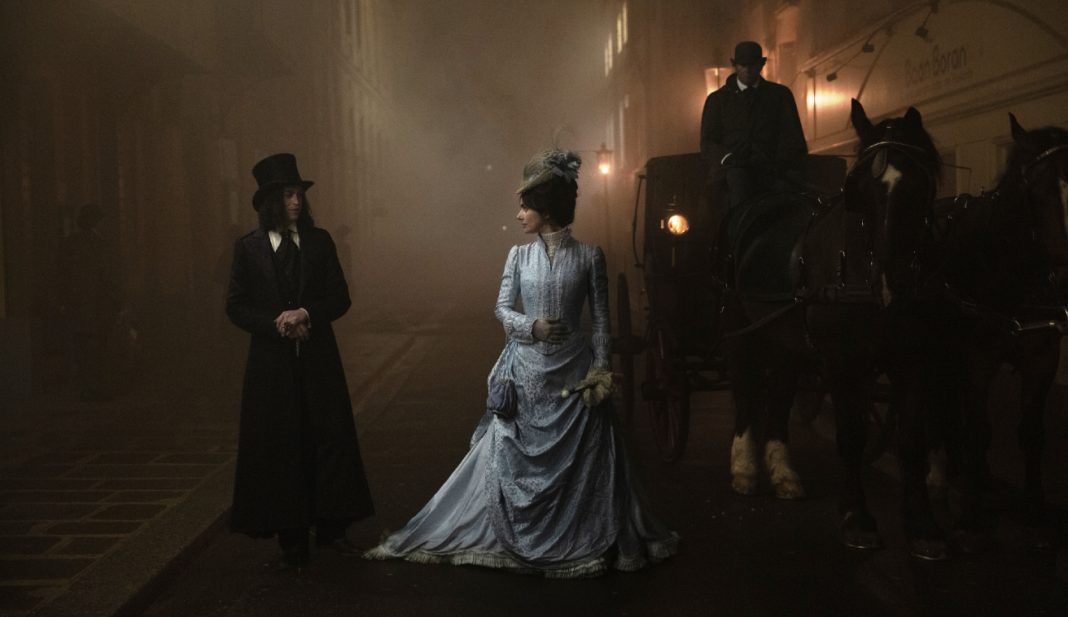
With a two-hour runtime, there is not nearly enough time spent with the leads to properly indulge Besson’s need to make his big love story. It is curious how it all comes to a conclusion, and in the end, I felt like the last act was simply a blur of images and checking off boxes after all the bizarre little scenes that Besson inserted up to this point.
Related: Luc Besson on Reimagining Dracula & Why He Wasn’t ‘Too Faithful’ to Bram Stoker (Exclusive)
I’m sure there will be praise about thinking outside the box, making this stand out, and the advantages of being different. In truth, the Dracula story has been told so many times that it’s almost a necessity to try to present something unique. However, that doesn’t mean it will always work, and in the case of Besson’s Dracula, there are too many moments of going overboard to make sense of where this story was going.
Is it watchable? Sure. Was it necessary? No. Who knows, maybe it will become a cult classic down the road and become something that is talked about with interest rather than the puzzled look of confusion.