










You can really cram vampires into anything, can’t you? Like zombies, they seem to wax and wane in popularity in perpetuity, with ultra-popular properties like Buffy the Vampire Slayer and Twilight sandwiching smaller, but beloved cult classics like He Never Died and Vampire: The Masquerade – Bloodlines. You certainly can’t deny that they have a lot of variety. Sometimes they get glittery skin, sometimes they’re tied to biblical history, and sometimes they have sprawling societies that live in total darkness. SEGA’s famous arcade series, House of the Dead, would see a spiritual successor of sorts featuring the devilish dhampir in 2000’s Vampire Night.
Never heard of Vampire Night? That’s not really surprising. A rare project shared between SEGA and Namco, it would come and go in the shrinking arcade scene before earning a home port on the PlayStation 2 in 2001. But as a fan of House of the Dead, I had to look at it. It runs on the same engine, even. It has the same cheesy voice acting, and it has a similar level of explosive violence. And underneath it all, there’s a challenging, but fair game that rewards your gradual mastery with alternate paths and brutal bosses.
But is Vampire Night worth your time? Is it even fair of me to say it is, given that I already love these games? And is it a worthy follow-up to an already fantastic series of arcade games?
House of the Dhampir
If you’re not at all familiar with House of the Dead, you’re missing out. The original three games (released in 1997, 1998, and 2002) are quintessential examples of how to do light gun rail shooters right. Each features a pair of heroic special agents — whose English performances are always laughably butchered, overacted, or both — tasked with taking on an outbreak of undead monsters, all starting with the malevolent Dr. Curien and his mansion of horrors. The camera moves you through the game as zombies try to eat your brains. With a giant plastic gun, you’re meant to blast away at them until they stop doing that. It’s simple. But it works. And it’s endlessly satisfying.
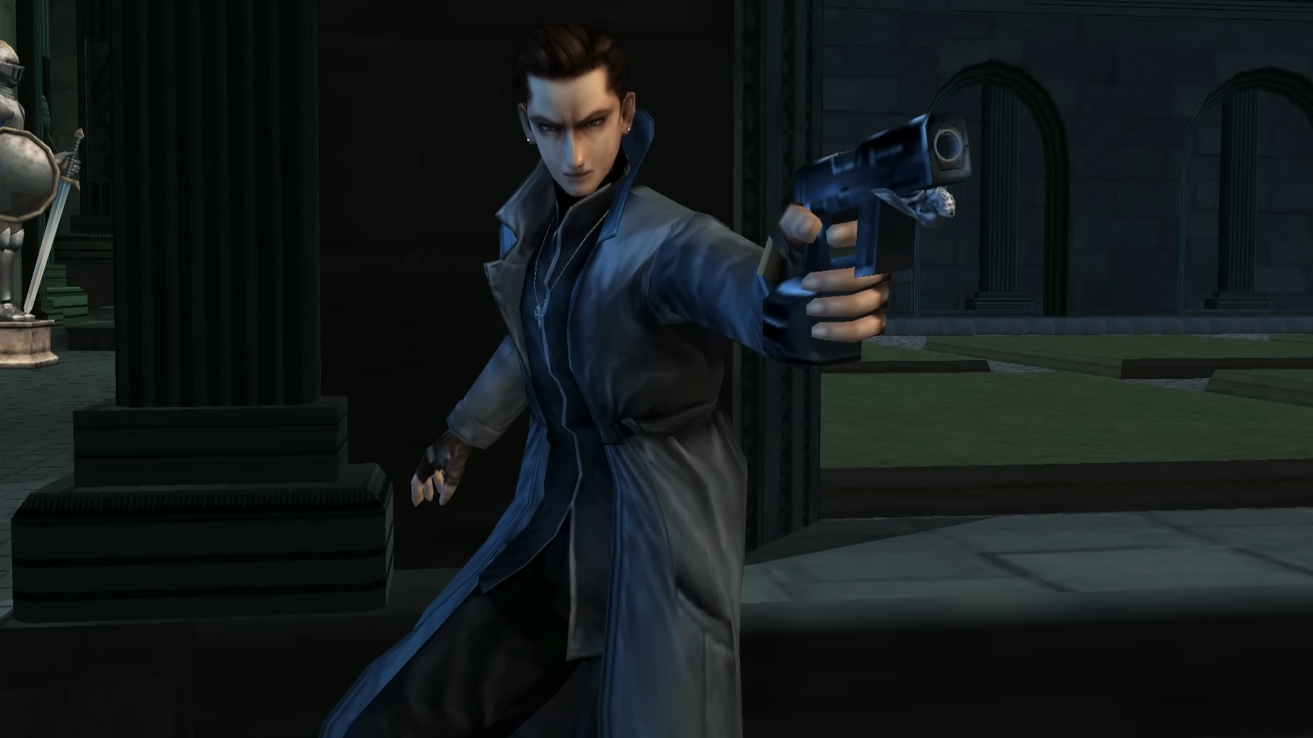
Vampire Night is the same way. The year is 2006. Things aren’t all sunshine and rainbows. A powerful vampire known as the “Immortal One” has awoken after centuries of being laid to rest, spreading vampirism throughout the countryside while terrifying monsters occupy newly emptied homes. As things turn from bad to worse, a pair of sharply dressed vampire hunters, Michel and Albert, arrive with nothing more than their shadowy pasts and loaded handguns. With the help of Caroline, a child the duo rescue from a nearby village, they’ll have to carve their way through dozens of infected villagers and devout followers of the Immortal One to save humanity.
I’ll be looking at the PlayStation 2 port of Vampire Night specifically. Not because it’s more accessible than finding an actual arcade cabinet, no. But it does help.
Ridding the Night of Vampires
Actually playing Vampire Night is really straightforward. You take your PlayStation 2 light gun accessory of choice, point it at any vampires on screen, and pull the trigger until they’re dead. If you’re out of ammo, shoot off-screen or press the appropriate button to reload. Rinse and repeat for about six chapters and six bosses until the credits roll.
There is some strategy to it, thankfully. Enemies will often have a single weak point that you’re meant to target to quickly take them out. Is it the head? Usually, yeah. But sometimes it’s just whatever is currently unarmored, like their midsection. Bosses even highlight what you’re meant to shoot at. But you won’t have much time to aim. Enemies will usually make a beeline towards you or employ serpentine maneuvers to dodge your shots. There’s a small, but noticeable delay between you firing a shot and your bullets actually making an impact, so you’ll have to nail down some specific timings for certain enemies in order to squeeze by with no damage taken. It’s the same sort of logic that made NAM-1975 so hard.
Health is a commodity in games like these. It seems generous at a glance, sure. You get about three hits before you have to use a continue. But it is so easy to burn through health by just missing a few shots. You’ll never get a grace period if you’re getting annihilated by a boss or a swarm of difficult foes. A few mistakes back-to-back are all it takes to send you packing back to the title screen. But there’s a silver lining here. You can find HP by breaking environmental objects, or you can also try to rescue civilians for a potential health reward.
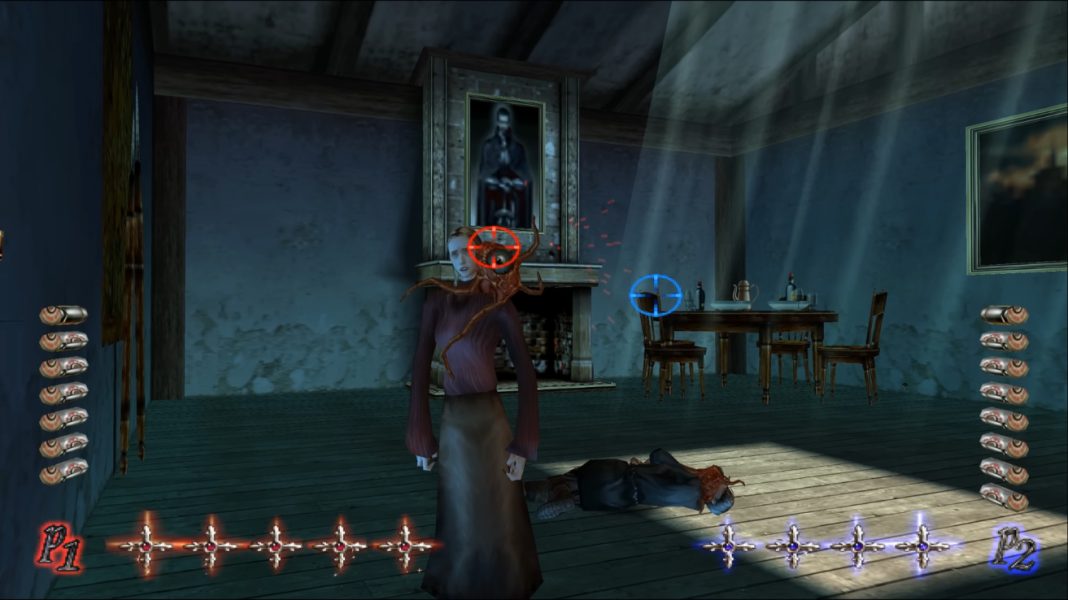
A holdover from House of the Dead, civilians are an additional challenge you’ll have to contend with no matter how you play. You can probably imagine how they’re incorporated into the game. They’re under attack by vampires — save them and get a reward. Fail, and you just end up with another vampire to shoot. Unlike House of the Dead, however, there’s an extra challenge here. Instead of simply killing a vampire that’s attacking them, you’ll have to precisely shoot a strange growth attached to them to prevent their transformation into a full vampire. If you miss? They’ll just turn immediately. Saving all the civilians in a level is usually enough of a boost to your total score for an extra health point, so you’re encouraged to save as many as you can.
House of the Dead was just as famed for its hulking bosses as well as its fun gameplay. The same is true here in Vampire Night. Are they as dangerous? Mostly, yeah.
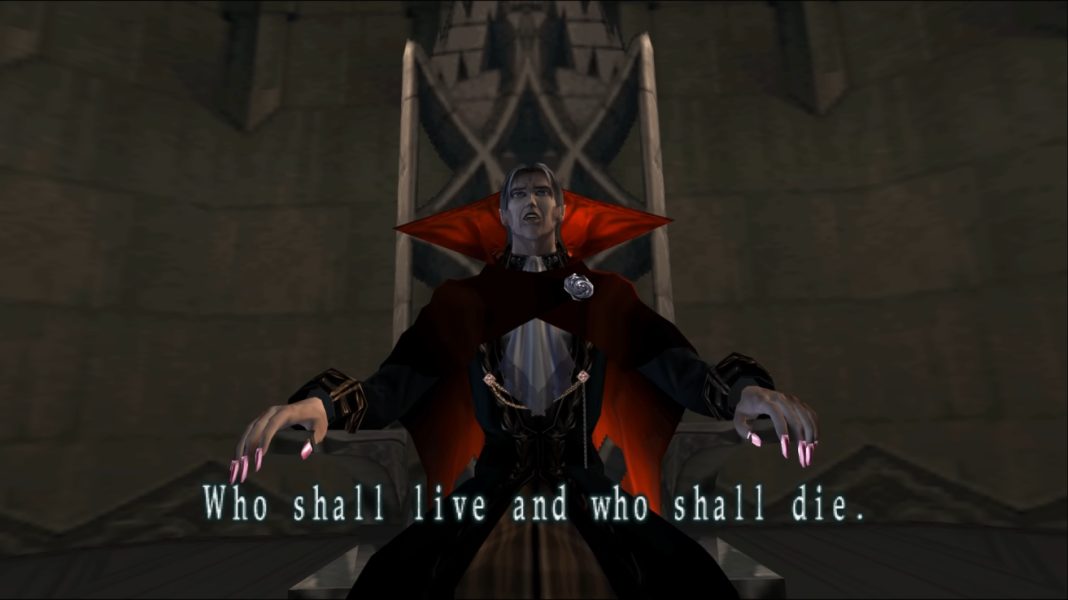
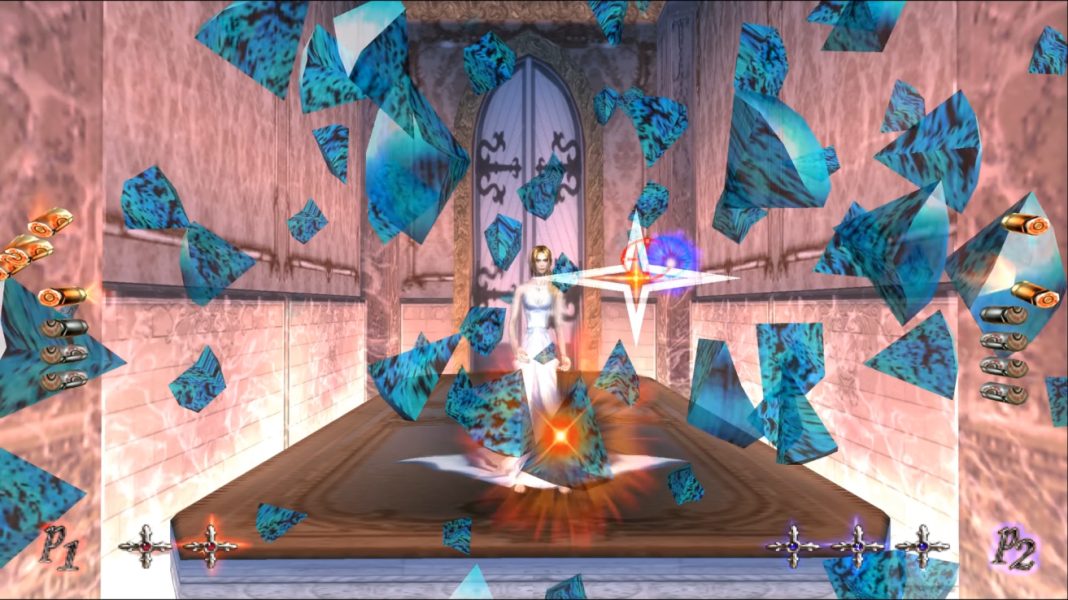
Instead of monstrous creatures that tower over everything, you’re often met with vampires that stand toe-to-toe with you. . . that eventually turn into monsters that tower over everything. Best of both worlds, I suppose. At least they’re not time travelers. Some chapters make their respective bosses a looming threat, with repeat encounters of you chasing after them or vice versa building to the actual fight. Others make them a full-on spectacle. For instance, the first boss sends you through broken battlements and winding pathways through a dead forest. A favorite of mine sends you into a Hellish alternate reality as he flies around the sky, while a giant vampire pelts you with equal amounts of bare knuckles and flaming rocks.
Like in House of the Dead, every boss is broken into segments. Every attack of theirs has a lengthy wind-up time before they actually hit you, allowing you to shoot their weak point, hopefully interrupt them, and then move onto the next attack to do the same. Rinse and repeat until you win. You can occasionally attack bosses outside of these segments, but your damage will be minimal at best. Because of this, your odds of winning ultimately come down to anticipating what attack will be next, how you can hit the boss during it, and preparing for the next one. You only get a few seconds to act per segment, so you’ll have to be quick.
Something also worth a brief mention are alternate paths. Succeeding (or failing) certain conditions in each chapter may put you on a completely different path to the boss than you used previously. They don’t amount to anything majorly substantial, but they do add some extra replay value if you want to see all the different routes.
RELATED: ‘TUMOR NECROSIS FACTOR:// amen’ Game Preview: A Rail Shooter in 2026
What Makes Special Mode Special?
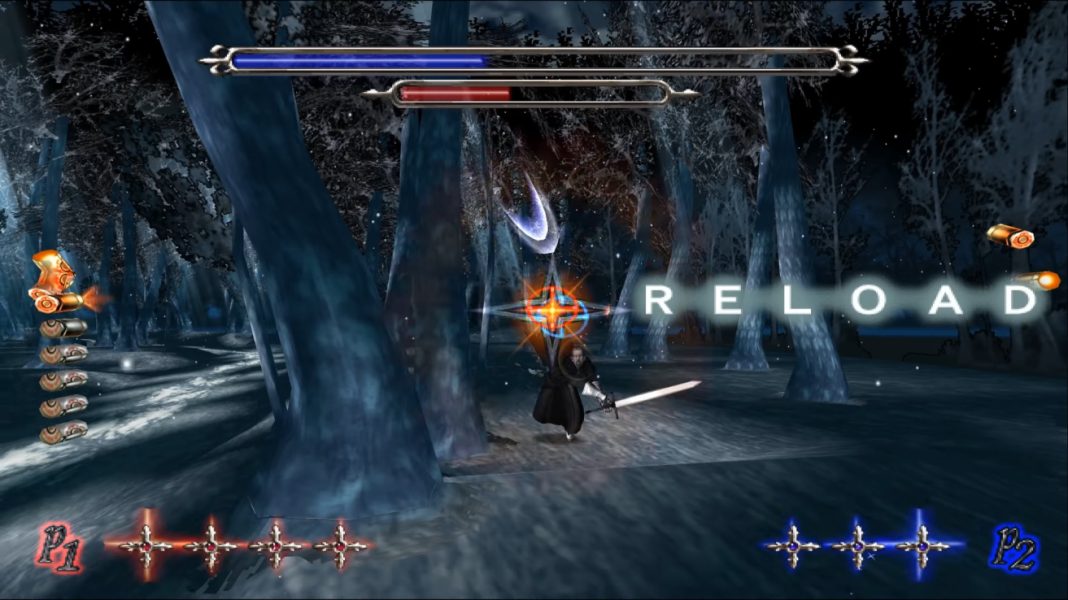
The home port of Vampire Night actually comes with a few more bells and whistles you wouldn’t normally expect. You have the traditional Arcade Mode, which is what you’d expect. It’s the arcade experience from the comfort of your couch. But you also have Special Mode.
Think of it as an expanded version of Arcade Mode that gives you a few more tools to play around with. You can collect silver throughout the game to purchase temporary upgrades for your next playthrough, like extra health, more bullets for your pistol’s magazine, and garlic to weaken most of the game’s enemies. These upgrades can also be found throughout the game by themselves and smelted down later on for some extra silver. There are also unlockable journals that are revealed when you fulfill specific conditions. They’re full of lore and character animations and even lengthy backstories you wouldn’t find otherwise, which are oddly more coherent than the dialogue you’ll find in-game.
If you have a lot of silver, you can try out a shotgun for your next crack at beating the game, which replaces your pistol. And you’d think this would be a direct upgrade from your dinky little pistol. Not so. The shotgun gives you fewer shots per magazine, a spread of pellets instead of a single shot, and the potential for massive damage if all of your pellets land on a single target. Theoretically.
The shotgun is an interesting weapon. You get these benefits, sure, and you’ll be able to more comfortably clear some of the more difficult sections leading up to each boss. But for bosses? Turns out having reduced damage per pellet compared to a normal bullet means you’re going to be hitting bosses for a lot less damage, a lot more often. Say goodbye to saving civilians, too. Odds are you’ll shear their head off instead of knocking that little vampire parasite off of their shoulder.
There’s also something equivalent to a level select in Special Mode. You can purchase items that allow you to skip just about every chapter up until the final one, allowing you to practice specific areas more thoroughly if you’re willing to spend the silver to do so. It’s a nice thing to have if you’re really devoted to crafting the perfect playthrough.
RELATED: Half Director & Stars Talk Their Gory Martial-Arts Vampire “Curry Western” (TIFF 2026)
Is Vampire Night Worth Playing Today?
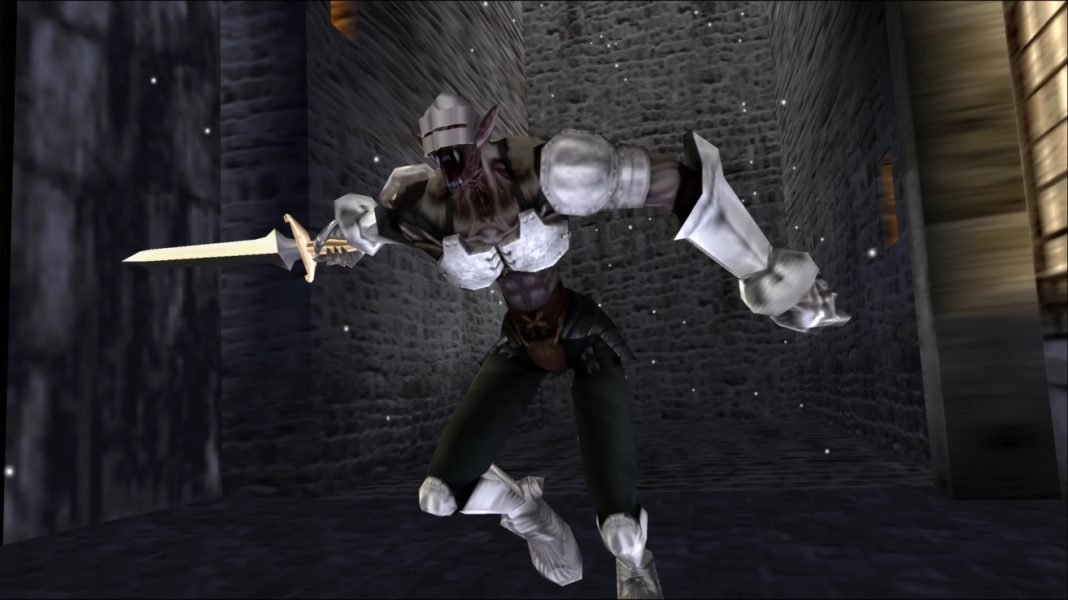
Functionally, there’s nothing wrong with Vampire Night. It’s as straightforward and action-packed as a light gun rail shooter should be. It’s got some decent bosses, some fun challenge, and some cool stuff to unlock if you’re dedicated to doing so. The problem with Vampire Night, though, is that it might just be a little too simple compared to what released at the time. Or what would come later.
Resident Evil: Dead Aim, for all its faults, transplanted the action of a light gun shooter into a traditional survival horror setting, even if it was a weird mess overall. Time Crisis 3 and Time Crisis: Crisis Zone implemented multiple usable weapons and even a riot shield to defend yourself against specific attacks. Silent Scope 3 turned your traditional light gun action into a dedicated sniper simulator, even. And these are just on the PlayStation 2.
Dead Space: Extraction on the Wii was a narrative-driven prequel to the sci-fi horror series of the same name. Ghost Squad attempted to implement recoil into its arcade cabinets. Hell, Deadstorm Pirates had a pirate ship wheel that you had to utilize along with your light gun. Meanwhile, Vampire Night is like House of the Dead. But it has vampires in it. Why not just play House of the Dead instead?
It’s a similar sentiment that I have towards the Sega Dreamcast. Don’t get me wrong. I love the Dreamcast, I think it’s a really cool home console. It has a ton of really cool games. But it’s not the PlayStation 2. It’s not that it isn’t good. It’s that it just isn’t as good.
If you’re a huge House of the Dead fan that wants a fun little novelty to play around with, there’s absolutely some merit in giving Vampire Night a shot. You’ll feel right at home with its presentation, its gameplay, its overall atmosphere, all of it. If you’re not a huge House of the Dead fan? There’s nothing wrong with it, but you might be missing out on something much better. I like Vampire Night a lot. But is it a must-play for anyone interested in light gun games? Maybe? You could do better, you could do worse.
You might be able to find a Vampire Night arcade cabinet out in the wild. Otherwise, it’s more readily accessible on the PlayStation 2.
Support independent genre journalism. Horror Geek Life is powered by passionate writers, editors, and fans. If you enjoyed this article, you can help us keep the lights on by buying us a coffee.
As an Amazon Associate, Horror Geek Life earns from qualifying purchases. Some links may be paid affiliate links, which means we may earn a small commission at no extra cost to you.