













There is no denying that the pandemic has forced filmmakers to make adjustments on the fly, and director Rob Savage understands this with his well-received 2020 film Host. He and his writers are back this year with Dashcam, which, while funny and chaotic at times (in a good way), quickly loses steam and becomes an uneven and confusing film.
We meet Annie Hardy (who plays herself ), who runs a live stream broadcast from her car, which consists of her driving around and improvising raps as suggested by her followers online. She’s brash, insulting, and yells at people from her car… not the greatest human being. This is an odd and somewhat daring choice for a protagonist in a film.
She says goodbye to LA, packs up her things, and heads to England. Annie shows up unannounced at her old collaborator’s home, El Stretcho (Amar Chadha-Patel). He’s not really thrilled to see her, nor is his live-in girlfriend (Jemma Moore). Her behavior gets her tossed out and, in her mind, stealing his car is really the only response to this ‘unfair’ behavior.
RELATED: TIFF 2021 Review: ‘Kicking Blood’ Takes on Vampires and Addiction
Annie is then asked to pick up and deliver Angela (Angela Enahoro) somewhere (I’m not sure why), who quickly starts showing signs of not being quite human. Stretch shows up after tracking down his vehicle, but neither of them is equipped or prepared to deal with what is happening right in front of them (what is happening to Angela is also never explained), and things quickly turn to chaos from there.
While Annie Hardy can be fun and sometimes hilarious in dialogue and choices, her character quickly grates on your nerves. As mentioned, this was a daring choice by Savage, and I applaud him for that, but it’s hard to concentrate on what is happening around her when the main character isn’t likable.
Savage’s shaky camera footage/chaos feel works well in spots when it shows some restraint. But too often, it becomes disorienting and nauseating to the point that it is as distracting as Hardy herself. By this time, viewers might find themselves just fatigued by the whole thing, especially since it’s not exactly scary, and for a film that is only 77 minutes long (66 minutes if you take away the long credits at the end), that’s not a good thing.
Dashcam sometimes feels like a found-footage film meets comedy sketch, with clever ideas and daring choices that, in the end, simply don’t amount to much. It feels more like a missed opportunity, especially when the scariest parts focus more on how loathsome a character can be than what is going on around her.
Dashcam had its premiere at the 2021 Toronto International Film Festival.
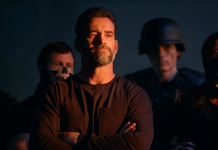





 new horror film from TIFF 2021, Dashcam, which quickly loses steam and becomes an uneven and confusing film.)