









Directed by William Friedkin and based on William Peter Blatty’s 1971 best-selling novel, The Exorcist is consistently ranked among the scariest and most influential films of all time. It was a success that Hollywood wanted to capitalize on. However, director John Boorman’s The Exorcist II: The Heretic shocked everyone in 1977, for all the wrong reasons.
Writer-director David Kittredge explored the making of the infamous sequel in the documentary Boorman and the Devil. The documentary delves into the filmmaking process and the stories behind the film. We talked with Kittredge about his approach to making the film, which sheds new light on what some consider the worst film ever made.
HGL: What led you to make a documentary focused on Exorcist II?
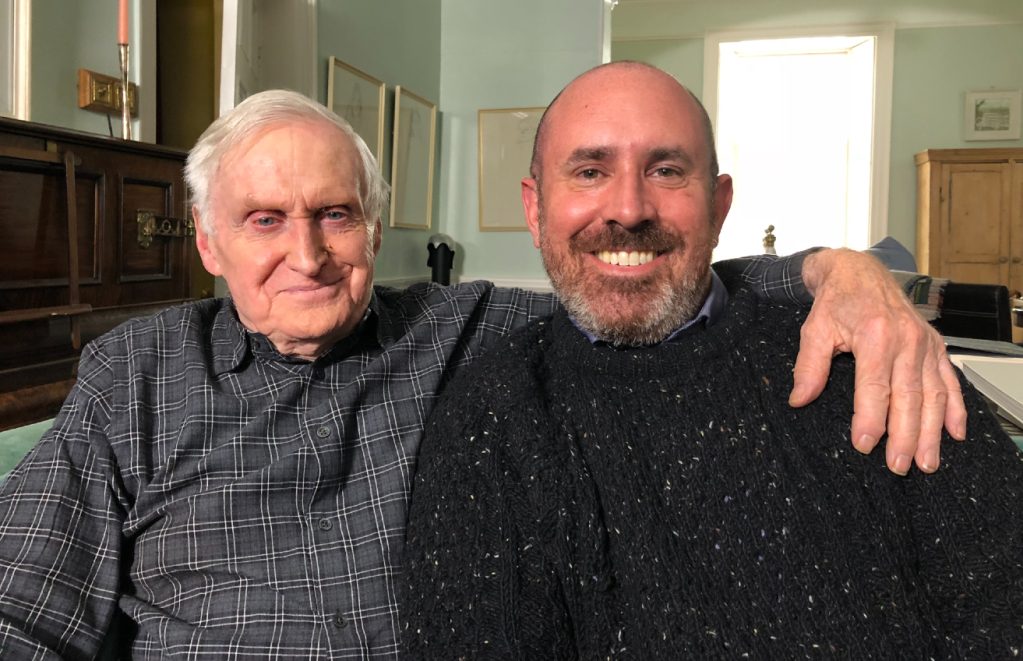
David Kittredge: In 2017, my friend Jeffrey Schwartz, who is a documentary filmmaker, was on me to make a documentary on Exorcist II. I resisted, knowing it would be a lot of work and I would get lost in the project. But as he said, no one was more interested in the film than I was, and if I didn’t do it, no one would. So I got in touch with the director John Boorman, and after a short courtship he agreed to do it.
I shot him in 2018, yes, it’s been that long, simply because of my work commitments and, of course, the pandemic. It was years before we got going. Once I talked to more and more of the cast and crew, the anecdotes from on set became a much deeper and interesting story. I already thought this was one of the most interesting stories in the history of Hollywood.
You had an auteur director who takes big and creative risks, a studio willing to finance these risks, with the biggest budget in the studio’s history at the time, and it was the sequel to the third-highest-grossing film of all time. It’s basically a surreal art film but made for a massive audience. I just wish we could have more examples of crazy risk-taking in cinema. However, studios don’t want to risk their money on that, and I don’t blame them. But as a cinephile, I live for the big swings and telling stories in ways I’m not expecting.
The tale of this wonderful artist, one of the greatest filmmakers ever to step behind a camera, a film that nearly killed him and changed the way he made movies, made a movie so impactful. Even though it was a disaster and almost ended his career.
HGL: As mentioned in Boorman and the Devil, Exorcist II almost destroyed John Boorman, both mentally and physically, and professionally. Was it difficult to convince him to talk about it?
David Kittredge: It was definitely a bit of a courtship. I think he needed to know I was a real filmmaker and I wasn’t just out to mock him. Two things really changed the tide, actually.
One was I told him I felt his decision to shoot a lot of these African exteriors on soundstages was reminiscent of what Powell and Pressburger did with Black Narcissus, a movie made in the ’40s. Powell and Pressburger were these amazing writing/producer/director duo that made this string of unbelievably amazing films, and Boorman said that Black Narcissus was an inspiration to those decisions.
I also said to him, and I think this is what did it, I don’t think you could have made Excalibur the way you did had you not gone through the hell of Exorcist II: The Heretic. I believe Excalibur was made in fury by an artist with something to prove, and I think that movie is a masterpiece, an almost flawless film.
RELATED: ‘Boorman and the Devil’ Review: How ‘Exorcist II: The Heretic’ Became a Hollywood Horror Disaster
HGL: After speaking with John Boorman, the cast and crew, and other filmmakers about Exorcist II, do you get the sense that the film is misunderstood?
David Kittredge: I think it is misunderstood. You can talk about the flaws in this film; there are flaws in Exorcist II: The Heretic. I’m not one of those people who thinks it’s an undiscovered gem; I think it’s a problematic film. However, I think it’s really interesting, and the things that were done in it and technically executed are astonishing.
Misunderstood, yes, I think there are a significant number of audiences who dismiss it as stupid, not interested at all in conversation about it or trying to understand it. Exorcist II: The Heretic, for better or worse, does demand that the audience work for it, to try and engage with and join the world the film is creating. It’s a little bit loopy, a little bit crazy, surreal and artsy and weird.
The film is made with such sincerity, which is another reason I think it hurt so much when it was rejected. If you really accept the film on its own terms, it mostly works as an interesting kind of journey. Again, it still has flaws, but I would take Exorcist II: The Heretic over a hundred perfectly fine films that don’t try anything.
I want to see films that take a big swing, and I don’t care if they pop out. To extend the metaphor, I want to see an artist expanding, trying, and reaching, in any art form, but especially cinema.

HGL: As a filmmaker yourself, do you think the film would have been received differently if it had just been titled The Heretic, with no mention of The Exorcist at all?
David Kittredge: I think at the time, it would have been received differently. I don’t know if it would have opened the same way. Maybe there was a mid-range they could have gone to? The way that Warner Bros. marketed it in 1977 as a sequel to The Exorcist — it’s horrifying, and people went to see it — and it’s not horrifying.
Exorcist II: The Heretic is not really a horror movie. There’s nothing really scary in it. There are a couple of creepy moments, but it’s not scary like The Exorcist.
It’s funny because the film is aimed at adults who want to watch an art movie. It’s in a very different place from The Exorcist, which is a great, almost flawless film, but that film was made for a mass audience, which is not a bad thing. Exorcist II is this whirling, dream-like thing.
Maybe the marketing could have helped sell that more, but I don’t know. If you’re making a horror movie sequel and it’s not a horror movie, you’re in trouble, no matter how you prepared ahead of time.
RELATED: 6 Slasher Sequels That Are Just as Good as the Original
HGL: What surprised you most about the process of making this documentary?
David Kittredge: Oh boy. I think, honestly, it was more about myself. When I started this, I knew I was going to finish it and make it one of the best movies about making a movie. I was not going to stop until I got to that point. I feel that responsibility; there’s a great movie here, and I need to find it.
It was a lot of trial and error. It was a lot of work. I think what surprised me personally was finding my own craft even more in this project. Even beyond all the editing I’ve done over the years, this was the hardest thing I’ve ever done by a mile. In between other projects and just working on it, what surprised me most was that, first, I got it done, and then people loved it.
When you’re in it, you don’t know how it’s going to turn out. It could have gone out to mid reviews, an “It’s fine” kind of thing. But I’m really happy that viewers, reviewers, and festivals like it and really got what the movie is really about. It’s not really about Exorcist II. It’s about making art, ambition, the craziness of making any movie, and what it’s like to see it all the way through.
I made this movie for artists, for filmmakers in particular, and people who love film, cinephiles. I think I’m very happy if it speaks to something about the medium itself and how it can enrich us.
Boorman and the Devil opens in select theaters on Sept. 4 via Yellow Veil Pictures.

I found it fascinating how the director drew attention to the behind-the-scenes challenges of making ‘Exorcist II’. The way he connected the film’s production struggles to its creative vision is truly insightful.