













Takeshi Kitano’s career in entertainment has spanned nearly fifty years and is known as a writer, painter, comedian, actor, and director. In Japan, much of his career he was thought of just as a comedian; one of the top comedians in the country. While he was widely known in his home country, his celebrity in the United States was never fully realized. He’s appeared in films like Johnny Mneumonic and Ghost in the Shell, but it seems that most American audiences remember him as “Vic Romano” from The Most Extreme Elimination Challenge, which ran on Spike TV for five seasons, premiering in 2003. The show was actually a dubbed version of his series Takeshi’s Castle, which ran from 1986-1990 in Japan. While never fully giving up comedy, in 1989 he was cast in the film Violent Cop. Originally do be directed by Kinji Fukasaku (who would later direct Kitano in Battle Royale), who had to drop out due to scheduling conflicts, Takeshi Kitano would make his directorial debut. Once he did a massive overhaul on the script, Kitano set off on a massive trajectory into the world of violent arthouse cinema. Film Movement Classics has released TKO Collection: 3 Films By Takeshi Kitano that contains his first two films as a director, Violent Cop and Boiling Point, as well as Hana-Bi aka Fireworks.
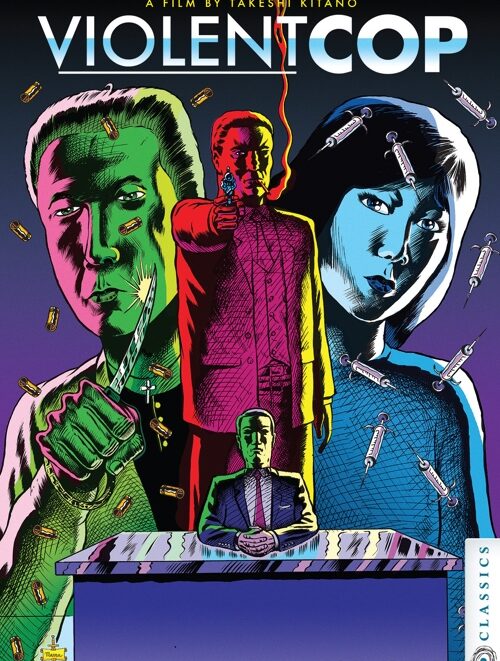
In Violent Cop (1989), Kitano stars as Azuma, a cop who plays by his own set of rules. He’s an honest cop who harbors a vicious streak against the scum of the world. He’s teamed up with a rookie officer, Kikuchi (Makoto Ashikawa), and the two have to investigate a drug murder that leads them to some evidence linking Azuma’s old pal Iwaki (Shigeru Hiraizumi) to the Yakuza. He wastes no time going after these scum and beats one of them inches from death. He’s dismissed from the force for the use of excessive force, leaving him with nothing but to continue caring for his handicapped sister Akira (Maiko Kawakami). What he did to the Yakuza won’t be forgotten and Azuma will have to go places he never thought he would have to go.
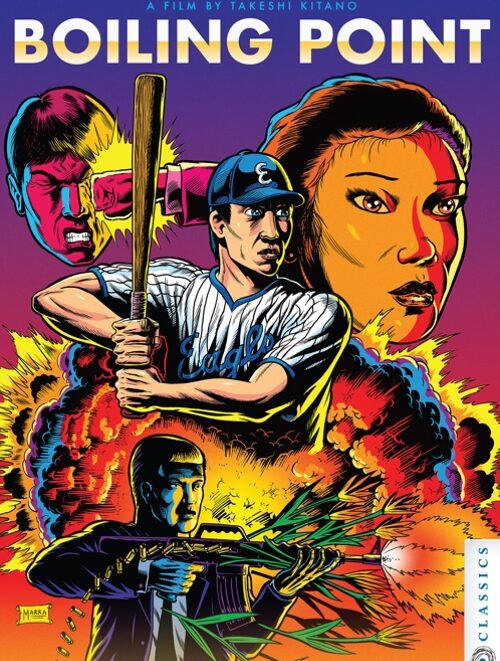
Boiling Point (1990) tells the story of Masaki (Yurei Yanagi), an amateur ball player who works at a gas station. He also happens to be a bit of a klutz and tends to blow things for everyone else, especially his ball team The Eagles. He’s a slacker at the gas station, too, but when one guy comes in and gives him a hard time, Masaki wastes no time lashing back at him. The guy turns out to be a gangster, so this will put him in a very messy situation. He turns to his friend Iguchi (Taka Guadalcanal) who still has some ties to the underworld. He goes to the Yakuza boss, trying to apologize for his friend’s ignorance, but he’s beaten close to death. Masaki has to make things right and agrees to go to Okinawa where he meets another gangster Mr. Uehara (Takeshi Kitano) to gather the guns he was sent to get. Once Masaki enters this vicious world of crime, his life will never be the same.
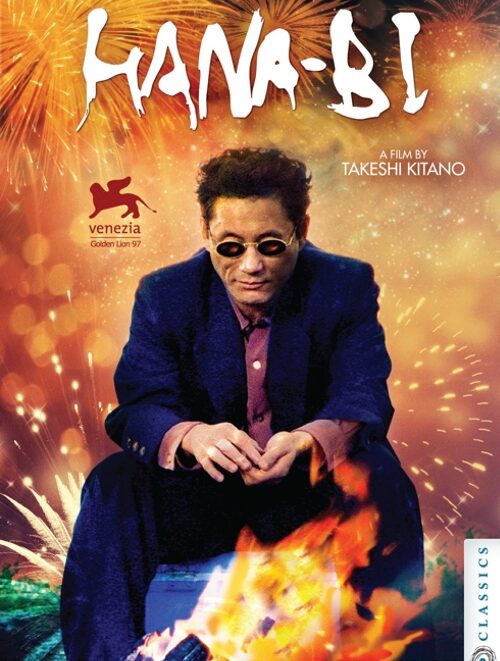
Hana-Bi (1997) once again star Kitano. He plays police detective Nishi, a man with his life crumbling around him. His wife is dying of cancer and their child has passed on. While taking care of her in the little time she has left, he’s part of a stakeout that leaves one detective dead and his partner paralyzed. With his wife’s medical bills piling up, he borrows money from the Yakuza in order to cover them. His paralyzed partner, Horibe (Ren Osugi), needs help, as does the widow of fallen officer Tanaka (Makoto Ashikawa), and he feels the need to do right by them. His wife Miyuki (Kayoko Kishimoto) doesn’t have much time left, and he needs money to take her on a trip so they can have some final moments of happiness together. He comes up with a plan to rob a bank and hopefully he will have enough money to do all of this and pay off the Yakuza at the same time. Even if he pulls off the robbery, he’s not quite aware of the consequences his actions will have.
The depiction of violence in a Kitano film is never meant to glorify it. It’s just plain brutal, and you feel the pain in your gut when watching them. The opening scene in Violent Cop where his character slaps a guy silly may be the most difficult to watch, and one of the most famous sequences in any of his films. Kitano’s films as director have always been character studies of tragically flawed people. All three of these films are perfect examples. Each one is a violent masterpiece, exploring similar territory while being distinctly different. I remember being blown away by each one of these the first time I saw them many years ago. Revisiting them now only reminds me how unique Kitano is as not only a filmmaker but as an actor. His directing style is slow and deliberate with outbursts of violence (and sometimes comedy) that jars the audience.
I own the original DVDs of these films and to see the new transfers on Blu-ray is nothing short of fantastic. It’s almost as if you’re watching the films for the very first time. They’re a little light on the special features, each has a single featurette and trailers, but the movies will speak for themselves. We can only hope some of his lesser known films like Kikujiro are given a similar treatment.
In addition to the boxset, the films are all available as individual releases. Don’t bother buying them separately, the trio of films are flawless and each one should be seen.
Related Article: Review: John Woo’s ‘Heroes Shed No Tears’ on Blu-ray