









In one of the most shocking and sudden announcements of the year, Star Fox — a series that has been dormant since the uncancelled Star Fox 2 in 2017 — is officially back from the dead. That’s right. Debuting exclusively on the Nintendo Switch 2, Star Fox is reinventing the wheel yet again in a remake of the beloved Star Fox 64, bringing fans back to what originally worked in Nintendo’s futuristic rail shooter series while introducing a new generation of fans to the titular Smash Bros. representative. Just like how Star Fox 64 was a reboot of Star Fox on the SNES. Or how Star Fox 64 3D remade Star Fox 64 for the Nintendo 3DS. Or how Star Fox Zero reimagined Star Fox 64 into something that nobody really liked. Seeing a pattern here?
It’s unfortunate that the well of ideas for a series that should, on paper, be extremely straightforward, is so thoroughly drained. Maybe it’s a result of the utterly bizarre Star Fox Adventures, a game that started as something wholly different before the Star Fox IP was forcibly rammed into it the way you’d smash two mismatched puzzle pieces together. A lot of talking dinosaurs, a lot of strange storytelling decisions, and not a lot of aerial combat. Maybe it’s because of Star Fox Command, an attempt to provide a conclusion to the series with some of the most bizarre endings you’ll ever see in a first-party title by Nintendo.
Maybe it’s because of what I wanted to cover today — Star Fox: Assault. Developed by Namco, and released in 2005, Star Fox: Assault is an effort to expand upon the formula laid out by the franchise’s earliest entries in a way that doesn’t completely veer away from what made them fun. With no talking dinosaurs this time. Well, that’s not necessarily true. We’ll get into it. Is this third-party experiment for the Nintendo GameCube worth your time? Or is it yet another confusing attempt to bring a beloved classic back to the modern era?
The Lylat System Is Under Siege (Again)
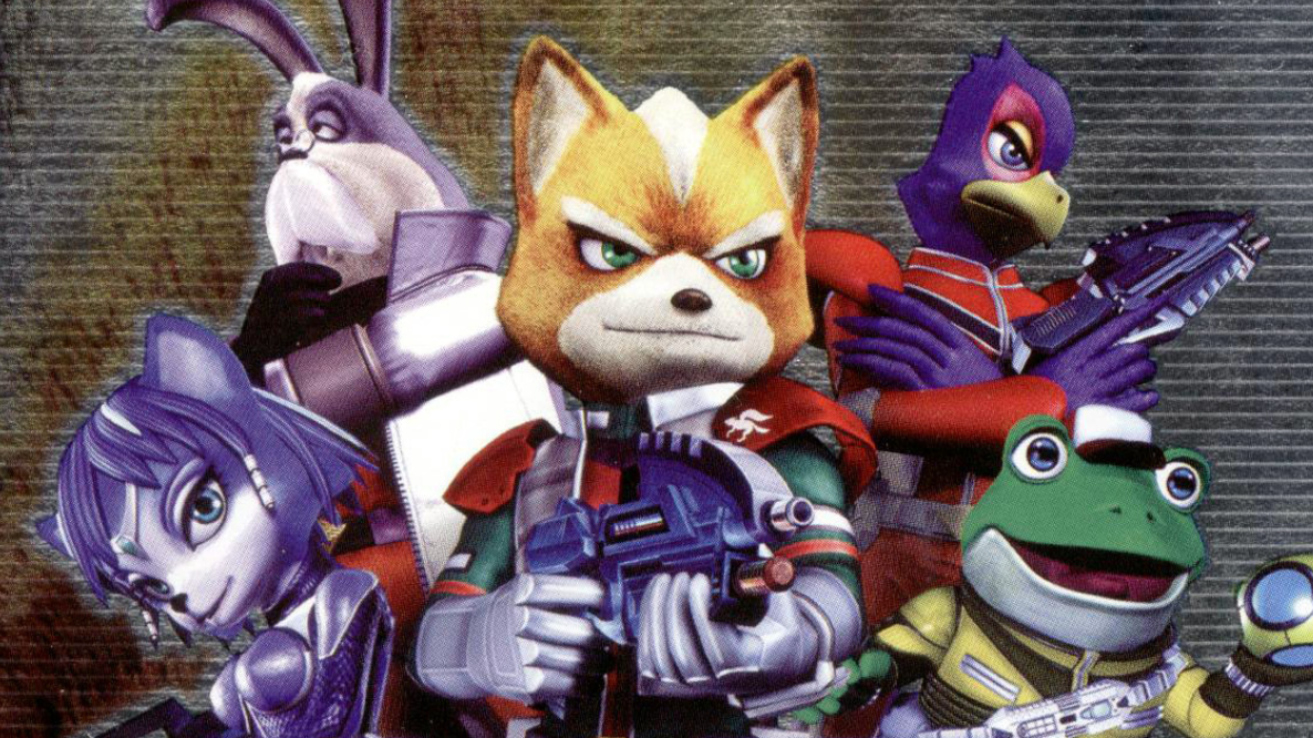
Set a full year after the events of Star Fox Adventures, Star Fox: Assault sees the return of the classic Star Fox crew, comprised of: ace pilot Fox McCloud, cocky jerk Falco Lombardi, commander Peppy Hare, mechanic Slippy Toad, and the newest addition to the team, telepath Krystal. At a glance, things are pretty familiar. The nephew of the now-deceased villain Andross is up to no good, and Star Fox are sent in to take care of him. It’s standard fare for the series. Though, it’s certainly jumping the gun when it comes to taking on the big bad guy. Or is it?
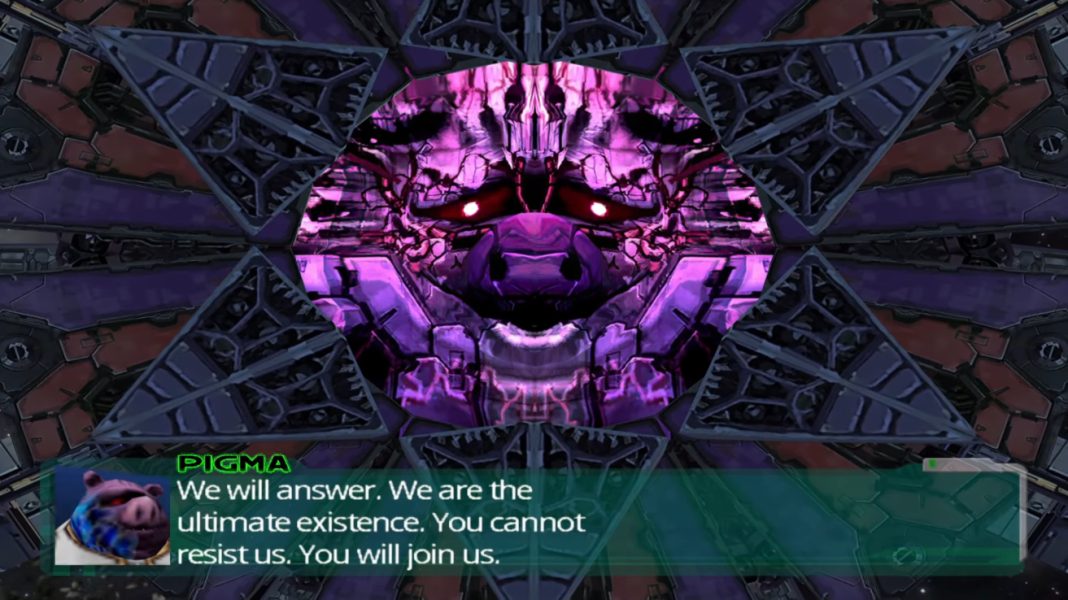
During their battle, a mysterious alien creature intervenes, leading Star Fox to make a horrifying discovery — the existence of the Aparoids, a race of cybernetic insects similar to the infamous Borg from Star Trek. Anything they kill, they infect and absorb into their monstrous hivemind. Needless to say, this is nothing like Star Fox has ever taken on before. Now in a frantic race against time against a foe stronger than they’ve ever faced before, can this squad of space pilots take on the newest threat to the Lylat System? Or will they ultimately succumb to a force beyond their understanding?
I won’t sit here and say that the narrative of Star Fox is its biggest appeal. Outside of Star Fox Command, it’s more often than not your typical heroic journey to defeat evil. It’s set dressing. Fox learns a thing or two, his teammates grow to respect him more after he saves their hides over and over again, the day is saved, et cetera. A similar course of events takes place here, though I can’t help but admit that there’s a greater emphasis on making everything feel more threatening and grandiose.
For one thing, a member of Star Wolf — an opposing crew of space pilots — is outright killed and absorbed by the Aparoids, leading to an unsettling body horror scenario as a boss battle. The same goes for the final boss, whose haunting taunts echo those of former foes and teammates alike. Star Wolf even drops all pretense of being rivals about 2/3rds of the way in to take on the Aparoids alongside Star Fox, even joining in on a heroic sacrifice to get the job done. The game itself is incredibly short, sure, but I can’t say that it was uneventful.
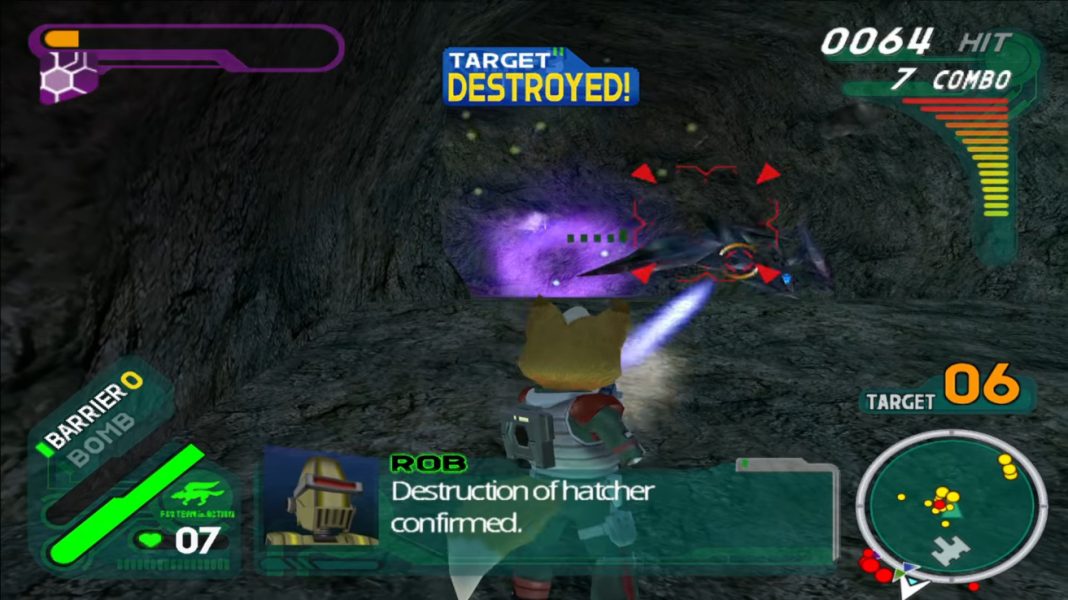
I can heap some praise onto Star Fox: Assault‘s presentation as well. It’s not the most mind-blowing game that came out in 2005 if you’re looking at its graphics, but it’s still fairly pleasing to the eyes, especially when you compare it to Star Fox Adventures. Musically, you get plenty of rearranged tracks from Star Fox 64 in addition to several original compositions by both Yoshie Arakawa and Yoshinori Kawamoto. The duo are longtime composers at Namco, with credits like Splatterhouse, Tekken, and Klonoa being shared between them, and you can certainly hear their high-energy style in some of the game’s original tracks. In fact, the whole soundtrack is pretty exceptional. Star Wolf’s theme, Katina, and even Sauria (the maligned dinosaur planet from Star Fox Adventures) are some pretty fantastic compositions that work just as well in a vacuum as they do in-game.
But gameplay takes center focus here. As it should. And there’s certainly a lot to unpack as you progress through the campaign. Multiplayer is a sizable fixture here as well, though I admittedly haven’t given it as much of a look.
RELATED: ‘Catherine’ (2011) Revisited: The Infinite Climb to Infidelity
On the Ground, In the Air, and In-Between
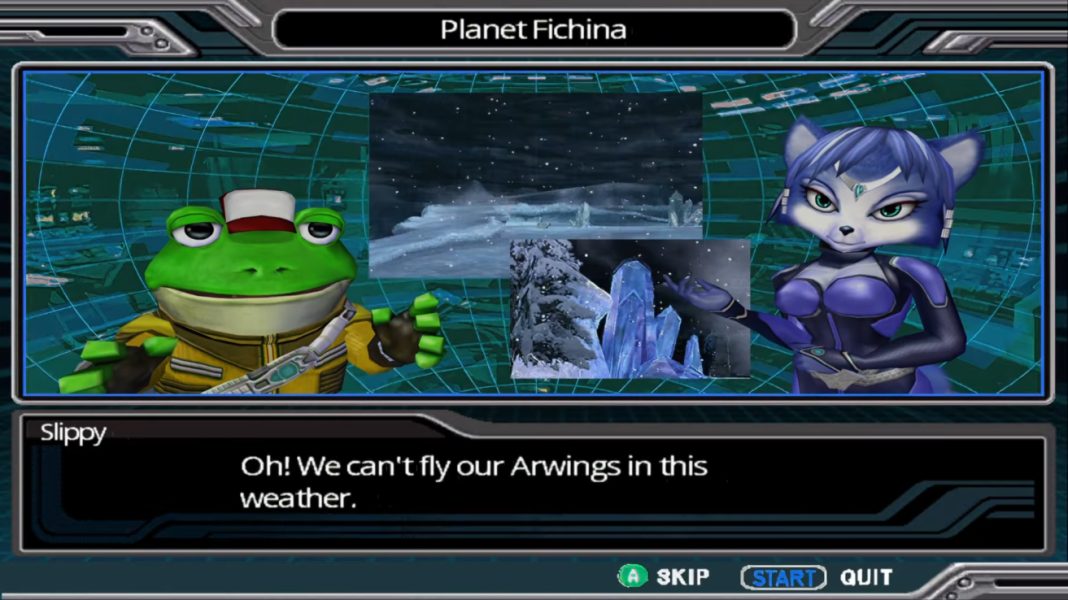
Star Fox: Assault eschews some of the series’ arcadey roots while simultaneously incorporating other ideas that the series has yet to experiment with. For one thing, branching paths are no longer an entity here. This is a strictly linear mission-to-mission journey, with longer missions overall, though your performance is still assigned a medal based on your chosen difficulty and your overall score. You’ll still be accompanied by the rest of Star Fox on your missions, thankfully, and they’ll reward you for saving their behinds with healing items, destructive Smart Bombs, or other goodies.
Instead of being a strict rail shooter this time around, Star Fox: Assault instead melds several different gameplay modes that, miraculously, transition between each other fairly well:
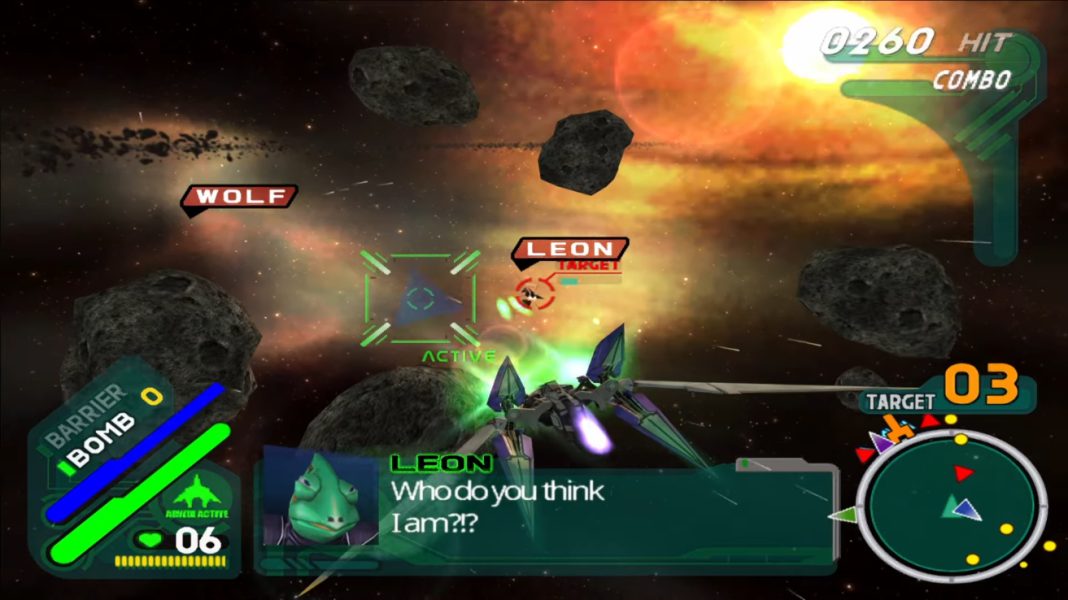
- The Arwing is what you’ll be used to if you’re a longtime Star Fox fan. All your familiar tricks are here. Rapid fire energy blasts, powerful homing shots, incredibly powerful Smart Bombs, and a bevy of evasive maneuvers powered by your ship’s thrusters are crucial for taking down Aparoids and accomplishing other objectives.
- The Landmaster is exactly what it sounds like. A hulking tank with similar evasive capabilities to the Arwing, the Landmaster is your primary means of dealing massive damage and clearing potential roadblocks on the ground. While it’s nowhere near as agile as its flying counterpart, it more than makes up for it with sheer stopping power. Plus, you can just barrel over Aparoids with its treads.
- Fox McCloud himself is still playable in the game’s numerous on-foot sections, where a majority of the game takes place (more on that later). Unlike sections devoted to the Arwing, Fox is capable of jumping into or out of the Arwing and Landmaster at any point if they’re available on a mission. He’s also packing his own competent arsenal of weaponry. You have a standard blaster, plus grenades, a sniper rifle, rapid-fire machine guns and chain guns, and even a homing missile launcher to tackle foes both inside and outside of any enclosed spaces.
It’s a difficult thing to make ground-to-air combat not only functional, but fun to engage with. Thankfully, instead of pursuing something slower and more deliberate — like in 2004’s Star Wars: Battlefront — Star Fox: Assault instead keeps the frantic pacing of its roots by never really letting up on the action. But how does it do this?
For one thing, Fox’s movement speed is more akin to something like Quake III Arena or Outtrigger than anything you might expect. He’s running outright marathon sprints across each mission, with a vertical leap that’s equally hilarious and useful for getting around. And they expect you to use this maneuverability well. Enemies are everywhere, projectiles can come from above and below, and you might even have to contend with the occasional timer that’ll really put your skills to the test. Being the ace of the group, you’ll also have to help out your less skilled teammates every now and then. Any time your teammates are in trouble, mostly in the form of being chased by three to five enemy fighters, you’re expected to drop anything to save them as soon as possible, as they won’t last very long without your interference. They won’t die for good if you’re too slow. But they’ll have to retire from the current mission you’re on, and that’ll be reflected in the mission results screen.
The results screen is the other big thing that encourages you to keep moving. You’re given a target score to hit in every mission, with two main ways of getting points to do so. The big one is your difficulty multiplier. Play on higher difficulties, and you’ll get a bigger multiplier for your total score earned during the mission. The other one, though, is your combo score.
Your combo score is what really matters here. Like in Total Overdose or other arcadey action games, it’s simple, but effective. Defeating enemies builds up your combo meter. A higher combo meter means more points. Not defeating enemies fast enough shrinks your combo meter. Getting a high combo score and going past the target score nets you a medal, and if you collect all silver medals in all available missions, you can unlock the NES port of Namco’s Xevious to play from the main menu. Bizarrely, only the Japanese version of Star Fox: Assault has additional Namco games for bronze and gold medals, with those games being Battle City and Star Luster respectively.
What you get with all of this, in theory, is a lightning-fast race to not only take down as many Aparoids as possible, but to do so while keeping your teammates alive and avoiding death yourself. Though progress is saved between missions, you do still have to contend with lives — dying takes away one life, and should you lose all of them, it’s game over. Some of the game’s longer missions are kind enough to grant you checkpoints before difficult sections, but others will boot you right back to beginning if Fox bites the dust.
Missing the Mark
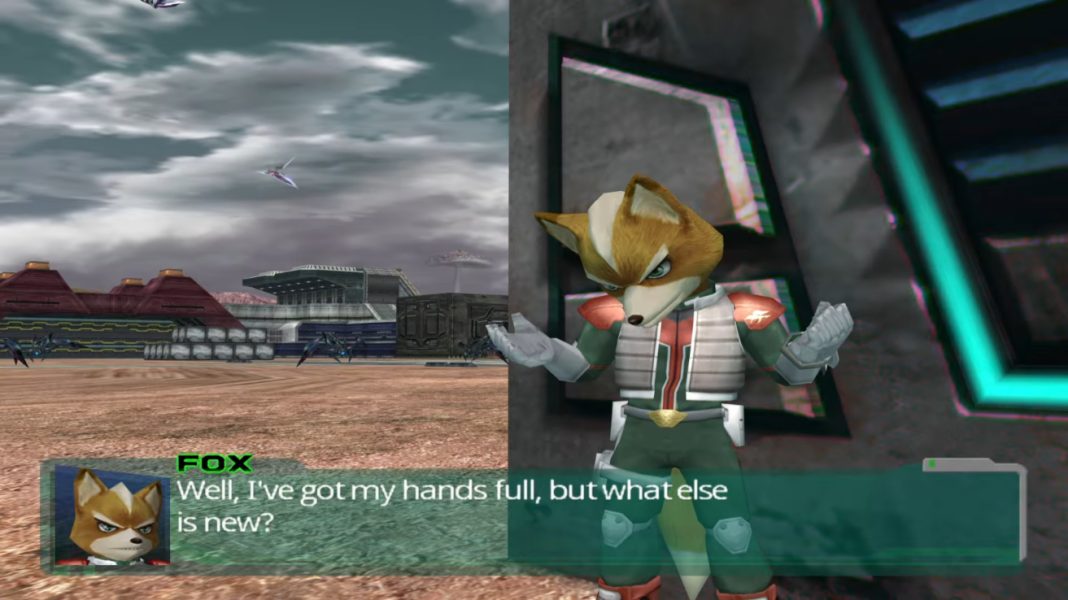
Unfortunately, Star Fox: Assault doesn’t quite nail everything down.
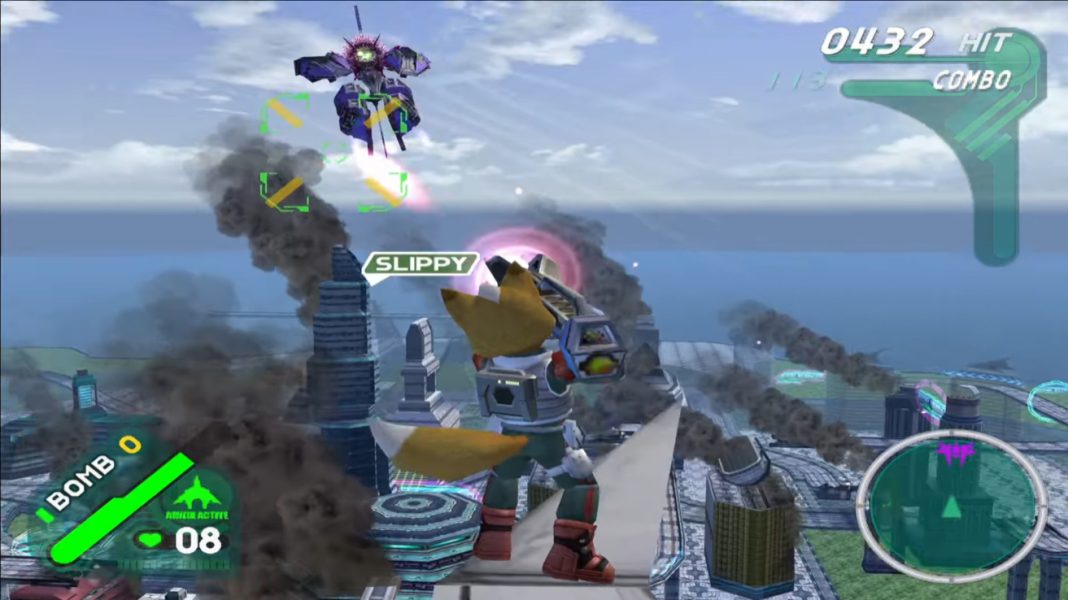
Star Fox fans rarely get a sequel that doesn’t mess around with a bunch of random stuff that doesn’t involve rail shooting, and Assault is unfortunately no exception to this. The biggest sin it commits is that rail shooting seems to take a back seat in favor of ground combat — which, admittedly, isn’t the worst thing. It’s certainly better than the greater focus on puzzles and adventuring in Star Fox Adventures. But when Fox is scurrying around a battlefield and blowing up random Aparoid MacGuffins before getting hoisted in the air, not to dogfight or do other cool stuff, but to just stand on a wing of a ship and gun down enemies in a glorified turret section, I can’t help but feel like we’re not really focusing on what’s important here.
Speaking of which — I praised the rapid-fire pacing of everything that you’re doing, but that illusion of everything flying by in your peripherals only really works if every mission doesn’t last very long. Star Fox: Assault trends towards the opposite more often than not. Mission length ranges between five, ten, and even nearly thirty straight minutes towards the end of the game, and considering most of these are ground missions, the disconnect from what Star Fox is famous for as a series becomes omnipresent. The penultimate mission is the worst example of this, trudging through nearly identical alien corridors and platforms just to have to weave between Hatchers and flying Aparoids in the Arwing shortly afterward. Again, it’s not terrible. But this isn’t what I’d really want out of Star Fox.
Replay value is also something that I need to harp on for a bit. Star Fox: Assault is short, sure, and you do have some encouragement to pick it back up and improve your performance in previous missions. You can even pick any mission you want to replay from the main menu. But compare that to the branching paths that the series was famously known for.
Think about how messing up in one stage may put you on a series of exclusive stages you would never see otherwise. Or how securing the perfect playthrough is the only way to see the best ending. It’s an apples to oranges thing, both approaches have their strengths and weaknesses, but I feel like Star Fox would benefit from the former approach more compared to something more defined and linear. It’s not even foreign to its arcade roots. Several prominent action games, like Metal Slug or Shock Troopers, flirted with alternate paths or even completely different routes of progression to encourage multiple playthroughs.
RELATED: Revisiting ‘Vanquish’ 15 Years Later: Shinji Mikami’s Cover Shooter
As a brief aside, I do feel the need to mention something important. It’ll recontextualize the shift in gameplay design here. There’s the topic of multiplayer, namely the game’s battle mode. You can battle up to three of your friends in a handful of different game modes, with eventual rewards for playing more and more matches. I did bring this up briefly earlier, but it’s more integral to Assault‘s development than you’d think.
In a Nintendo Dream interview (translated into English via Shmupulations), producers Takaya Imamura and Tsuyoshi Kobayashi, and directors Toshiyuki Nakanishi and Yutaka Yoshida, gave some deeper insights into how Star Fox: Assault came to be. More specifically, they discussed how Namco was primarily the source of the game’s diverse gameplay options. Imamura mentions this after briefly discussing the original battle mode in Star Fox 64:
“The [Nintendo 64] battle mode was kind of just a last-minute bonus, so for a long time now I’ve been wanting to make a proper, more fleshed out Battle Mode. So Namco handed us some planning docs titled ‘Vehicle-Swapping War Action Game,’ and we decided that would be the starting point for the Assault development.”
Despite the campaign’s depth, it was actually the battle mode that was given some lengthy development first. Imamura confirmed this, with Kobayashi elaborating on the process:
“Midway through, though, we had devoted all this time and energy and the battle mode was really great, and it was like. . . ‘Ok. . . so what are we going to do about the 1P mode?’ The battle mode being so enjoyable, we were worried that if the Story Mode was equally great, it would feel really unbalanced.”
In fact, there was even some internal discussion about whether or not to forego a traditional story mode altogether. This was thankfully reconsidered, though. Nakanishi would go on in further detail:
“In a normal development, you would work on a Battle Mode on the side while you’re creating the main game. . . But this time we made a really solid Battle Mode first, then pivoted to the single-player, which we were determined to make as good as the Battle Mode.”
Knowing this, it does make the emphasis on ground combat more understandable. Do I still wish it wasn’t as pronounced? Sure. But you can at least see that, from the beginning, the emphasis on different combat modes was always there.
Should You Play Star Fox: Assault?
Sure. Despite its faults, I’d argue Star Fox: Assault is still the single closest thing to an original Star Fox game that doesn’t just dig up what worked in the first game and puppet it around like it’s some new thing. And it certainly doesn’t attempt some bizarre gimmick that directly interferes with how you’d want to play the game normally. Looking at you, Star Fox Zero.
It begs the question, though: Does Star Fox really need to evolve? Does this need to expand upon a winning formula demand some kind of justification when you already have something that works? Part of the reason another dormant Nintendo franchise, the sci-fi racing series F-Zero, has been out of the limelight for so long is that there just hasn’t been any fun ideas to bring it back into the public consciousness. It ended with F-Zero GX in 2003, by what would become the Yakuza developers no less, and it’s largely considered to be the peak of the series due to its brutally punishing difficulty. But where do you take things from there? How is iteration even possible if you’ve already iterated your way to being as good as you can be?
I’m rambling, obviously. Maybe I’m just reading too much into an attempt at a return to form. Star Fox: Assault is a fun enough time, and I feel like those who just want an action game to kill an afternoon or two will find something to enjoy here. Is it a perfect Star Fox game? No. But it’s different, and for all the warts that come with it, that’s something I can at least appreciate.
Star Fox: Assault is available exclusively on the Nintendo GameCube.
We’re hardworking geeks who love to geek out, but we can’t do it without you! If you enjoyed this article and want to see more like it, please consider tipping our writers. Also, as an Amazon Associate, we earn from qualifying purchases.