












“F***ing blocks. . . I’m gonna climb the s*** out of you!”
Romantic relationships are always a tricky thing to navigate. From having to trust your best judgment, to making an honest effort to give up your vices, the connection between two hearts has always needed a steady stream of maintenance to make sure things work out smoothly. But what happens when the unexpected occurs? More specifically, what happens when one half of a relationship is caught in the middle of a dangerous, block-themed curse that may ultimately kill them in their sleep?
Catherine, originally developed by Atlus and published by Atlus USA (later Sega), is a deviation from the developer’s usual role-playing output in favor of something a bit more adult, a bit more puzzling, and a bit more difficult. It’s a tale of love, loss, and limitless amounts of block-based puzzle-solving. It’s also a fast-paced puzzle game, signifying a new direction in something that Atlus has rarely if ever touched in their few ventures outside of the Shin Megami Tensei universe.
But is this salacious brain teaser still worth playing in 2025? Well, yes. But there are a few reasons for that. There’s more to Catherine than just a colorful cover. It’s fun, it’s frantic, and it can occasionally frustrate you. Let’s talk about why.
Catherine or Katherine?
Catherine tells the story of Vincent — a man in his 30s who’s currently entangled with a stern, but well-meaning lady by the name of Katherine. Their relationship isn’t necessarily rocky, but Vincent is clearly apprehensive about a few things going on. Things feel like they’re moving a bit too fast. He’s already comfortable where he is now. Why do things have to change when they can just stay where they are forever? As he juggles his inner thoughts around in a haze of booze and friendly company every night at the Stray Sheep bar, however, one fateful incident will change his life forever.
In his drunken stupor, Vincent is greeted by a mysterious blonde woman with striking blue eyes. The two have a short, but intimate conversation as the world slowly turns to darkness. Before Vincent knows it, he’s back in his apartment, half-naked in his own bed.
The lady from the night before is there too. Her name is Catherine.
Vincent quickly realizes what happened. Now ashamed, confused, and left to wonder what’s to come in his life after such an unexpected night of passion, he finds himself plagued by a reoccurring nightmare every time he falls asleep. He’s nothing more than a sheep in this dream, forced to climb an ever-growing tower of pain and suffering with herds of other familiar-looking sheep, all while being chased by terrifying monsters that evoke his own insecurities. Should he lose his footing, miss a precarious jump, or get munched on by the monsters at his heels, he can’t help but feel like he’ll never wake up; especially after hearing the recent rumblings of a mysterious curse killing those around him.
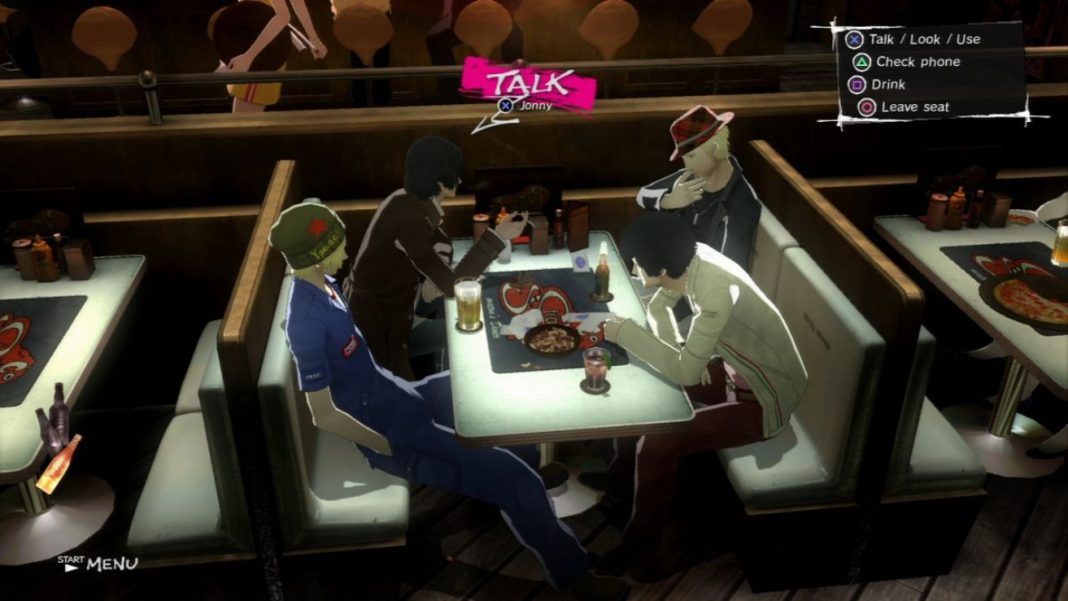
Catherine is split into two distinct halves. Any time Vincent is walking around outside of his apartment, you’re just meant to take in the story as its unfolding. Cutscenes and small narrative sections at the Stray Sheep bar are what you’ll primarily be interacting with whenever you’re not knee-deep in blocks and supernatural nastiness. The latter is especially important if you want to really get the most you can out of a playthrough.
Vincent isn’t alone in his predicament. By talking to other sullen patrons at the Stray Sheep bar, you’ll get some more insight into their own relationship foibles alongside Vincent’s. You might even be able to pull them out of their own personal rut before the curse manages to kill them. The Stray Sheep bar also lets you save your game, down a few drinks to make the ensuing nightmare a bit easier and communicate via text with Katherine and Catherine. Suffice to say, your actions will ultimately determine how much misery and hilarity Vincent undergoes during his journey.
Speaking of which, Catherine‘s narrative isn’t set in stone. Vincent is unsure of what he really wants in the beginning of the game, leaving you to ultimately decide his fate via your actions towards both Katherine and Catherine. Whether or not you lean towards either woman (or neither) affects Vincent’s internal monologue in certain cutscenes, as well as determining the overall ending of the story. Answering a series of strange, open-ended questions periodically throughout Vincent’s nightmares also heavily influences the ending you’ll get.

The game’s presentation deserves a quick mention too. As usual for the same team behind Persona, it’s downright gorgeous. Highly expressive and personable character models and animations, animated cutscenes by Studio 4°C (Memories, The Animatrix), and an absolutely inspired soundtrack by longtime Persona composer Shoji Meguro, all make Catherine an absolute treat for the senses. Even 14 years later, it still looks and feels great.
Which was a good thing for Atlus. Catherine was the studio’s first-ever fully-HD game designed with the seventh generation of consoles in mind, and despite the usual foibles that many a developer faced in transitioning to this specific breed of new technology, the lessons learned from the development of Catherine would prove incredibly useful for the eventual release of Persona 5. It goes without saying by now, but Persona 5 would quickly become the studio’s most financially successful game to date, along with earning near-universal acclaim from critics and players alike.
RELATED: ‘ENA: Dream BBQ’ Game Review: A Gonzo Adventure in a Surreal World
Stacking, Climbing, and Traversing Blocks
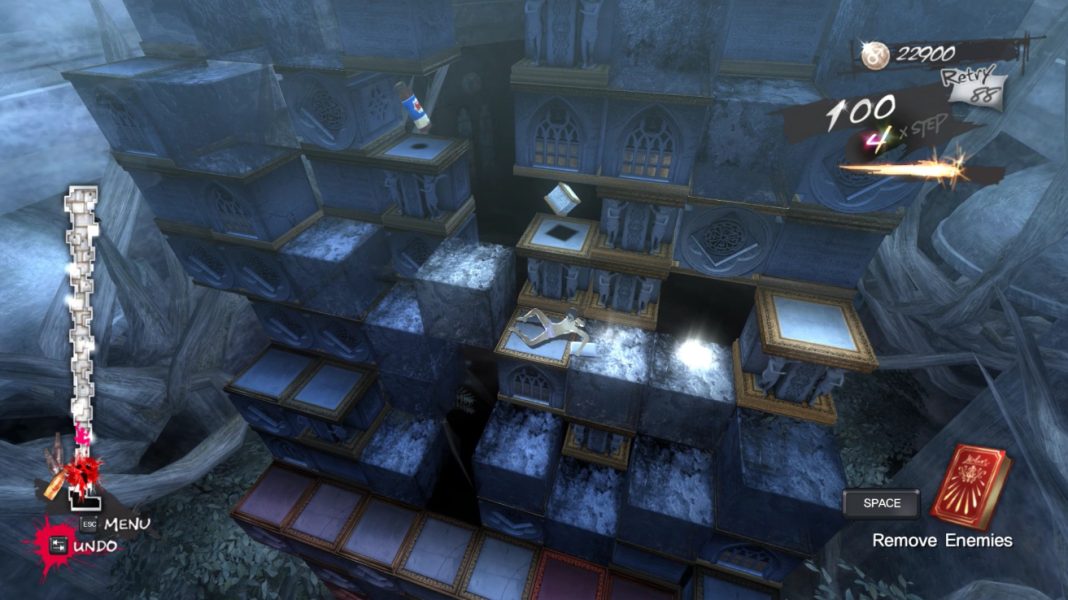
When it comes to actually playing Catherine, there’s one thing you ought to know: no punches are pulled here.
Catherine is a puzzle game, though such a blunt and simple description doesn’t really do it any favors. Vincent’s nightmares take the shape of sprawling, towering structures that you’re tasked to climb in any way you see fit, all while manipulating the blocks that comprise these structures to continue your ascent. Vincent can run along the tops of blocks, push and pull blocks in four different directions, and hang down from the edges of blocks if there isn’t a block to jump onto below.
But things quickly get complicated. Beyond the game introducing variants of blocks that each have their own unique properties — like ice blocks with slippery surfaces and spring blocks that launch you vertically into the air — something you’ll have to keep in mind at all times is how each and every block interacts with each other. As long as any two blocks are touching along one of their edges, they’ll stick to each other, allowing you to create incredible staircases, impromptu bridges, and irregular climbing paths by just pushing and pulling blocks in the correct order.
What you get as a result of this is a puzzle game that’s as difficult as it is rewarding, one that precariously balances your own creative freedom across 30 or so separate levels in the game’s story. Once you know how to get things done, you can quite easily breeze through a majority of these levels at lightning speed. As for solving them as you’re going through them without any external help? It’ll depend on how crafty you are and how quickly you can understand the game’s internal logic. It’s not as if Catherine is cryptic about itself. You can find plenty of “techniques” for getting out of specific situations throughout Vincent’s nightmares. But committing these to memory between juggling a half-dozen other variables at a time will definitely take some getting used to.
Bear in mind that you’re not alone on the tower, either. You’re always on a timer, with the bottom-most levels of the tower gradually falling away into the abyss below with every passing second. If you’re especially unlucky, you may have to contend with a monstrous creature giving chase from below as well, often being able to manipulate blocks far beyond their reach with a plethora of special abilities or dangerous attacks. On top of that, you’ll often come across other unfortunate souls caught in the very same nightmare you’re traversing. They’re trying to get in your way, shove blocks around, and knock you into the abyss.
It’s incredibly easy to outright die or somehow find yourself in a situation that just can’t be resolved. You’re more than free to burn a retry if you’re ever stuck, as retries let you attempt a level over from the very beginning or the most recent checkpoint you’ve activated. However, just keep in mind how many you’re using. If you’re not careful, you may end up burning through dozens upon dozens of retries with few ways to get them back.
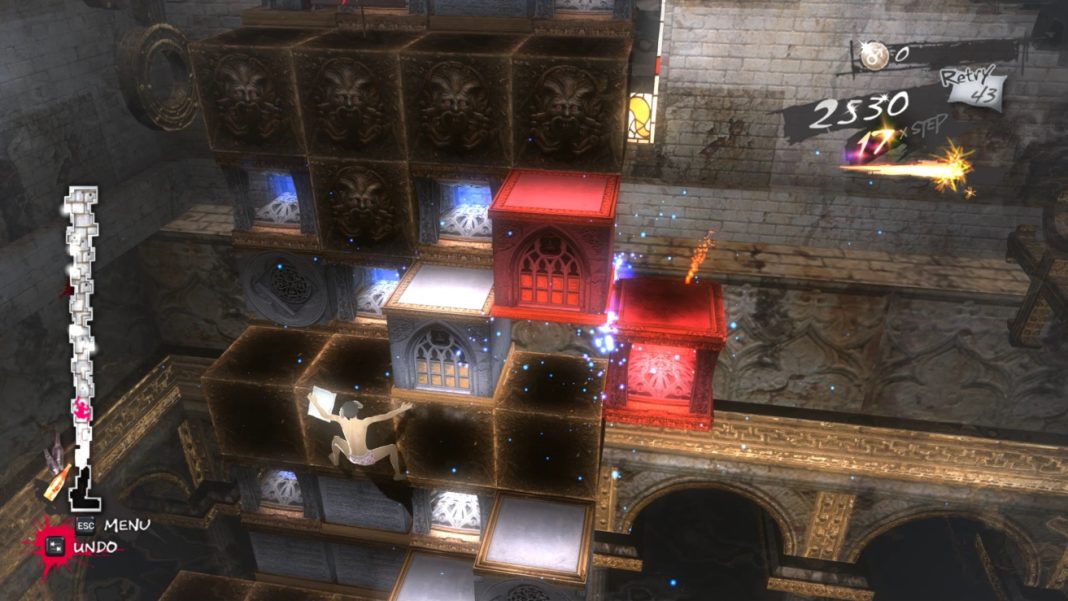
In so many words, Catherine is hard. Not impossibly difficult, mind you, but you’re going to have to work for even the easiest of victories here. But there are a few ways you can approach this.
You could play on Easy, if you really wanted to, though it won’t make your journey all that much easier. Certain levels will have more forgiving puzzles to solve, you can undo up to 10 moves you’ve made, and you’ll gain retries much more easily. You can drink yourself stupid at the Stray Sheep bar, with each full drink you down boosting Vincent’s speed in that night’s dream. Hell, you can even activate the secret Very Easy setting if you’d like, which adds some additional power-ups you won’t find in other difficulty settings. You’ll even get an additional score multiplier.
That’s right, Catherine also has a ranking system. Every time you complete a level, you’ll gain either a Bronze, Silver, or Gold trophy, with each one being tied to your speed, your “chain”, and your ability to collect coins scattered throughout each level. Your “chain” is essentially a timer within a timer — as long as you climb up another floor in the tower before your chain runs out, you’ll gain even more points that stack with every subsequent floor you climb. Playing on Easy will boost your final score at the end of each level by a factor of two as well.
Alternatively, you could try to tough things out. You’re free to replay any stage you’ve already completed from the comfort of the Stray Sheep bar, and should you get a Gold rank on any level at or above Normal, not only will you get bragging rights — as you should — but you’ll gain the ability to outright skip that level on subsequent playthroughs. Your dedication to outright mastering the game’s content allows you to more quickly blaze through what you’ve already perfected to see more of the game’s numerous endings. It’ll be rough, sure. But if you enjoy the game enough, you’ll get some fun out of the grind for perfection.
RELATED: ‘Sorry We’re Closed’ Game Review: A Bad Breakup Turns Survival Horror
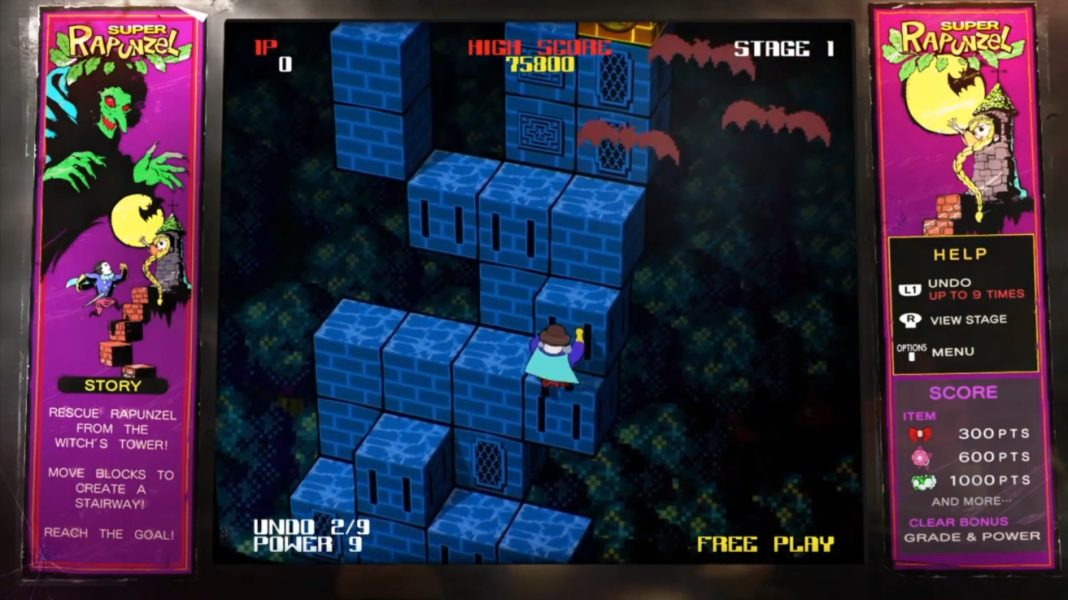
If that wasn’t enough, there’s also a game within a game here. Catherine features a completely separate, condensed game called Rapunzel that you can play whenever you’re at the Stray Sheep bar. Like the title implies, it tells its own version of the classic fairy tale, complete with an eye-watering 128 levels total. It functions as a much more limited, bite-sized version of the puzzle-solving you’d find in Vincent’s nightmares, albeit with some significant changes:
- Rapunzel has no time limit whatsoever. None, nada, zilch. You’re free to deliberate for however long you want on every move you make, which is great because. . .
- Your lives are limited in Rapunzel. You only have so many lives and continues to work with, and should you use them all before finishing getting to the end, that’s it. You’re effectively locked out of trying Rapunzel again unless you reload a save or revisit the Stray Sheep some other night. However, once you beat the story mode once, you’ll gain unlimited attempts.
- Despite what difficulty you’re playing on, you’ll have a set number of block movements you can make. Should you use all of your block movements without getting to the goal or otherwise make it impossible to reach the goal, you’ll perish.
Even beyond that, Catherine managed to establish itself as a genuinely fascinating competitive game. Beating the game once not only unlocks several Babel stages for you to play — which are dynamically-generated puzzles that gradually ramp up in difficulty — but a head-to-head mode that lets you challenge up to three others in a tense climb to the finish. A brief piece by Ian Walker on Endless Mode goes into much more detail about a dedicated competitive scene that was developed for Catherine, with competitor David “Dacidbro” Broweleit having this to say about the game:
“Catherine, as a competitive game, is truly one of a kind. . . As someone who loves both fighting games and turn-based strategy games like chess, Catherine is a dream game. You need similar knowledge of space control and tactics, but it’s directly attached to a real-time fighting system where reactions, mental clarity, and speed is paramount.”
Suffice to say, you certainly get your money’s worth when you play Catherine. That’s to say nothing of the endings, which I won’t really spoil for you here. They certainly span the emotional spectrum, though. Some are tragic, some are triumphant, and some are just downright hilarious. The game itself even bookends itself with a strange wraparound segment that outright spells out the themes of Vincent’s journey in a fun little nod to the player.
Should You Play Catherine?
Like a lot of things I really like, I can’t say that Catherine will be a match for everyone. From my own anecdotal research, some really enjoyed the thrilling story, but hated how difficult the actual gameplay sections were. Even the inverse is true, where my own friends absolutely love the complexity of Catherine‘s challenges — especially the Babel stages — but really couldn’t care less about the context in which they take place. But I enjoyed both parts enough to ultimately see things through to the end.
Knowing that the same team behind Persona made Catherine, I can’t help but wish that they’d stretch their wings like this once more. And by “same team”, I do mean that in a specific sense. Producer/director Katsura Hashino, character designer Shigenori Soejima, and the aforementioned Shoji Meguro among others all put their unique talents into Catherine, and it shows. But is it selfish to ask for more?
Every decade or so, sure, they’ll drop a Catherine or something like Maken X, an early 3D FPS game on the Dreamcast that relied on sword fighting above everything else. Maybe it’s partly the novelty of these creative one-offs that really makes them stick out more, or maybe it’s that they represent some kind of boredom or dissatisfaction with the norm that forces thoughtful innovation to keep things fresh. Or maybe I’m just thinking too deep into it. Regardless of what drew me to Catherine, I do hope that they’ll eventually revisit this kind of gameplay or at least attempt something wildly different once more.
All I’m ultimately saying at the end of the day is, yes, you should play Catherine if you’re at all interested. It’ll definitely take some adjusting to. It may not click with you the first time you try it. That’s what happened to me when I first tried it over a decade ago. But if it does click with you, what you’ll find is a puzzle game that’s not only a giant brain teaser, but an incredibly rewarding one as well.
Things do get a bit confusing when you actually go to buy Catherine, though. Catherine originally released in 2011, but would later see an expanded rerelease in 2019, Catherine: Full Body, for just about every modern platform . . . except PC. Steam got a slightly upgraded version of the original game, Catherine Classic, that unfortunately lacks just about all the content added in Full Body, including a brand-new story path involving a new love interest, more playable characters, an even easier difficulty setting, and even more fun additions. You could argue that these additions make Catherine: Full Body the definitive way to play, but that’ll ultimately be up to you. Still, the base game is still plenty of fun by itself, and Full Body adds quite a bit of extra content if you’re willing to shell out a bit more for it.
Catherine Classic is available on Steam, as well as the PlayStation 3 and Xbox 360. Catherine: Full Body can be found on modern PlayStation and Nintendo Switch platforms.
We’re hardworking geeks that love to geek out, but we can’t do it without you! If you enjoyed this article and want to see more like it, please consider tipping our writers. Also, as an Amazon Associate, we earn from qualifying purchases.







 attempts to meld fast-paced block puzzles with a chilling tale of infidelity.)