









“Kitana is not my girlfriend!”
I’ve been a fan of Mortal Kombat since I was just a kid. But Mortal Kombat: Shaolin Monks always eluded me.
It wasn’t necessarily by choice. The days of NetherRealm Studios’ (formerly Midway’s) iconic franchise dominating arcades with both its gory presence and colorful intrigue were already long gone by the time I got introduced to the series. No, I came in during its very, very odd foray into home consoles. Deadly Alliance, Deception, and Armageddon were regular staples of morning and afternoon gaming sessions as a kid, against my parents’ better judgement. Were they good? That’s debatable.
But you can’t argue that the appeal of Mortal Kombat was lost during these odd years. A world made up of kooky martial arts lore and wanton violence was filled with more than enough colorful characters and grotesque fatalities to occupy the imagination of any growing, immature boy. It was like a corrupted Saturday morning cartoon, cheesy voice acting and all. If you don’t believe me, Mortal Kombat: Defenders of the Realm exists.
But I’m a grown adult now. An adult with disposable income, access to the information superhighway, and a better understanding of why I found Mileena so cool when I was younger. In reminiscing about my favorite fighting game franchise, I had discovered that not only were there several spinoffs to the series, one of them managed to successfully translate the Mortal Kombat formula to a genre most befitting of it: a 3D beat ’em up. Not only that, it had earned an entire cult following in the years since its release.
Having played several games by masters of the genre, like Shinji Mikami and Hideki Kamiya, I thought it’d be fun to see how exactly Mortal Kombat: Shaolin Monks stacks up to not only the main games in its parent series, but a genre that can be done incredibly well, or incredibly poorly. Experience tells me the latter is more likely. But who knows? The 2011 revival turned out to be one of the best games in the entire series. Who’s to say Shaolin Monks doesn’t deserve its cult classic status among fans of the franchise?
Liu Kang and Kung Lao’s Big Adventure

Knowing that Mortal Kombat would eventually turn into some weird, multiverse-spanning mess that rebooted itself twice within four games, it was admittedly refreshing to return to the series’ roots in martial arts films and east meets west mythology.
Things pick up immediately after the events of Mortal Kombat. A gruesome martial arts tournament (the franchise’s namesake) culminates in a tense free-for-all on a remote island in the Lost Sea, with the defenders of Earthrealm duking it out against the forces of Outworld. After the evil sorcerer Shang Tsung is given a swift beatdown by Liu Kang and Kung Lao, he makes a hasty retreat as the island begins to collapse. Narrowly avoiding death themselves, Liu Kang and Kung Lao return to Earthrealm victorious, comforted by the knowledge that their victory secured Earthrealm’s future until the next Mortal Kombat tournament.
However, as they return to their home base, Wu Shi Academy, they discover that the campus is engulfed in flames and littered with the bodies of its students. Turns out that the forces of Outworld aren’t willing to play fair. The two are forced to take the fight to Outworld themselves to save Earthrealm once more, while simultaneously heeding the words of their mentor, Raiden, and avoiding the telepathic influence of Shang Tsung.
The story really isn’t all that interesting in the grand scheme of things, but it’s an absolute treat for those who enjoy Mortal Kombat‘s universe. Famous locales and characters from the series, predominantly Mortal Kombat II, are all featured here, with just about every room in the game being packed full of secrets to discover. Hidden fights with Mileena, Kano, and even Ermac — a historically significant hidden character — can be found if you’re willing to look all around.
RELATED: Revisiting ‘Maximo’: Capcom’s Forgotten Platformer Series
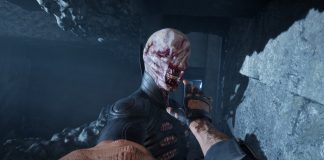
While not as graphically impressive as something like Deception or even Deadly Alliance, it still looks decent enough for the time when you consider its broader scope. It’s easy to make a fighting game look good when there are only two guys on screen, it’s harder when you have to quadruple that. Thankfully, the gore is relatively unchanged. Fatalities and weapon kills are still loaded with the same kind of ultraviolence you’d want from a Mortal Kombat game, with the added benefit of being much more frequent and varied compared to its parent series. Voice acting, for better or worse, is still hit or miss in terms of cheesiness, and the game’s soundtrack doesn’t really have much to talk about — though, to be fair, that’s been an issue with the entire series. Name one track that isn’t the main theme, and I’ll eat my hat.
A Bloody Beat ‘Em Up

Mortal Kombat: Shaolin Monks is a 3D beat ’em up, and you’d think that the sudden change in genre would divorce it from a lot of the franchise’s staples. But I was honestly surprised by how much of an effort was made to integrate Mortal Kombat‘s uniqueness into the moment-to-moment gameplay. It’s simple, sure. But I think it works well enough as a Mortal Kombat game.
Shaolin Monks allows you to play as either Liu Kang or Kung Lao, and you can go at it solo or with a friend. The two have their signature attacks from the mainline Mortal Kombat games, but they otherwise play similarly to each other. You have a handful of maneuvers at your disposal:
- A light attack that can be chained into a three-hit combo.
- A heavy attack that can be charged up for additional damage.
- A launcher attack that throws a foe up into the air.
- A grab that launches a foe far away horizontally, giving you some breathing room.
Each of these attacks can also be used in mid-air. By chaining sequential hits together, on top of defeating enemies, you gradually build up a combo tally that grants experience points, which you can subsequently use to unlock additional upgrades for your character. Kung Lao, for instance, can improve his signature skills, like making his razor-laden hat more deadly or giving some additional utility to his teleport ability.
This system is useful, sure, but I feel like it’s a bit underdeveloped. It almost reminds me of how I felt about BloodRayne 2. You can snap it over your knee if you really want to, for one thing. One area early in the game allows you to effectively farm Tarkatan warriors that infinitely spawn in, and since defeating foes successfully gives you a bit of health back, you can realistically gain enough XP to unlock all the available upgrades before you even venture into Outworld. The upgrades themselves are fairly superfluous, too. Some, like a three-hit combo that chains into a grab and an extra attack after your heavy attack, are really useful. But others, like upgrading Kung Lao’s teleport, just never really came into play. I rarely even used the thing to begin with, making it better won’t magically make me want to use it more.
Combat itself is fairly fun, at least. Enemies are somewhat aggressive, launching ranged attacks at you while you’re juggling someone around in mid-air, ganging up on you whenever you leave yourself open to attack, and quickly closing the distance whenever you launch someone away. Playing on the hardest difficulty from the get-go was the right idea here, I think. I felt consistently challenged throughout, doubly so since I only seemed to find a single health upgrade buried in a nondescript secret area.

I do think that something is lost here playing solo. Beyond just being unable to complete the game 100% due to some secrets requiring two players, there’s a certain ebb and flow to the game’s combat that admittedly feels vacant without a second person tagging along. And I don’t mean the general chaos that a second Shaolin monk can bring to the table.
Combat is less about bloody action and reaction and more about locking enemies down one by one. Launching someone into the air and spamming your light attack will be just as common as spilling buckets of blood all over the place. Keeping distant foes down on the ground with your projectile to juggle someone else is the most efficient way to systematically take foes down. As long as you’re wailing on someone in mid-air, they can’t really fight back. Mostly. Bosses and some tougher enemies have ways of breaking free from this relentless beatdown. But then it just becomes a matter of finding the exact threshold for them to retaliate and never crossing it. You’re encouraged to do this, too, because of how you gain experience points. If you go too long without hitting something, you lose that big streak of points you’ve been building up. Bear in mind too that your ability to block is also tied to the same meter that controls your special moves — the more hits you absorb, the less meter you have to work with until it regenerates. It’s often more advantageous to keep your enemies suspended in a nightmare of mid-air kicks just to keep yourself alive.
Bosses are a bit different. They maintain that aggressiveness that regular enemies possess, but with the caveat of being able to break your combos after a set amount of hits, use their own special moves, and occasionally incorporate a handful of different mechanics you won’t find elsewhere. They’re more consistently challenging because of this, and there’s much more of a sense of give-and-take here as opposed to mercilessly wailing on whatever the closest living thing is. You have to be evasive; you have to exercise some restraint. A certain fight involving Mileena, Kitana, and Jade is a notable highlight for me, as well as the prolonged battle with a certain iconic ninja towards the end of the game.
Speaking of things being iconic — Shaolin Monks managed to find a way to semi-naturally integrate not only fatalities, but even the Test Your Might minigame from its parent series into multiple different facets of the game.
The former does exactly what you’d think. Defeating enemies fills a blood meter that, when full, allows you to stun a foe and instantly kill them with a brutal, grotesque finishing move. You just have to enter the right series of buttons, otherwise your fatality will fail, and they’ll get some health back. Fatalities are also the main way you’ll dispose of just about every boss in the game. On top of this, filling up multiple meters’ worth of blood will allow you to execute “multalities” (fatalities that can kill multiple foes at once) and brutalities, which puts you into an immortal, high-powered state that makes defeating larger foes a complete cinch. You only get one of each by default, but you can discover additional maneuvers for the entire roster of characters by hunting for secrets. You’re even forced into fatality animations against bosses whenever you die against them.
Something that’s not as cool, though, is how stage fatalities are handled. Stage fatalities are just as violent as regular fatalities, and by knocking foes onto spikes, or into saw blades, or into deep pools of acid, you’ll dispose of them — without earning any XP, that is. For how often you’ll be doing this, not only for convenience, but for forming platforms on hazards and busting through walled-off environments, it’s admittedly a little weird to not be rewarded for it. It’s a step sideways, if I had to call it anything.
The Test Your Might mechanic isn’t as special, being a standard implementation of the original minigame that demands you mash on the controller until you cross a certain threshold. It’s mostly just a means to activate switches for progression or potentially break out of a nasty attack that’s heading your way. Still, it was fun to see. I will say though that it was frustrating to suddenly react to one of these minigames popping up during a boss, as hitting the wrong button will immediately fail the minigame at your expense.

Much like the original fighting games, there’s plenty to do outside of the main adventure mode. There’s a versus mode that’ll let you fight against a friend using characters you’ve unlocked through secret hunting, which is as plain as it sounds. An optional survival mode exists for those who can discover it, pitting you against nine waves of increasingly difficult foes and bosses that you’d never face together otherwise. You can even unlock Mortal Kombat II as a separate game to play if you complete a series of secret missions for Smoke, and the ability to play as both Sub-Zero and Scorpion in the main campaign after successfully completing it with either Kung Lao or Liu Kang. The main adventure is surprisingly short compared to what you might expect, so I’m glad there’s so much to discover.
Shaolin Monks even did the impossible. It somehow made fighting the big bad of the series, Shao Kahn, just as terrible as it is in the main games. The final battle itself is already really obnoxious. On top of having to defeat Shang Tsung, an already semi-difficult fight, and Kintaro, a dull fight that boils down to spamming projectiles, back-to-back, you’ll have to deal with some especially heinous nonsense all on a single health bar.
Kahn is the worst kind of a final boss in a fighting game, one who fundamentally breaks the rules and plays with such overwhelming ferocity that, instead of fighting him fairly, it’s easier to just spam whatever ranged attacks you have and hope for the best. He has an ungodly attack speed, amplified damage compared to other bosses, the ability to spam his special attacks without so much as a pause (including both a grounded and aerial shoulder charge), and, most especially, armor that makes him resilient against just about all of your attacks. It’s awful. It’s not even worth trying to fight him legitimately, since one accident during Kahn’s second phase is enough to send you all the way back to Shang Tsung. Just spam your projectiles from a distance and slowly whittle him down.
Should You Play Mortal Kombat: Shaolin Monks?

It’s hard for me to say that Mortal Kombat: Shaolin Monks doesn’t deserve at least a little bit of its long-lived favoritism. For one thing, it’s probably the only halfway decent Mortal Kombat spin-off game, especially when you put it side by side with Mortal Kombat Mythologies: Sub-Zero and Mortal Kombat: Special Forces. It’s not even a contest, really.
To that, I’d say Shaolin Monks fulfills its purpose well. It’s a game that heavily borrows from Mortal Kombat‘s lore and gameplay while transitioning it into a genre that the series had yet to explore in such a competent fashion. While you can find some traces of its DNA in, say, the Konquest mode for Mortal Kombat: Armageddon (with both games even featuring similar styles of attacks), it’s something that’s deserved a sequel or follow-up of some kind for years. Though plans for a sequel were underway sometime after the game’s release, per a post by series co-creator Ed Boon on X, the eventual bankruptcy of Midway would slash those plans into meaty ribbons.
Would I recommend Shaolin Monks to fans of the beat ’em up genre, though? I’m a bit hesitant. There’s a level of intricacy and deliberate design that goes into the best the genre has to offer (i.e. God Hand, Devil May Cry, SpikeOut) that I’m just not seeing here. As a solo experience, it’s really nowhere near the level of challenge and sophistication you can find elsewhere.
But I’d more than happily recommend Shaolin Monks to fans of Mortal Kombat, especially those who grew up during its maligned 3D era. For all their faults, these games had a legitimate charm to them through their extreme amount of additional content, their blatantly unbalanced rosters, and the over-the-top lore that kept things just serious enough to maintain your interest. I’d even say that magic kept going up until Mortal Kombat 9, albeit that game was an absolute blast to play on top of being much better in terms of balancing.
RELATED: ‘Mortal Kombat’ (1995): 10 Things You May Not Know
Minor tangent aside, I felt like a kid again playing Shaolin Monks. Part of me wishes that I never missed out on this game during it’s original release, but part of me is also thankful that I did. It gave me an opportunity to revisit that time of my life in earnest for a little while. If you’re a longtime fan of the series, chances are you might even feel something similar. Just be sure to bring a friend along.
Mortal Kombat: Shaolin Monks is available on the PlayStation 2 and the original Xbox.
We’re hardworking geeks who love to geek out, but we can’t do it without you! If you enjoyed this article and want to see more like it, please consider tipping our writers. Also, as an Amazon Associate, we earn from qualifying purchases.