







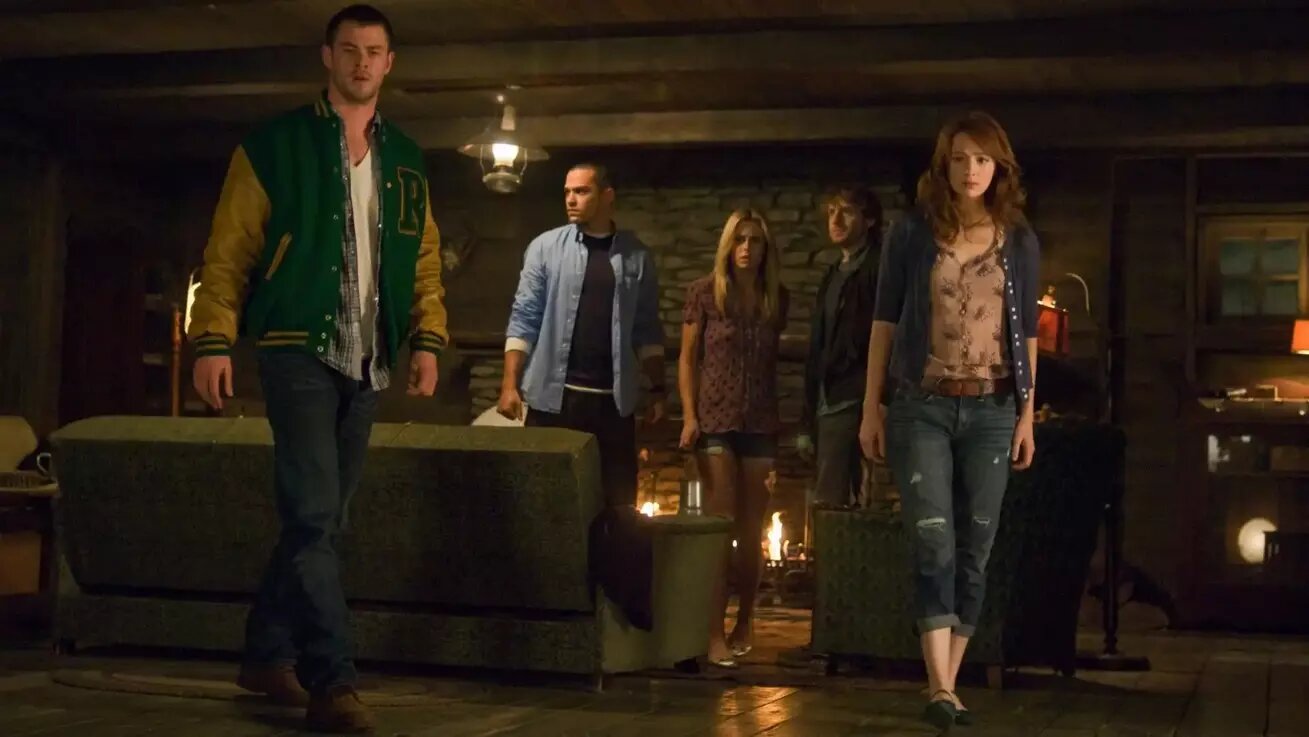
It’s not often that filmmakers can skillfully market their film to moviegoers a certain way, only to completely pull the rug out and present it in its true, unexpected, unpredicted form. An even more impressive feat is when that movie can successfully balance two genres, mashing multiple concepts together into one outrageous, screwball story that’s a study of insanity from start to finish. Wrap it all up with a love letter to movie tropes, and you’ve got 2012’s horror-comedy fan favorite, The Cabin In the Woods.
Ten years later, this film is still talked about with as much fervor as when it was first released, chiefly among horror movie fans, many of whom praise it for its originality and ingenuity. The fact that it doesn’t fit squarely in the ranks besides similarly themed classics such as The Evil Dead and Friday the 13th also endears it to many.
This is one of those films where the less you know about it going in, the better your experience will be. Whether you’ve seen it a dozen times or are merely curious if it’s worth checking out, the movie deserves a deep dive into why it works, how it was conceived, and how it continues to challenge filmmakers to step outside the box of creativity.
Directed by Drew Goddard (in his directorial debut) and produced by Joss Whedon, the duo wrote the script in just three days, locking themselves in a hotel room and only taking short breaks to eat. It’s a mind-boggling accomplishment for even the most skilled writers, especially given the plot’s complexity.
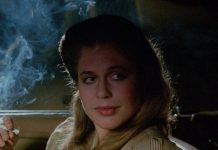
The story follows five teen friends (Chris Hemsworth, Kristen Connolly, Anna Hutchison, Jesse Williams, and Fran Kranz) as they embark on what is supposed to be a relaxing weekend away at, you guessed it, a cabin in the woods. As with the plethora of films with similar plotlines, chaos, and terror take over their idyllic vacation, and as the body count multiplies, so do the formulaic tropes. That’s where the similarities end, as everything you think you know about how these types of films work gets thrown completely out the window.
RELATED: Exclusive: ‘Hell Hole’ Directors Discuss Using Practical FX in the Gory Creature Feature
You get the sense that something isn’t quite normal during the opening moments when you meet engineers Sitterson and Hadley (played with impeccable comedic chemistry by Richard Jenkins and Bradley Whitford), who appear to be working in an underground lab. You’re probably saying to yourself, “Wait, I thought this was a horror movie,” and you’d be right. It’s just not the kind of horror movie you’re anticipating it to be.
The Cabin in the Woods takes its time unraveling the insane plot, all the while leaving breadcrumbs of information to keep you enraptured and bewildered, all the way until the final credits roll, where you’ll be asking yourself what the heck you just watched. What starts out seeming like your run-of-the-mill horror movie quickly turns into a voyeuristic game of control orchestrated by a group of engineers who are just out to save the world, albeit in a very unorthodox way.
It turns out that there are ancient beings dwelling deep in the recesses of the Earth who are angry, hungry, and demanding. Human sacrifices must be made, but not just humans: very specific types categorically describe our main characters. The Virgin, The Athlete, The Whore, The Fool, and The Scholar all embody this group of teens, making them the perfect offerings for the monsters threatening to end all of humanity.
This is where the beauty of the overall commentary of The Cabin In the Woods comes in. We’ve seen all these plot points before, and while the writing is clearly poking fun at these tropes, it also examines them in a different light and offers brilliant explanations for it all. The typical “ditzy blonde” that’s often portrayed? She’s only that way because of mind-altering narcotics that were placed in her hair dye. The adage that groups of people in horror films always split up at the worst possible time? In this story, they only do so because the engineers restructure the cabin and force them to.
From pheromone-laced mist that seeps up from the ground to increase characters’ libido to controlling temperature to keep them outside, every poor decision these five teens make is a direct result of the engineers’ coordination and infliction.
Speaking of those engineers, another part of this movie’s charm is its inept ability to bounce seamlessly back and forth between the teens and the people behind the controls, who, are just trying to stay alive and save mankind. These aren’t evil sadists who want to torture people for fun; they’re stuck in a no-win situation where not doing their job means the end of the world.
The final act is nothing short of bonkers, as all hell breaks loose, and we are treated to a multitude of creatures and monsters that are obvious homages to horror villains throughout the years. Stats on the actual final body count differ, but it’s reportedly somewhere between fifty and ninety, most of which happens in those final moments.
The ending is equally scary and hilarious, which seems like it wouldn’t fit, but it truly is a perfect blend of the writers’ recipe of insanity. There’s also that brilliant cameo by Sigourney Weaver, signifying the cherry on top of an already decadent, if not warped, cake.
Considering all this, it’s easy to see why The Cabin in the Woods has endured in the hearts of scary movie lovers and film buffs alike. Horror-comedy is difficult enough to get right, but combining that subgenre with a completely off-the-wall, wacky storyline is not something often seen in cinema. Critics largely agreed, and it received overall positive reviews, being praised for its unique take on common cinematic situations.
It’s a melting pot of genres, stereotypes, thrills, and laughs and somehow manages to make perfect sense in its own demented world. It’s a movie with considerable rewatchability, where subsequent viewings will have you discovering tidbits you may have missed during the madness the first time around. Give it another watch and see how much more you pick up on. Just don’t anger the Ancients.





We accidentally turned on the adaptive description narration for the blind for the ending sequence. Never in my life have I laughed so hard as hearing the dispassionate narrator say things like, “The evil clown and little girl attack the scientists”. It deserved an award!!!
Love “Cabin,” love your article. I’m always proselytizing for this movie, so I’m glad to see anniversary pieces rolling in. The only people who I know would love it but haven’t convinced yet are those with a low gore tolerance.
P.S. “Concept” isn’t a verb; so “conceived,” not “concepted.”