













“Listen, Operator. Can I say one last thing? Thank you.”
Peripherals and gimmicks are always a risky proposition for video games.
Sometimes they pay off immensely. Take the breakout success of the Nintendo Wii, for instance. With its approachable control scheme comprised of just swinging around what felt like a television remote, it would eventually amass a total of over 100 million consoles sold by the end of its lifetime. Conversely, the Microsoft Kinect aimed to capture a similar audience that fell in love with the Wii, only to ultimately crash and burn despite its strong initial sales. Not only that, but it also seemingly contributed to Microsoft’s near-total disconnect from the console market nowadays after the now-infamous debut of the Xbox One. What I’m saying, ultimately, is that deviating from a traditional controller that most have been acclimated to for decades tends to produce some incredibly varied results.
So, what happens when you try to combine voice controls with a survival horror game? More specifically, a survival horror game on the PlayStation 2? You get Lifeline.
Developed by Sony Computer Entertainment Japan, and published by Konami in the United States, Lifeline is easily one of the most infamous titles on the PlayStation 2. And it’s almost solely because of its voice-driven control scheme. Since its release, it’s been dubbed by publications like Game Informer as one of the worst horror games ever made, whereas contemporary opinions from content creators and casual players alike seem to bounce all over the place.
But does it really deserve such a negative reputation because of its unconventional controls? Is Lifeline one of those horror games that just came out at the wrong time? Or does this voice-controlled survival horror adventure really deserve to be left behind? I took the time to find out, and I’ll say this much; there were certainly plenty of peaks, and plenty of deep, dark valleys.
Become the Operator
It’s the near future of 2029 as the Japan Space Line has sent out its luxurious Space Station Hotel into the stars. It’s a full-on hub for the movers and shakers of Japan, where extravagant suits and cocktail dresses make up the average wardrobe of every occupant. It just so happens to be Christmas, too. With festivities currently ongoing, you’re quickly introduced to the main players of the story: Rio Hohenheim (Kristen Miller), a waitress; Naomi, a guest on board the hotel; and you, the nameless, faceless boyfriend of Naomi who’s just here to have a good time.
Then everything hits the fan. A swarm of strange, monstrous creatures ravage the hotel, decimating just about everything and leaving you rendered unconscious. You awaken an indeterminate amount of time later in a room that’s unfamiliar to you, battered, bruised, and surrounded by sterile machinery. Ahead of you, a single monitor displays an image of a familiar woman.
It’s Rio. Having been secluded in a holding cell sometime after the attack, Rio is made aware of your presence, henceforth dubbing you as her dedicated “Operator” after you free her from the cell. With you serving as Rio’s eyes and ears, it’s up to the two of you to investigate the bloody aftermath of what happened, unveil what’s really going on in all the chaos, and hopefully reconnect with Naomi before she meets a grisly fate.
It’s fairly standard survival horror fare. Things do get a bit more interesting towards the end when it dumps ample amounts of cheese all over its plot development, but a handful of twists can be figured out early on, and its overall scope is pretty small. Thankfully, it’s not as if there’s nothing to enjoy here.
The biggest thing that Lifeline brings to the table, and what I feel really makes it a unique game, has to be its approach to its moment-to-moment gameplay. You’re not Rio — but you’re not some nobody, either. You’re you, the Operator in the control room, and it’s through your voice that Rio moves, solves puzzles, fights enemies, and ultimately progresses the story. It’s a surprisingly intimate way to forge a connection with the protagonist, doubly so when you consider the occasional moments where you have time to just stop and chat. Rio does have a personality, and the many, many times you can pull her aside and get her opinions via consultations gives her more depth than your typical protagonist in the genre. It was more effective than I ever could’ve anticipated, honestly.
The same goes for how much interactivity there is in the world around you. Every room you explore comes with its own specific areas marked on an accompanying map, with Rio being able to interact with or at least comment on just about anything within arm’s reach. If you find a bottle of champagne, you can get Rio to examine it for the year it was bottled, you can try to get Rio to drink it, and if you’re feeling psychotic, you can even try to get Rio to shoot it. In fact, getting Rio to whip out her gun and unload on whatever inanimate object is in front of her is actually used in a handful of different puzzle solutions. In an IGN review from 2004, Douglass C. Perry confirmed that the game can roughly recognize around 500 words total, which gives you quite a few actions to work with.
By collecting cards found throughout the hotel, you can even unlock additional actions that Rio can perform based on the context she finds herself in. Want her to strike a pose on command? There’s a card for that. Want to be able to zoom in on whatever is in the center of the camera currently? There’s a card for that. This even extends to maneuvers you can perform during combat, but we’ll get to that later. You can even unlock some additional minigames to try out if you’re diligent enough to find everything.
Searching all over the place is absolutely worth doing. Aside from some extra worldbuilding tidbits, you’re bound to find healing items, explosive shells, or other useful things that’ll make the journey a bit easier. Not that you’ll really need all of them, though.
RELATED: ‘the white chamber’ 20 Years Later: A Hand-Drawn Horror Adventure
Playing Lifeline
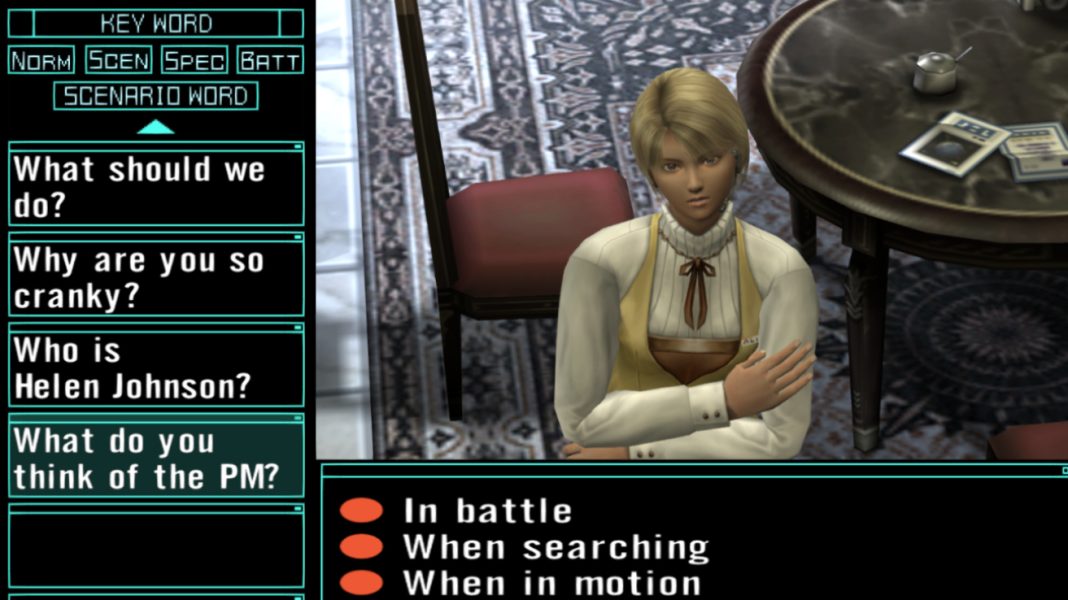
Lifeline is a survival horror game at its core, albeit one with a greater focus on its adventure elements and puzzle solving than straight combat. For one thing, Rio has infinite ammo, with the only resources you have to actively manage being her health and explosives towards the end of the game. But healing items are absurdly plentiful if you’re actively looking around every nook and cranny, and explosives are only necessary for a handful of situations.
Rio is almost solely controlled via your voice. Simply hold down the appropriate button and speak a handful of recognized phrases to get Rio to do. . . well, anything. Need her to closely examine a note? Simply say “check note”. Need her to take a key card in case you need it later? Just say “take key card”. Even navigation is fairly simple. Moving around rooms just involves saying the specific section you want to go to. You can even get Rio to hurry along by saying “run” or “hurry” as she casually walks to her destination.
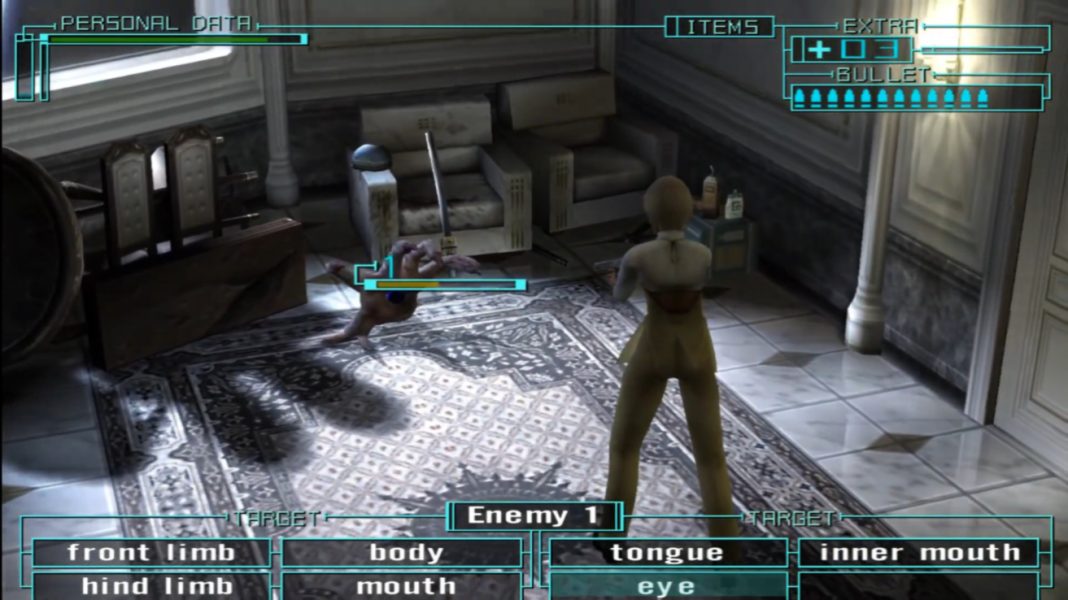
Enemy encounters start out simple but eventually fall into a pattern of highlighting individual weaknesses and systematically taking them out one by one, with the challenge primarily stemming from your ability to guide Rio against the sheer number of enemies thrown at you simultaneously. It’s never beyond the point of being too much to handle — the most you’ll have to ever fight at once caps at around three or four — but you’ll definitely feel the limits of the game’s voice controls with every successive enemy you have to tackle.
Combat itself just boils down to making space between your foes with “flee” or “move right” or “move left” and simply saying what body part you want Rio to shoot. You can even stack multiple commands at once and see them play out in quick succession, though the usefulness of this does vary pretty significantly. Be sure to clarify that you want to hit “Enemy 1” or “Enemy 2”, depending on how many of them are in a specific battle. And make sure Rio can actually see them.
It’s a really unconventional and interesting way to make combat work. In fact, it even makes the game’s numerous fixed camera angles feel all the more appropriate and natural, with Rio often turning to face you directly whenever you and her need an exchange of words. You really do get the sense that you’re guiding some seemingly ordinary person through an impossible scenario most wouldn’t be able to handle. You know, in the best and worst ways possible.
Lifeline is one of the single most exasperating games I think I’ve ever played. Not rage-inducing, mind you, nor downright frustrating. But my God, did Lifeline just leave me feeling absolutely drained and tired at points. And it’s all because of the voice controls.
When they work, they’re fine, if not a little simplistic. You’ll have to simplify your diction a bit and overly enunciate every syllable to get your intended message across most times. But otherwise, your most-used commands will typically be recognized around 80% of the time.
But when they don’t work? It’s like trying to get a dog to play poker. Having Rio confuse “Gustav’s Room” with “leave the room” or “I’m already stopped” 20 times in a row was already annoying enough. But having her outright refuse to follow commands like “turn around” in the middle of a tense battle was outright obnoxious. It’s not like the game itself is even that difficult — outside of an initial encounter with a brand-new enemy or the occasional boss, you’ll rarely find yourself dying due to a lack of your own skill. Rather, you’ll find yourself practically shouting the right things to do at Rio as she either mindlessly stands around or, miraculously, does the exact opposite of what you want. When did “forward” ever mean “move back”?
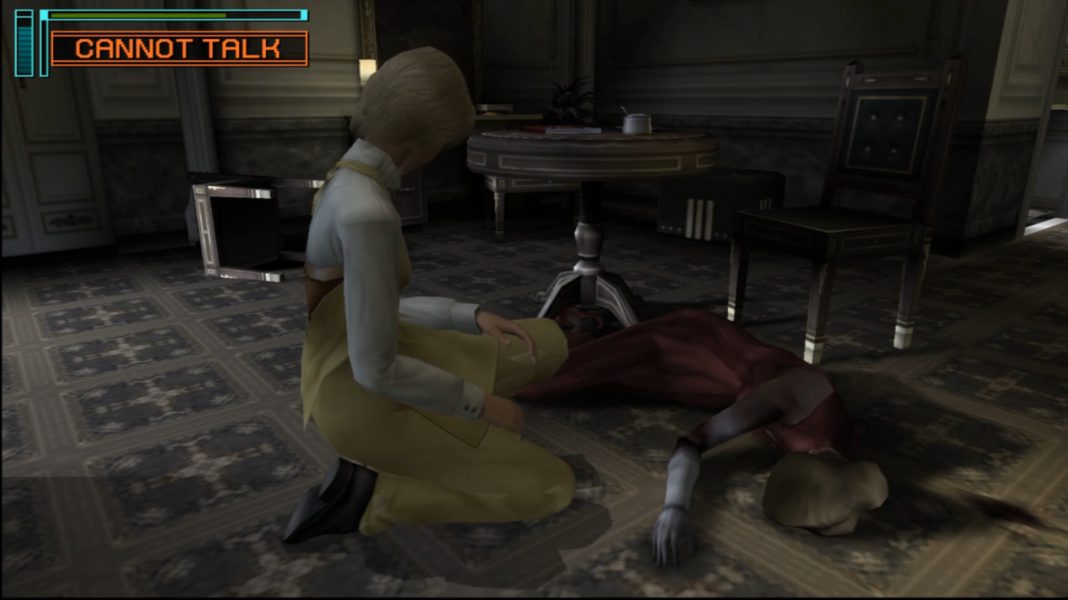
Lifeline doesn’t throw that much at you in terms of variety, either. The first half of the game, prior to you gaining a new outfit and a powerful assault rifle, largely consists of you exploring isolated guest rooms, scanning each and every corner for a key to open a gate, and repeating said process a handful of times until you come across a new impasse to deal with. Some cutscenes mute you until they finish, but others occasionally demand that you pipe in with the exact and correct thing to do. Otherwise, you’ll be faced with a premature game over. Sometimes they’re obvious — telling Rio to “run” when faced with a foe that’s impervious to bullets only comes naturally. Other situations, though, aren’t as intuitive.
I’d even argue that there was a small amount of padding. After you’re forced to flee from a giant spider monster, you find yourself in an infirmary where Rio manufactures a weapon to kill it. It’s weak to fire, but before you can belt out “Molotov cocktail” at the top of your lungs, you’re tasked with inexplicably naming things that you would find in an infirmary to get Rio on the right train of thought. In another section, to clear up some debris blocking the path forward, you’ll even have to grind a few different enemy spawns for explosive shells. I won’t spoil the more interesting sections for you here, but you’ll definitely have to crawl through some underwhelming stuff to get to them.
The game at the very least looks and sounds passable. Rio’s voice does have some occasional emotional weight, and the game’s creature design does feel inspired every now and then. Instead of grotesque, ravenous zombies or generic aliens, you get an assortment of weird slugs and worms, plant-based monstrosities, and the occasional amalgamation of colorful flesh and eyeballs. The music is pretty good too, with Shingo Okumura (Omega Boost, Gran Turismo 2) primarily composing the game’s soundtrack. Special mention should go to the supporting cast’s voice acting as well — though they have nowhere near the emotional depth as Rio, their hamminess does make the bizarre plot developments all the more entertaining.
RELATED: Revisiting ‘Area 51’: David Duchovny Takes on the Illuminati
Should You Play Lifeline?
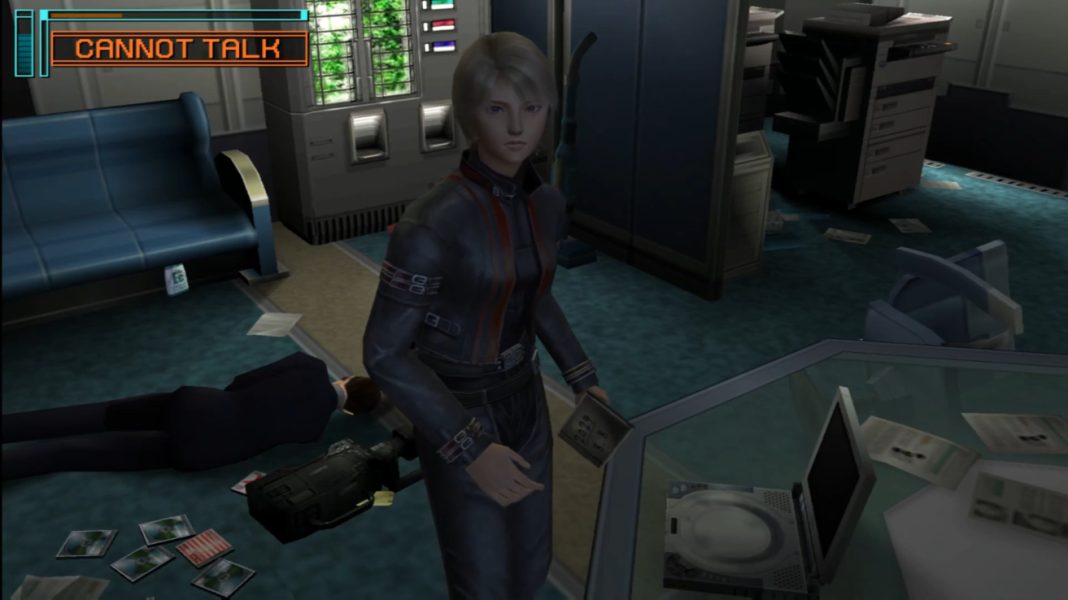
Ultimately, no. Lifeline is a fascinating novelty, and its twist on the use of fixed camera angles coupled with unique voice controls is surely something to appreciate. That said, it’s still a novelty.
Things are just way too inconsistent for Lifeline to be a good time. With the mediocre precision in recognizing your commands, the lack of direct control eventually becomes a hindrance more than a unique asset. Its repetition and surprisingly limited scope do ultimately bring the game down a few pegs as well when compared to its contemporaries, be they frightening survival horror titles or sprawling adventure games.
Can I say that I’ve played anything like Lifeline though? Or that I’ll ever really forget playing Lifeline? I can’t say so.
I’m glad Lifeline exists, despite my frustrations. It feels like a product that only really could’ve existed in one era, before a kind of dull, jaded cynicism and recognition of the status quo started to take hold when it came to reinventing the controller. Something like Lifeline nowadays would most assuredly remain in the realm of the indie niche, a title loved by the few that can appreciate its means rather than the ends it attempts to reach with them.
In the same way that Zero Tolerance was limited by its hardware, however, Lifeline does ultimately feel limited by the quality of voice recognition technology from the early 2000s. This is amplified even more by just how primitive an original PlayStation 2 headset is compared to audio tech we have nowadays. It just doesn’t make its gimmick feel consistently fun to use.
Does that justify playing through it yourself? No. Watch someone else do it. You can experience the frustration and comparatively tender moments vicariously, instead of bumping your blood pressure up a few notches.
Lifeline is available exclusively on the PlayStation 2. As of writing, no digital rerelease is currently available.
We’re hardworking geeks that love to geek out, but we can’t do it without you! If you enjoyed this article and want to see more like it, please consider tipping our writers. Also, as an Amazon Associate, we earn from qualifying purchases.