










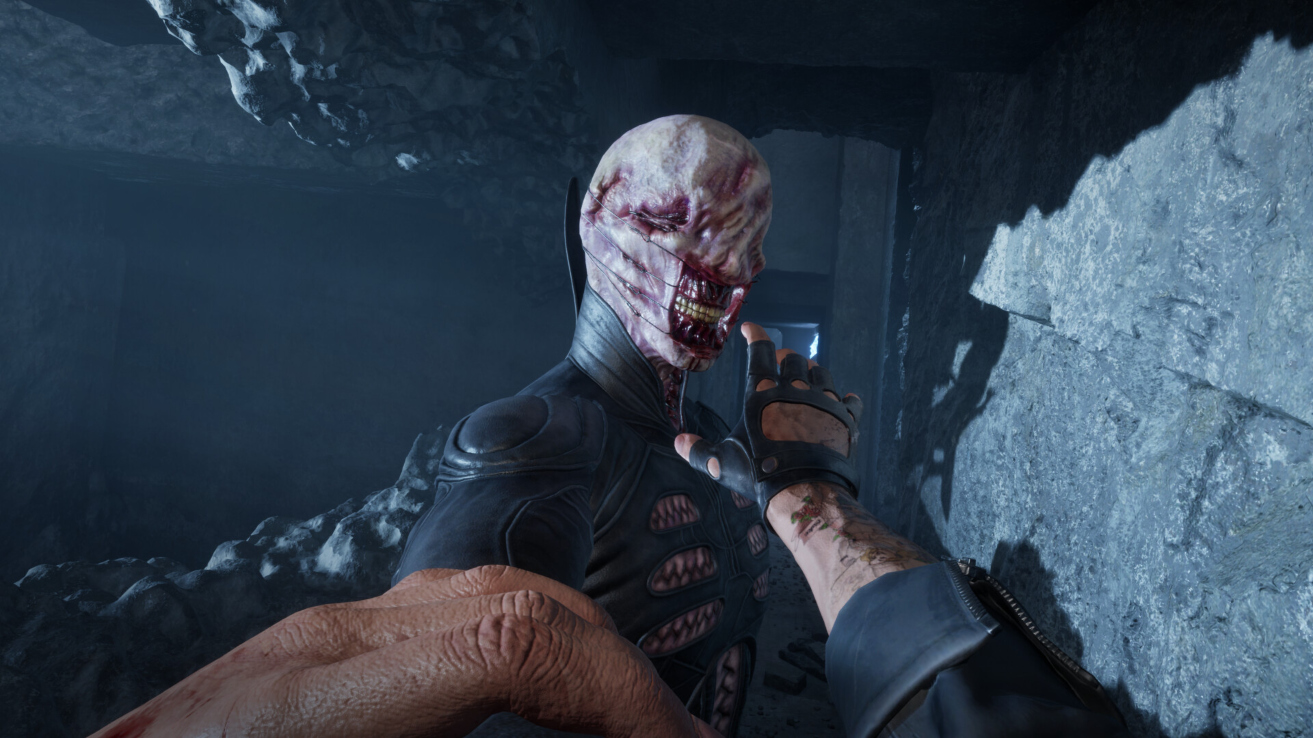
I think it’s safe to say that Clive Barker’s Hellraiser isn’t the most consistent of horror franchises. Incredible first movie, pretty alright second movie, some decent appearances in comics, and then everything kind of goes south from there. I’d even say the same for Clive Barker’s contributions to gaming. Clive Barker’s Undying had some rough patches, but it was engaging and genuinely challenging. Clive Barker’s Jericho was fascinating on a conceptual level but eventually devolved into just running down corridors and shooting the same few enemies in different gore-soaked settings. And there’s also Nightbreed: The Interactive Movie, which. . . exists. But I was stunned by how impressive Clive Barker’s Hellraiser: Revival was.
Developed by Saber Interactive (formerly Mad Head Games), Hellraiser: Revival is a shockingly competent survival horror game that indulges in absolute depravity and unabashed fan service. As a Hellraiser property? I’d say it’s one of the best outings the franchise has seen yet. But don’t just take it from me at face value. There’s a lot I have to say about Hellraiser: Revival. Most of it is good. Some of it not so much.
An Original Story in the Hellraiser Universe
Instead of basing itself on the existing films, Hellraiser: Revival tells an original story while heavily incorporating narrative and visual elements from both Hellraiser and Hellbound: Hellraiser II. You are Aidan Lynch — a member of a biker gang with a propensity for pleasure in the form of hard drugs and extreme sex. During a particularly intimate night with his girlfriend, Sunny, a mysterious puzzle box is presented to him mid-coitus. If you’ve seen Hellraiser, you know where this is going. The box is known as the Genesis Configuration, and shortly after it tastes Sunny’s blood, a mysterious bunch of leather-bound creatures cross dimensions to greet the duo.
They are the Cenobites: beings from another dimension whose pursuit of pleasure is so eternal, suffering and ecstasy are one and the same. They’re grisly, twisted, wrapped in black leather and exposed muscle fibers. They’re angels to some, demons to others. But more importantly, they’re led by a towering figure known colloquially as Pinhead (lovingly played by a returning Doug Bradley). Sunny, seemingly in a trance, is offered an opportunity to travel to their dimension. She agrees. Then she’s ripped apart by chains.
Aidan, in a mix of shock and confusion, finds himself slipping unconscious. He reawakens, not to a calm morning after a horrifying nightmare, but to a fresh Hell of his own. He’s now a prisoner of the Scarlet Church, a mysterious cult devoted to the Cenobites and their grisly search for gratification. They know he activated the Genesis Configuration. And they want to know how.
Endless questions, and only so many have answers. Aidan has to escape his captivity. But what then? What happened to Sunny? Who are these Cenobites, and what do they want? And how does the Scarlet Church tie into all this? He’ll have to figure these things out as bodies pile up in his wake, all while mysterious creatures torment him both on Earth and in the barren Labyrinth the Cenobites call home.
A Shocking Amount of Effort
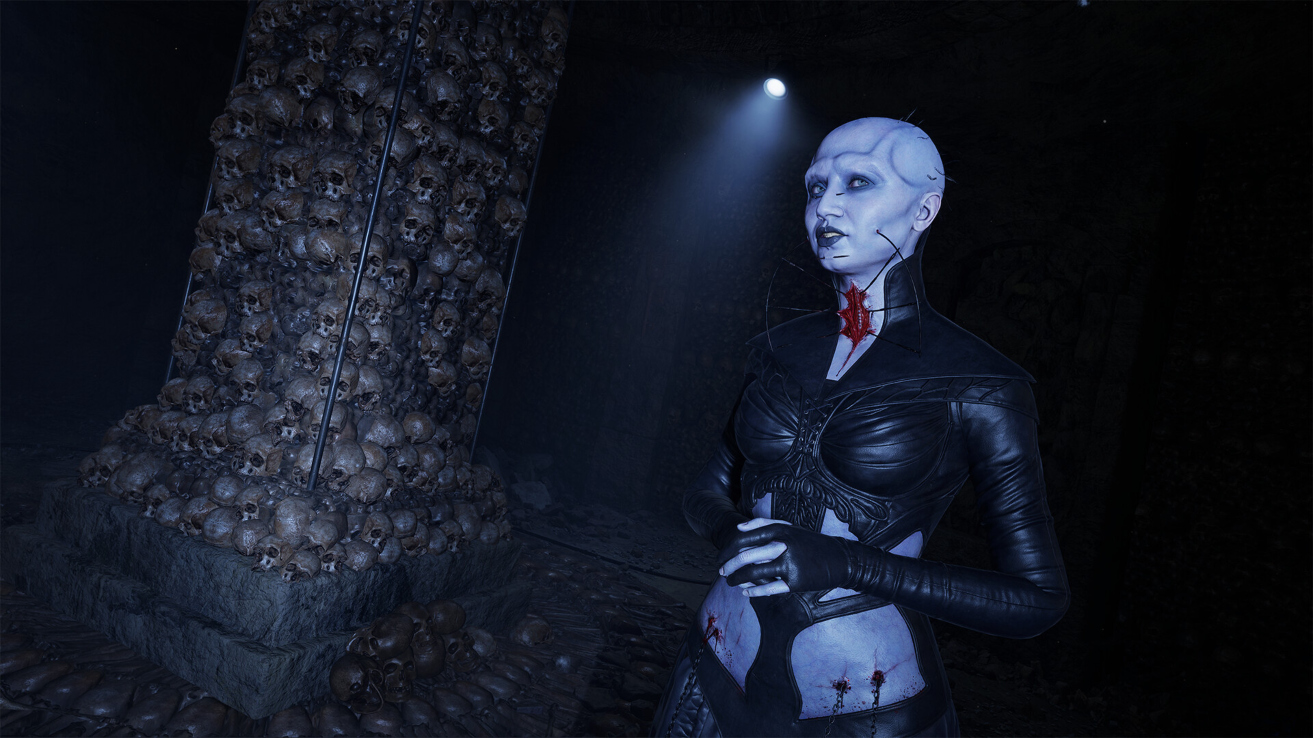
Of all the directions Hellraiser: Revival could’ve gone in, I’d say this was a pretty good one. It’s admittedly difficult to place the Hellraiser property into a traditional horror game without some major shakeups. What would you even do? Run from Pinhead forever? So the introduction of a cult with both human and monstrous foes to fight feels natural without being too forced. They tie into the whole “pleasure and pain” angle the Cenobites are known for, with the endless amounts of fetish gear and glistening gore they’re layered in.
That’s the other thing about Hellraiser: Revival. They really do not skimp on fetishism here. The first major area of the game is a torture facility underneath a full-on BDSM club. Nothing is left to modesty. For instance, a puzzle you have to solve involves “assisting” a lady in full latex gear in exchange for a VIP key. This was touched on in the first two films, sure. But you could argue that the change in medium here allows the game to really explore the darker sides of BDSM culture among other grim pleasures.
There’s even some decent worldbuilding here and there. Side stories of people associated with the Scarlet Church can be found in abundance if you look hard enough. Aidan and Sunny start as blank slates, but their grey backstories are slowly unraveled as the main story plays out. If you’re especially observant, you can find some fun ties to the original films. But I won’t spoil anything major here. It’s worth noting that Clive Barker didn’t technically pen the game’s story like he did with Clive Barker’s Undying. But he did serve as a consultant. And you can find plenty of this prominent horror writer’s DNA throughout every major story beat.
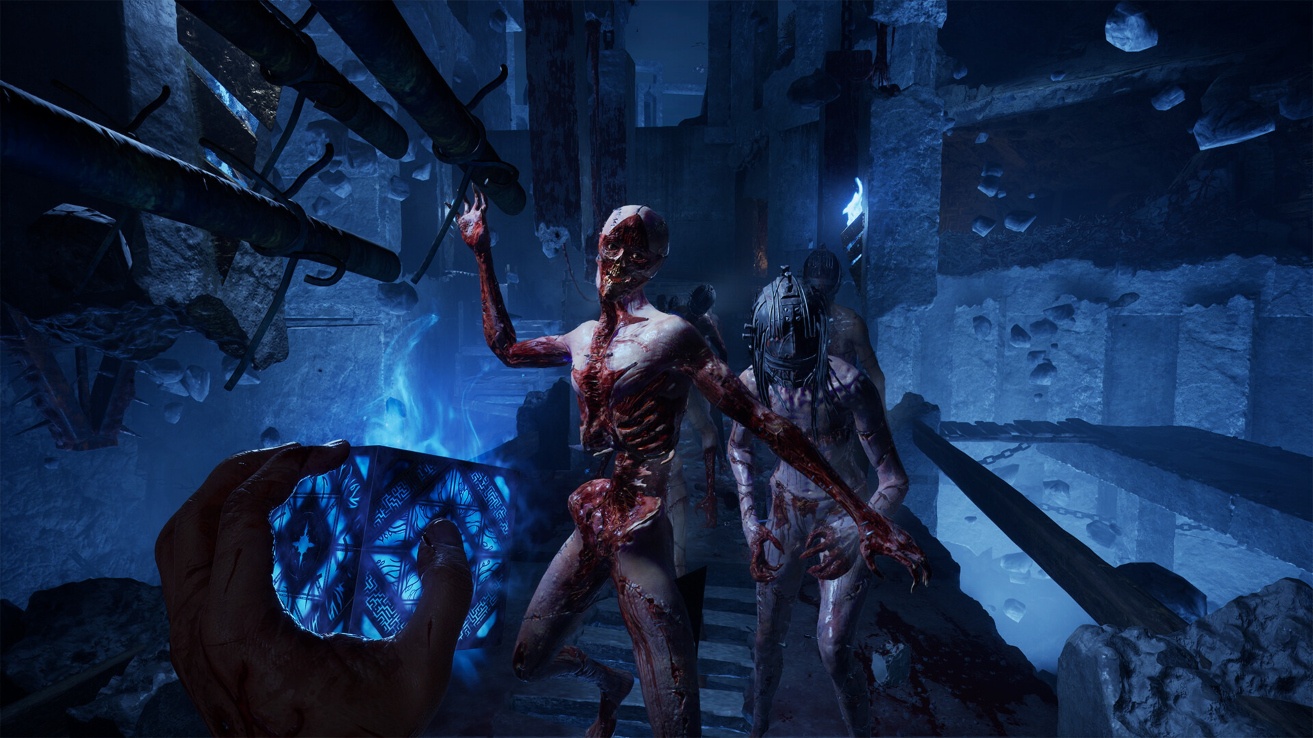
And I can’t go without mentioning how the game looks. It may not be a visual powerhouse, but I was agape at how often it perfectly matched the style of the Hellraiser films. The Labyrinth is the clear highlight here. Endless winding pathways set against an all-encompassing void, strange structures and dangling chains looming in the distance, a general sense of awe and unease, it all feels perfect. I was reminded of the extensive attention to detail you’d find in RoboCop: Rogue City, where you can clearly tell the developers did their homework. The regular locales on Earth are fine enough in comparison. Though, the creative use of gore to form grisly structures and other general nastiness definitely steals the spotlight.
This is all fine and good. But Hellraiser: Revival originally caught my eye because it was billed as a “survival” horror game. You know, resource management, fighting enemies, all that. How does that stack up compared to other horror games?
Raising Hell in Hellraiser: Revival
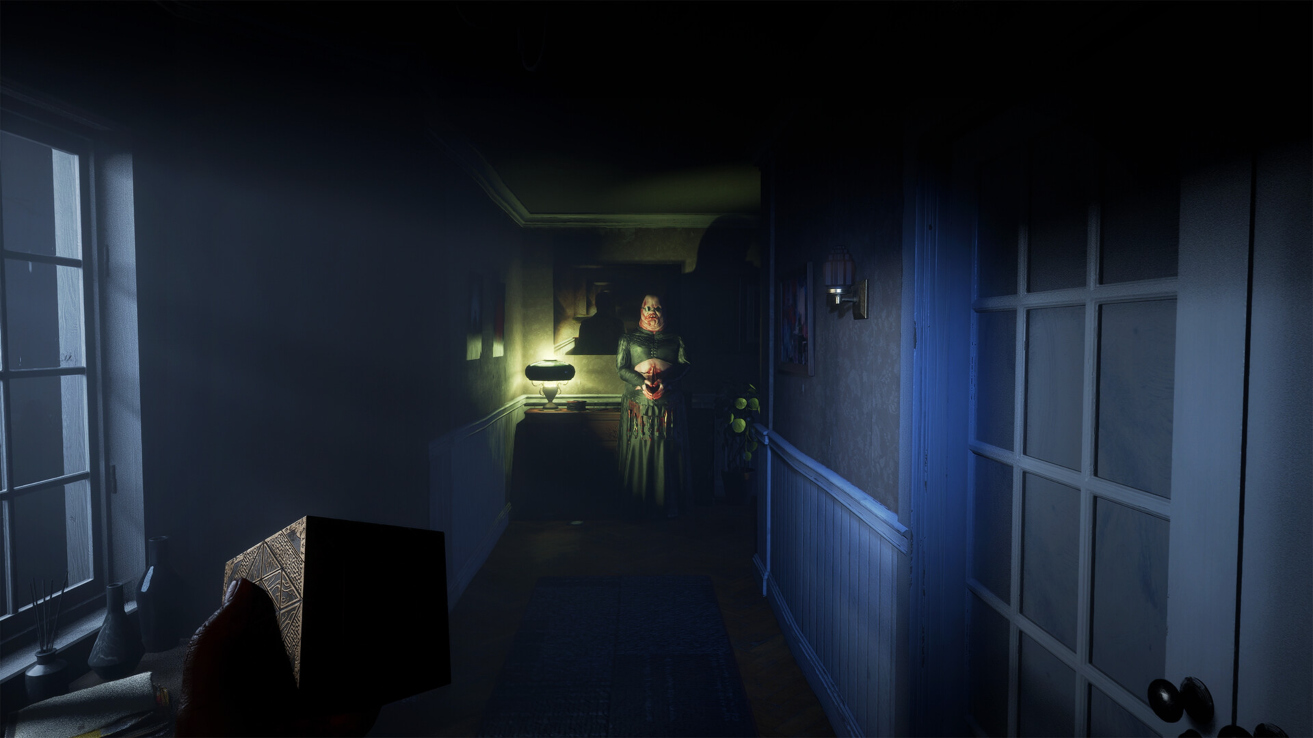
Hellraiser: Revival is split into two semi-equal halves in terms of its gameplay. Anytime you’re on Earth, you’re scavenging for supplies, battling the Scarlet Church, and solving puzzles. Anytime you’re whisked away by the Cenobites, you’re running for your life, manipulating the environment with the Genesis Configuration, and slowly unraveling the story. The two aren’t cleanly separated from each other — Aidan’s involvement with the Cenobites means you’ll often be whisked from one reality to another on a moment’s notice, until the two eventually bleed together in an unholy matrimony.
The segments on Earth play out like a traditional survival horror game. Four weapon slots — one being devoted to melee weapons — and a limited inventory space mean you’ll have to pick and choose what to lug around between battles. Weapons and ammo need to be accounted for on top of any coins and treasures you find in then environment. That’s right, there’s also an in-game economy to manage. You can trade coins and treasures for limited stocks of healing items, ammunition, weapons, and weapon upgrades at a dedicated vendor where available.
RELATED: Gone Feral Is a Procedural Slasher That Lets You Do the Slashing
Unlike Resident Evil, which Hellraiser: Revival does borrow from quite a bit, melee combat and environmental traps play a significant role in how you approach your foes, especially on higher difficulties.
Take melee weapons, for instance. You start out with a paltry dagger that’s really only useful for stealth kills and minuscule damage. However, you can find both blunt and sharp weapons that each have their own specific purposes. Blunt weapons bust open armor, which is necessary for quick and efficient kills. Conversely, sharp weapons deal massive damage to exposed limbs and flesh. All melee weapons have durability, however. You can only swing each one so many times before it breaks apart in your hands. You can repair them with dedicated repair kits, but you’ll still have to consider how to use them and when. The difference in killing an armored enemy with nothing but your guns versus one or two strikes with a blunt weapon first is shockingly significant.
The same can be said for using your environment. While this doesn’t come into play that quickly, you’ll find that bear traps, explosive barrels, spinning blades, and electrical boxes are far more efficient ways of dealing with hordes of enemies. Sometimes you’ll be able to use certain weapons in an unconventional way, like using loose boards to block points of entry, or placing gas cans down at specific choke points. You’re rarely ever trapped into a narrow hallway. So, it’ll always be in your best interest to scope things out and see how you can save your precious ammunition. This can easily be done with the Genesis Configuration, too.
The Box of Chains and Fire and Telekinesis
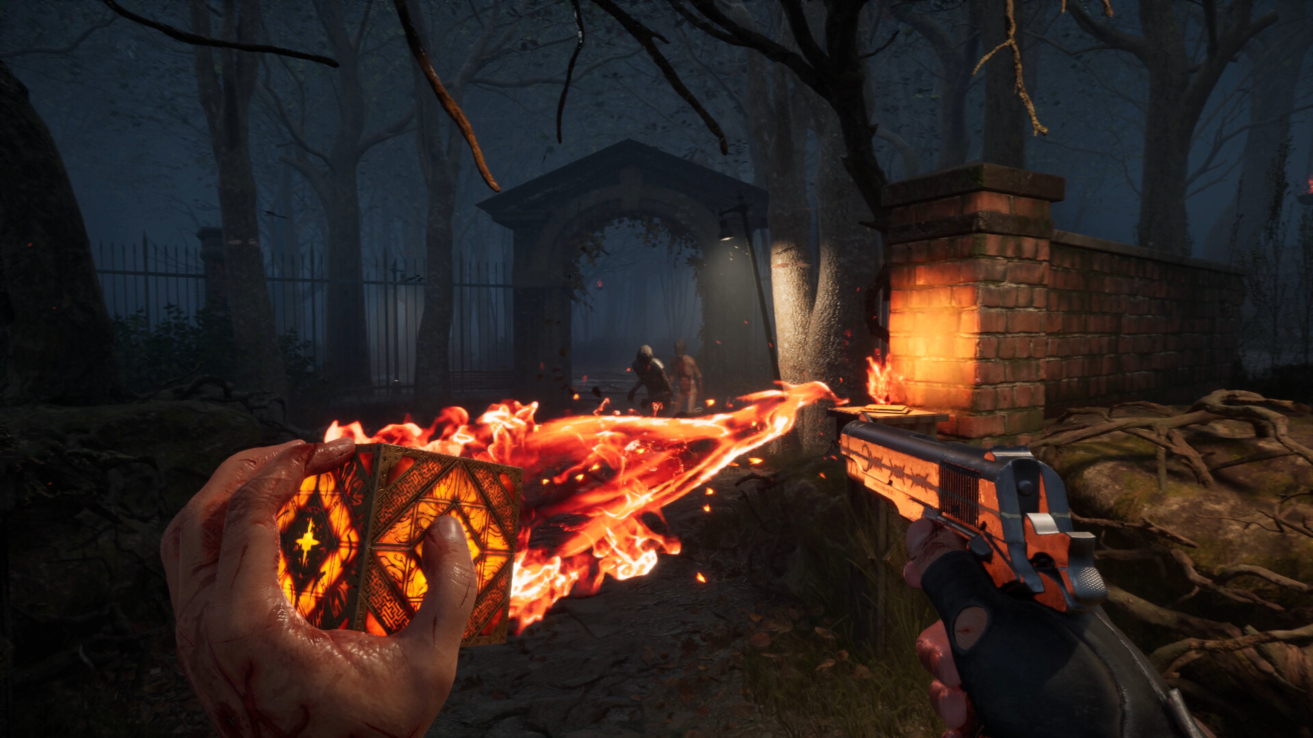
The Genesis Configuration is a crucial part of Hellraiser: Revival. And this goes beyond its MacGuffin status in the plot. It solves puzzles. It can refill your health, and it can even be used to turn the tide of a particularly dangerous fight through its supernatural powers. As long as you have enough Suffering in your Suffering meter, you can use its powers.
Telekinesis is the first one you’ll get, and you’ll rely on it for most of the game afterward. It does exactly what you’d think. See a piece of rebar or a loose saw blade hanging around? Rip it out, and fling it at your foes. See industrial spikes sticking out of a monstrous creature? Pluck them out, and watch them collapse. It deals decent enough damage with some additional piercing properties, meaning you can either weaken or outright kill groups of weaker foes with as little as two button presses.
You also gain pyromancy shortly after, allowing you to manipulate fire to set groups of enemies ablaze. Fire in general is extremely powerful in Hellraiser: Revival, dealing a little less damage than telekinesis but making up for it with a lengthy stun period as enemies writhe around while ablaze. It’s a great way to give yourself some breathing room.
You’ll also gain the iconic Hellraiser chains towards the end of the game. You’ll need a full Suffering meter to use them, but when you do, you’ll rip crowds of smaller enemies into pieces and hold larger foes in place. Suffering can be regained through defeating enemies or using a special finishing move to banish the Unworthy, which also gives you a bit of health back.
The box is also used for some puzzles. These are pretty few and far between. Sometimes you’ll push blocks around, sometimes you’ll shuffle the box around to make a key. But they get some fun twists every now and then whenever you’re in the Labyrinth. Sometimes you’ll have to manipulate blocks while in a tense chase sequence, or even to locate elusive health and Suffering upgrades.
Such Delicious Suffering in Hellraiser: Revival
Speaking of suffering, Hellraiser: Revival isn’t perfect. Not that I would expect to be. But it’s still worth bringing up some of its specific shortcomings.
For one thing, Hellraiser: Revival is buggy. Specific level assets would occasionally pop in and out of sight just a second or two longer than they should’ve. Some items in drawers got stuck in place when they were opened. One enemy towards the end of the game entered a permanent state of being docile, but also immune to attacks. There were also moments where the game would temporarily hang as level chunks loaded in, though I can happily say that it never actually crashed on me. A section in the Labyrinth involving a dangerous spotlight seemed to have some broken detection as well. I’d be seen even if I was behind a specific wall near a Suffering upgrade.
Something that isn’t tied to the game’s performance is the inclusion of a special Hellraiser difficulty. It not only makes the game even more difficult with additional enemies and limited resources, but it also incorporates limited saving through the use of dedicated tokens. If you want to save your game, you need a token. Don’t have a token? Tough luck. It’s a neat idea. But these kinds of systems are only ever at their best when the game is designed around them completely.
A chase sequence I managed to die at required a full seven minutes of running back, solving the same puzzles I’ve already solved, gathering the same upgrades I already solved, and watching the same handful of unskippable cinematics again before I could take another crack at it. That’s with the most recent save point, too. The Labyrinth portions of the game are especially egregious with forced story moments that you can’t really zoom past if you just want the real meat of the game, which makes the prospect of redoing potentially 30 minutes or even an hour’s worth of progress again feel less enticing.
It reminded me of the infamous intro in Wolfenstein II: The New Colossus that lasts upwards of 15 minutes by itself, and without resorting to external tampering, you’ll have to watch it every single time you attempt the die-once-your-save-is-lost Mein Leben difficulty. Why have this if you’re not making the game around it?
Then there are just some general oddities here and there:
- Why do I have to force a weapon onto a hotkey in my inventory before I can equip it?
- Why can’t I manually spin weapons around to sort them in my inventory?
- Why do I have to manually unequip other melee weapons just to use my backup dagger?
- Why reuse the same miniboss enemy over and over without really changing the arena you fight him in to keep things fresh?
These are minor nitpicks in the grand scheme of things. But they still stuck out to me as being a little annoying.
RELATED: Galerians Was a PlayStation Horror Game That Dropped the Ball
Should You Play Clive Barker’s Hellraiser: Revival?
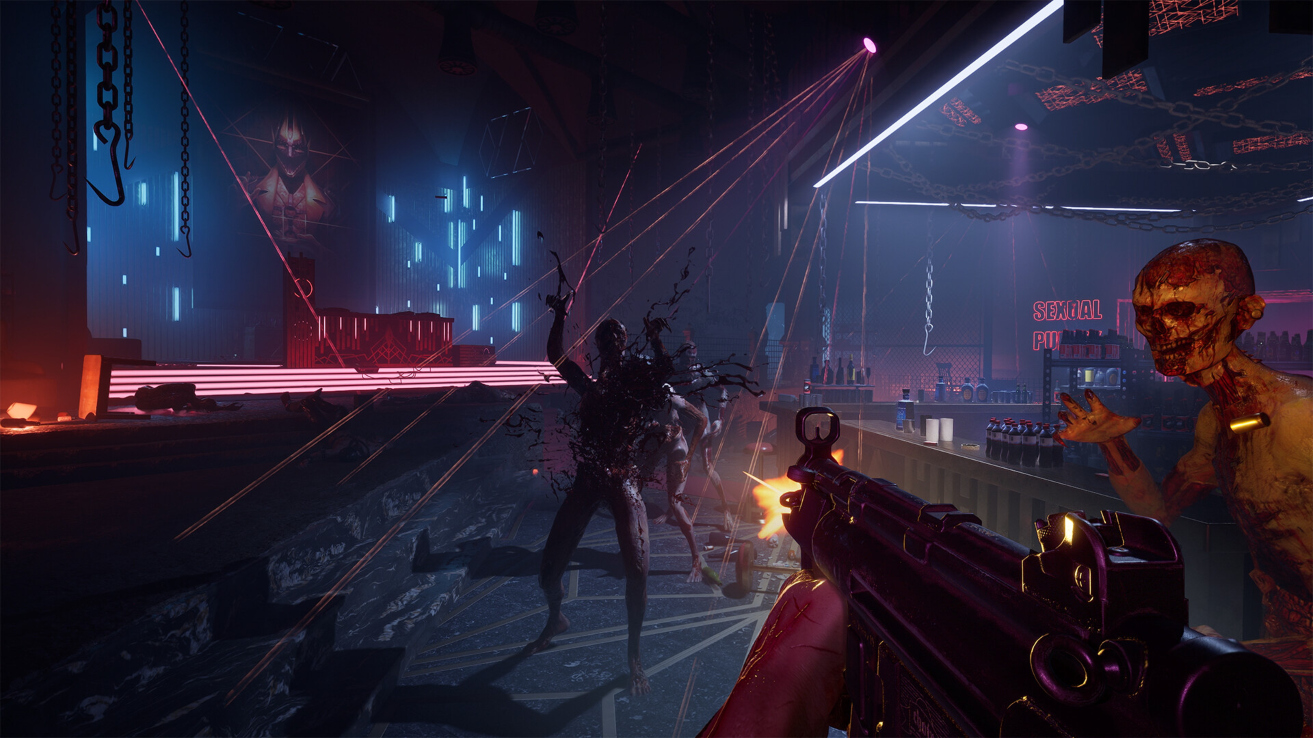
I’ll be blunt. Clive Barker’s Hellraiser: Revival isn’t a gangbuster. It’s rough around the edges. It’s incredibly simplistic. Hell, if you simplify the graphics a bit, you could’ve convinced me that it was ripped straight out the Xbox 360 era with how much it bites from games of that period. But is that a bad thing? Absolutely not. In fact, it’s refreshing.
Hellraiser: Revival could’ve very easily turned into yet another asymmetrical horror game, or one that delivers run-and-hide gameplay with shocking imagery, like Outlast. But it didn’t. Instead, there was an effort to do something competent with survival horror that feels like an evolution from the previous games Clive Barker attached his name to. It’s easily one of the best entries in the entire Hellraiser franchise. I’d even say it’s one of the better horror games to release this year, if we’re considering the whole package. At only $40, too? With a demo? That’s just wonderful.
Clive Barker’s Hellraiser: Revival is available on Steam, Xbox Series X|S, PlayStation 5, and Nintendo Switch 2.
Support independent genre journalism. Horror Geek Life is powered by passionate writers, editors, and fans. If you enjoyed this article, you can help us keep the lights on by buying us a coffee.
As an Amazon Associate, Horror Geek Life earns from qualifying purchases. Some links may be paid affiliate links, which means we may earn a small commission at no extra cost to you.