














When was the last time a game genuinely disappointed you? For me, it was Condemned 2: Bloodshot. And how could I not be disappointed? A somewhat grounded horror series was turned into a mess of ancient cults, zombified bears, half-naked jester women and exploding dolls with an equally bizarre focus on multiplayer. It was frustrating.
It was even more frustrating since it had a few shining moments strewn throughout. And though I did eventually simmer down from that underwhelming high, I thought that that’d be it. That I wouldn’t ever feel that intense form of longing and regret ever again. Unfortunately, I came close with Galerians.
Developed by Polygon Magic and published in the United States by Crave Entertainment in 2000, Galerians is a gargantuan survival-horror game spread across three discs on the Sony PlayStation. It’s a game that sets one Hell of a first impression. It’s full of fascinating twists and turns on established survival horror conventions.
It promises a cheesy but interesting tale of experimentation and revenge through the perspective of a psychoactive child. And that’s just disc one. But things go south pretty quickly. How is this possible? And why does it hurt so bad when they do? Let’s talk about it.
Psychic Experiments Gone Awry

It’s the 26th century. Shining metal, cold scientists, and shimmering chemicals line the brightly lit walls. That’s all that the protagonist of Galerians, Rion, knows when he awakens in a sterile medical facility with little of his memory intact. His only knowledge of the outside world is that mysterious voice that keeps calling out to him in his dreams. Who is she? And why does she keep yelling about being rescued? It’s too much for Rion to ponder as he makes a harrowing realization — he has psychic powers.
The shackles on his bed loosen themselves with little more than a thought. The scientists peering at him through one-way mirrors gasp in awe and horror. As one tries to apprehend him, Rion sets his body ablaze with only a thought and a wave of his hand. With that distant voice still ringing in his ears, Rion makes his way throughout the bright bowels of the medical facility. He’s looking for answers. But what he’ll find is something far bigger than he could’ve ever anticipated, as more questions trickle in with every new discovery.
The story isn’t anything to write home about. It’s certainly hard to take seriously due to the game’s voice performances. Are they bad? Objectively, yes. But I have a soft spot for that especially wooden turn-of-the-century English dubbing, and Galerians does occasionally have moments of strong sincerity. There are also some really baffling ones. Thankfully, there are plenty of interesting locations and characters to interact with that make up for it.
Psychic Powers and Survival Horror
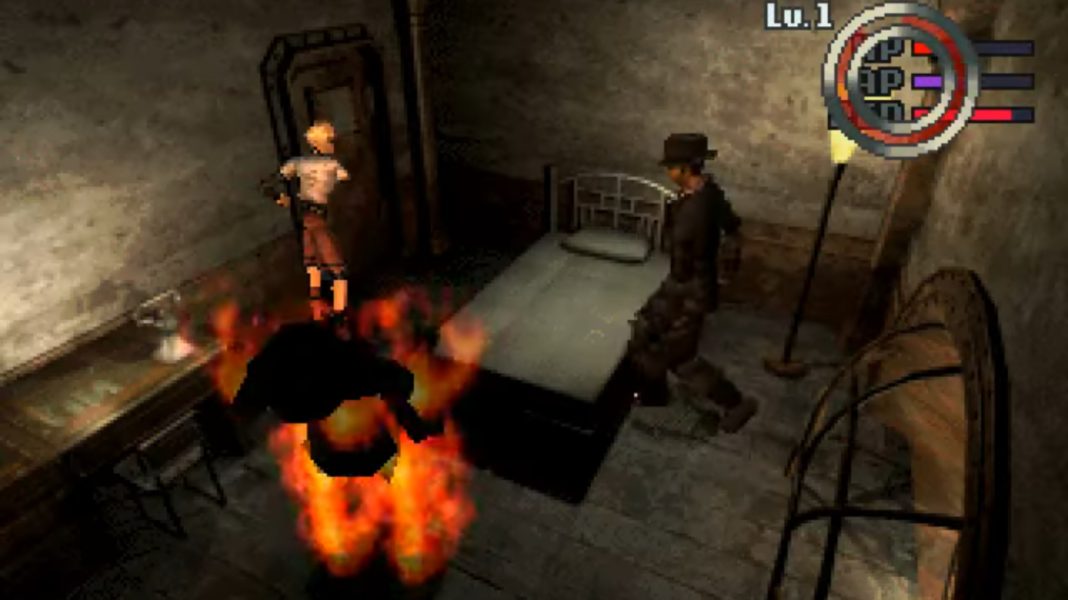
At a glance, Galerians is your average survival horror game. It’s practically a Resident Evil clone. Tank controls, item management, key hunting, and occasional puzzle-solving make up the bulk of what you’re doing here. But there are a few interesting twists that Galerians throws into the formula that set the stage for something really cool.
For example, take how weapons work. You still have to manage ammo for them, and new weapons are a rare commodity that you’ll have to treasure as much as you can. But now they take the form of psychic powers. Knocking people back, setting people ablaze, slamming them into the floor- it’s everything you’d want from your psychokinetic power fantasy.
These powers come in the form of Psychic Power Enhancement Chemicals (PPECs) that Rion injects into his neck. They can even be charged up to deal extra damage if you stand still long enough. But again, these aren’t guns.
Using your powers for a prolonged period, taking too much damage, or being in a high-stress situation for too long will charge your absorption point (AP) meter. The AP meter adds a layer of complexity here. When that meter is full, activating any power will force Rion into a “short” state, meaning that he’s completely overloaded himself with his psychic powers. His movement speed slows to a crawl. His health is quickly draining.
And while this sounds bad, it comes with an incredible tradeoff: any regular non-boss enemy that comes into contact with you will immediately die, no strings attached. Regular human enemies even cower in fear as you approach them while shorted, adding to the level of power this state exudes. The only way to reverse this condition is with a special pill named Delmetor, which is available in limited quantities throughout the game.
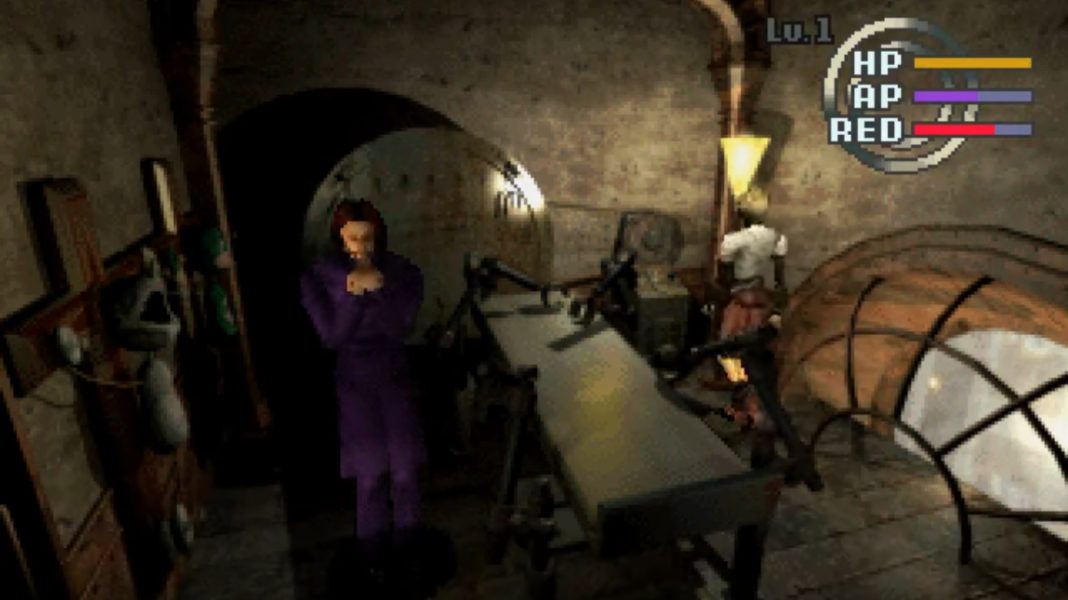
There’s something so innately cool about something like this. Not only do you have to weigh the cost of every battle against your precious resources, but you also have to consider the ticking clock that is your AP meter. If you fight things too often, you’re speeding up your eventual death march. It’s a really fascinating idea. The same goes for Skip, the pill you can find that upgrades your powers.
RELATED: Revisiting ‘Area 51’: David Duchovny Takes on the Illuminati
Skip bumps all of your psychic powers up a notch, allowing you to charge them even further for more devastating effects. The effect is, in theory, permanent. You just can’t drop half your current HP below, or that extra boost will vanish. It’ll be gone for good.
These things alone give Galerians a lot more depth in terms of their potential as a challenge. When should you fight, and how long should you fight for? How many of your powers do you need to save up for a boss fight? How can you time your short to make the best use of it? Hell, the game even expects you to make these decisions using another pill, Appolinar, that instantly fills your AP gauge.
I was expecting something more bog-standard by comparison, something like Second Life or Psi-Ops, but no — this has a lot of interesting stuff going on. Even something like Skip rewards your mastery of the game by letting you steamroll enemies and bosses as long as you can effectively avoid taking damage.
Galerians also sets itself apart from its survival-horror contemporaries by making extensive use of full-motion video and prerendered imagery. Using your Scan power, you can not only remotely activate doors and other barriers to progression but also interact with dozens of background objects in the world that flash prerendered images on the screen. They might be related to Rion’s memories. They might be a hint of something to come. Or they might even be solutions for puzzles.
Either way, you’ll be seeing a lot of these. The same goes for cutscenes. The first disc is fairly light on these, but discs two and three will have you seeing a pretty lengthy cutscene every 10 or 20 minutes.
Prerendered Presentation

Visually, Galerians isn’t all that incredible to look at. Silent Hill and Resident Evil 3: Nemesis were released on the same day in Japan, and both have incredible visual fidelity in their environments, character models, art direction, etc. The latter especially made full use of prerendered assets. The clock tower, the water treatment facility, the final battle with Nemesis- it’s all a visual treat.
In Galerians, well. . . things are readable. You can tell where you are. But some scenes definitely look a lot more half-baked than others. Simple geometry and colors, reused rooms, and the occasional rough-looking asset do admittedly stand out. You can tell that a majority of the game’s visual strength comes from its cinematics, and even then, they firmly entrench Galerians in the PlayStation era.
Galerians‘ music is the same way. The intro and ending themes are fine enough, but the rest of the score is mostly unremarkable, with ambient textures and thudding industrial beats. Nothing’s really that offensive, but nothing’s all that memorable either.
Things do thankfully get pretty hectic by disc three. Standard locales familiar to you and me give way to more elaborate machinery, fleshy appendages, towers, and sprawling dystopian skylines. You even get a taste of that vibe by the start of disc two.
Unfortunately, that’s where things start to crumble apart. You see, disc one makes such an incredible first impression that you’d expect the subsequent discs to build on it. Much like how Parasite Eve was split into two distinct discs, with the second disc feeling like a climactic finale compared to the meaty first disc, Galerians breaks its main areas across the two discs, with escalating reveals split between them.
Disc one has a sprawling hospital and confined mansion to explore. Disc two has a towering hotel. Finally, disc three is the final showdown against the main bad guy.
Galerians Is Front-Loaded
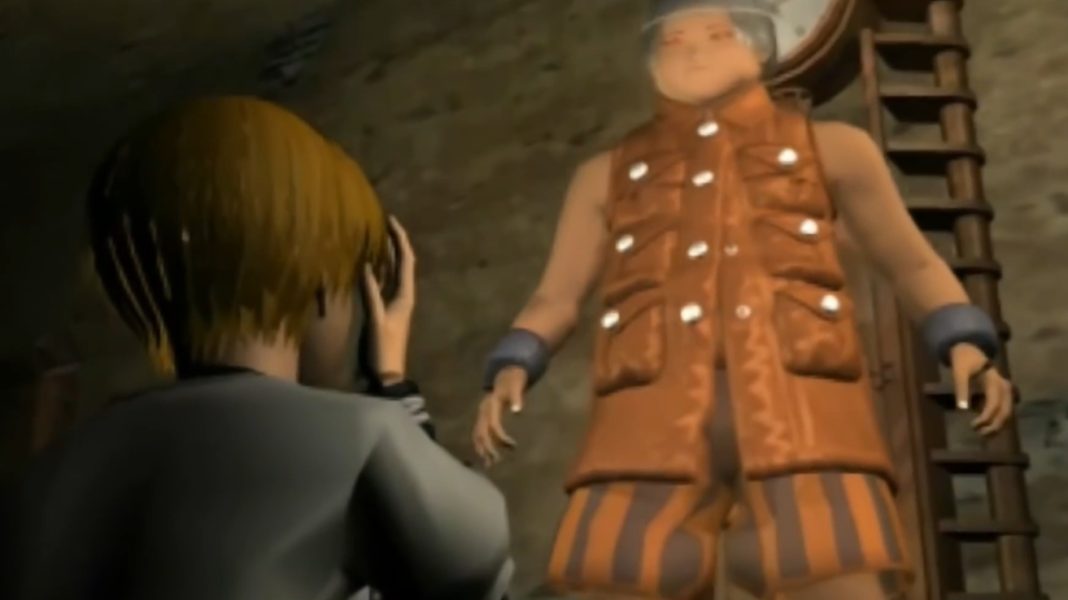
The problem here, however, is length. The game itself isn’t too long. In fact, it’s actually on the shorter side of retro horror games, even on a blind first playthrough. No, the problem is that Galerians is arguably the most front-loaded game I’ve ever played.
I mean that in the sincerest way possible. Everything after disc one is somehow incredibly rushed and slapped together, either reusing the same three nearly identical hallways back-to-back for less than an hour (as in disc two) or just throwing you into a handful of barren combat arenas before the final boss (as in disc three).
It was especially egregious on disc two, seeing as how the hotel’s size is a fraction of both the hospital and the house on disc one. Yes, there are easily two to three times as many videos on disc two compared to disc one, but still.
Puzzles in Galerians aren’t exactly all that compelling either. Granted, you’re always going to get a mix of great and not-so-great puzzles in these sorts of games. Resident Evil 3, for instance, laid it on thick with some of the best (and arguably obnoxious) puzzles in the entire series. Galerians starts things off alright before going south little by little.
Take everything you do in disc one, for instance. You’re making extensive use of your Scan to find keys and discover ways to open inaccessible areas. That mysterious button might open a door on another floor of the hospital. This strange series of scribbles in a padded room might be a hint to open an elusive office. It’s standard stuff, but it works.
Your Scan even serves as a visual hint book of sorts, often showing you directly where to go or what to do to progress. If you’re ever stuck, Scan something that looks interesting.
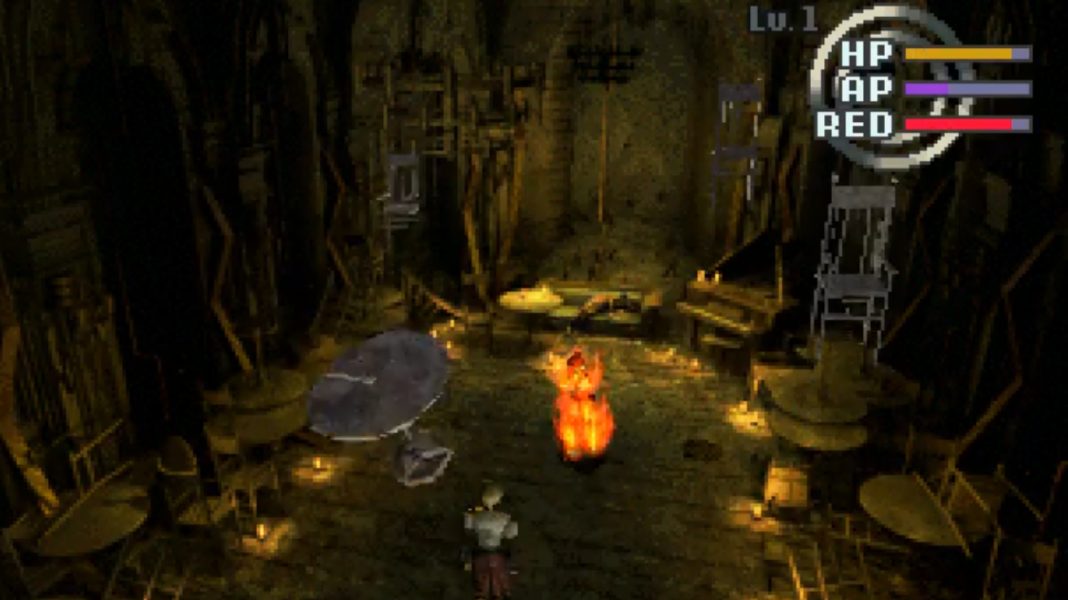
But then you enter Rion’s house. Things are still the same, for the most part, and it’s good. The second floor of the house, however, has a hole in the floor.
What would you think to do to cross the hole? Find a plank to use as a bridge? Try to jump? You’d be correct for assuming the latter. Would you also assume that you’re meant to mash X as Rion tries to clamber up, or else he’ll plummet to the first floor? No? Not at all? Would you expect this to ever appear again in any capacity throughout the rest of the game? Yes? Well, it doesn’t.
The same can be said for the brief Morse code puzzle in disc two. After you clear a series of rooms, one room requires you to knock on the door in a very specific pattern to gain entry. The thing is, though, that the game is lying to you. The person who tells you how to knock correctly is flat-out wrong with his timing.
You can match him one-for-one in terms of knocks, cadence, and repetition, but it’ll be incorrect every single time. You’re actually supposed to knock a little faster than he does. This is something that was so perplexing, it actually prompted YouTube creator descawed to do a technical breakdown of what you’re expected to do.
I’m not upset at these two instances in isolation, so much as I’m upset that they’re the only times you’ll really do something outside of key hunting. The last few “puzzles” on disc three consist of just hitting colored buttons in a specific sequence. It’s just a sour note that caps off the multitude of problems found in discs two and three.
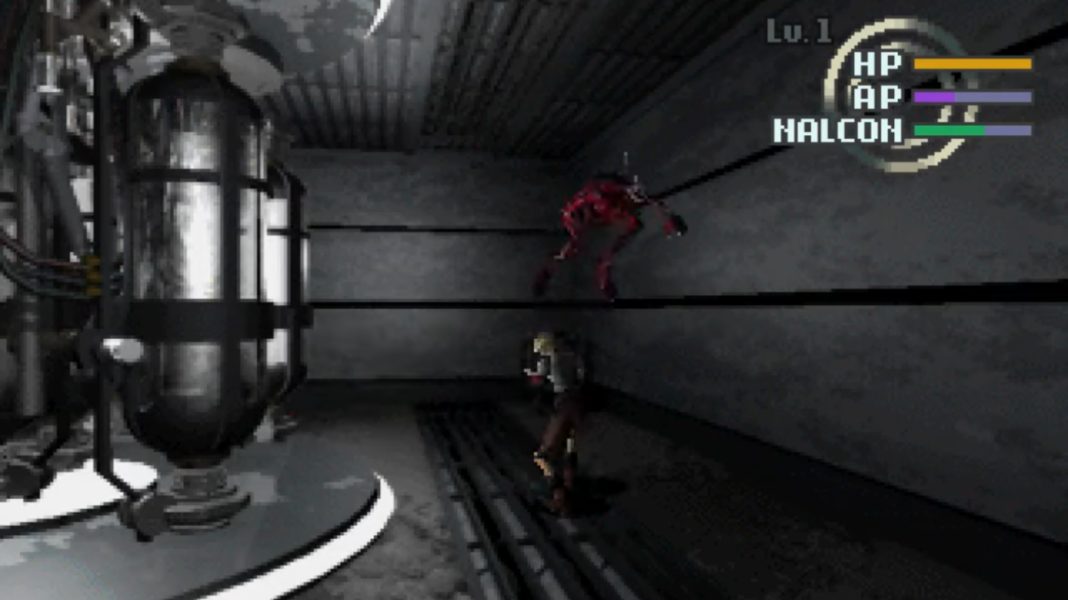
Enemy encounters take a nosedive outside of disc one too. Instead of a mix of human foes and mutants, you’re stuck fighting the same mysterious psychics over and over again, with occasional reskins of mechanized soldiers from the hospital and a mutant or two throughout the final third. Strategies never really veer away from serpentine maneuvers at range and circling around them up close, since a majority of foes you fight have ranged attacks that track you relentlessly.
Sometimes they can miss, sure. And some projectiles can be dodged. But that’s about it. I never thought I’d miss the lethal instant-kill attacks you’d have to avoid in Resident Evil 3, but here I am. They at least added some variety.
RELATED: ‘CONSCRIPT: Director’s Cut’ Game Review: War Is Hell (Among Other Things)
Bosses are alright. They’re nowhere near as flashy as the fleshy monstrosities found in Resident Evil, since you’re mainly battling other psychic children, but they’re challenging enough, given your limited movement and lengthy attack animations. No single boss is a complete cakewalk, especially if you don’t have any Skips activated.
The window of opportunity to counterattack is often razor-thin, and if you don’t seize it, you’ll just have to wait for the next one. I didn’t die too often. But the last two bosses managed to get me a handful of times. The penultimate boss was especially fun, with its strange attack patterns that take a second to recognize.

The final boss is appropriately grotesque, given that it’s the first time the game really cuts loose with its design. Exposed flesh, sharp teeth everywhere, and floating eyeballs everywhere all reminded me of something from ParanoiaScape or Akira. No spoilers for how you fight it, obviously, but it definitely demanded some extra attention.
Should You Play Galerians?
Am I too critical? While I didn’t really love most of Galerians, I’m hesitant to say you shouldn’t check it out for yourself. It’s no ordinary survival horror game, that’s for sure. And while I feel like it doesn’t really utilize the interesting ideas it establishes early on, there’s a charm to its mix of impressive prerendered visuals and half-hearted voice acting that I really enjoyed.
And it’s not as if Polygon Magic isn’t a talented development studio. Their biggest claim to fame, aside from Galerians, is Incredible Crisis, a progenitor of minigame collections like WarioWare that was popular enough to receive a full international release outside Japan. They even developed the elusive Silent Hill: The Arcade, a spinoff of the legendary horror series that places you in a rail shooter setting. They clearly know their way around different genres, and the fact that Galerians has so many unique mechanics that I’ve yet to see elsewhere is a testament to that.
Interestingly, if you can’t actually play Galerians for yourself, there’s another way to experience it through a different medium. Galerians: Rion is a three-part CG-animated series that debuted in 2002, loosely retelling the story of Galerians with the edginess of the early 2000s and the surreal atmosphere of the original game. I saw it myself, and it’s certainly an entertaining time capsule of the era.
Still, I’d hesitantly recommend Galerians if you’re looking for something different. I had wondered why it seemed buried in the shadows of its survival-horror contemporaries. I see now that there was a reason for that. It has some fascinating ideas, and its presentation hits all the cheesy notes of horror anime, but it doesn’t really come together into a truly compelling whole.
Despite this, it eventually received a sequel, Galerians: Ash, on the PlayStation 2. Maybe all this series needed was a decent foundation to really get things grooving in the sequel. Then again, maybe not.
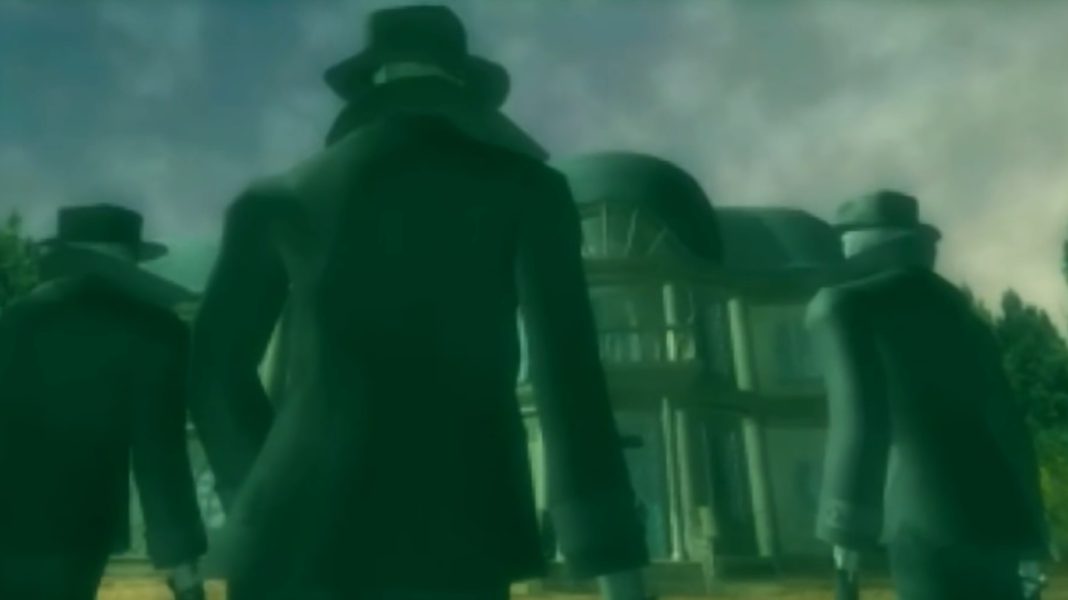
Galerians is available exclusively on the PlayStation.
We’re hardworking geeks who love to geek out, but we can’t do it without you! If you enjoyed this article and want to see more like it, please consider tipping our writers. Also, as an Amazon Associate, we earn from qualifying purchases.








It’s interesting to see how ‘Galerians’ tried to blend psychological horror with action elements, yet ultimately fell short of its potential. recommended
Interesting to see the analysis of how ‘Galerians’ failed to capitalize on its horror elements. The discussion on gameplay mechanics really stood out. good resource