












It’s been a while since I’ve looked back at an older game. Not for lack of trying, mind you. Life happens, I got disengaged, I got distracted, whatever excuse you want to toss my way, it’s probably applicable. Most especially, though, was a lingering thought in the back of my mind: “Someone already did this, but better.” And in most cases, I’d be right. And maybe that’s even true for something like ParanoiaScape. But this time, I can’t really help myself.
Developed and self-published by Mathilda, a small Japanese studio with only one game to their name, ParanoiaScape released to the Sony PlayStation as a regional exclusive in 1998, never seeing the light of day outside of Japan ever since. After looking at it, you might be able to tell why. What is this? Is it a first-person game? Is it a pinball game? Is it a bullet hell shmup? It sure is something, that much I can say. Underneath a layer of flesh and rust, however, is a fun surprise for longtime horror fans.
Screaming Mad George Made a Game
From its conceptualization to its graphics and music, ParanoiaScape is as much the baby of horror aficionado Screaming Mad George as it is Mathilda’s. If you’re at all a devout horror fan, chances are you already know who he is. If not, there’s a good chance you’ve seen some of his incredible work already.
Screaming Mad George is a face that’s rarely been seen in front of the camera, instead developing a cult following through his impressive efforts in the visual effects departments of horror films and horror-adjacent productions. Beyond one-off efforts, like aiding in the production of masks for the band members of Slipknot, his work would be featured in some of the most beloved horror films to date. Brian Yuzna, for instance, would call on George for the grotesque effects in Society and the Re-Animator sequels. Freaked featured George’s effects studio on top of other contributions from Tony Gardner and Steve Johnson. You can even find his work in more popular projects, like Predator, A Nightmare on Elm Street III and IV, and Big Trouble in Little China, on top of several domestic Japanese productions. He would even co-direct his own feature-length film, 1991’s The Guyver, with Steve Wang.
What really makes George such an integral part of ParanoiaScape — as well as the handful of horror productions that he would eventually become attached to — is the method behind his madness. An archived interview from the Los Angeles Times in 1985 gives a clearer idea of what’s going on in his head as he reminisced about his time in the punk music scene, where he utilized shocking gore effects during his live performances:
“I want to make the most strange fantasy realistic 3-D. I want to make the unreal realistic. That’s my whole thing. I want to do something totally unreal, completely imaginative, to give birth to it. Animation is not real enough. But this makeup effect is getting more and more realistic. It’s closer to realism. Everything is fake but it looks so real! This so far is the most fascinating art form to me.”
Screaming Mad George is still fairly active, too. Beyond regular posts on his Instagram page, George spent some time teaching for the Film and New Media department at the Osaka University of Arts, sharing his own knowledge of practical effects to a new generation of artists. You can even find some showcases of his props and puppets on his MAD CLUB YouTube channel, though its last post was in 2024.
It’s this focus on “making the unreal realistic” that makes his involvement with the world of video games a bit more interesting. For someone who made a name for himself avoiding the world of digital effects, even as they started to gain more and more prominence, why partake in a similarly virtual environment? Maybe it was the ability to make his grotesque creations more interactive. Or maybe it was a way to more easily bring his creations to life with less oversight and more freedom. Either way, it’s a fascinating display.
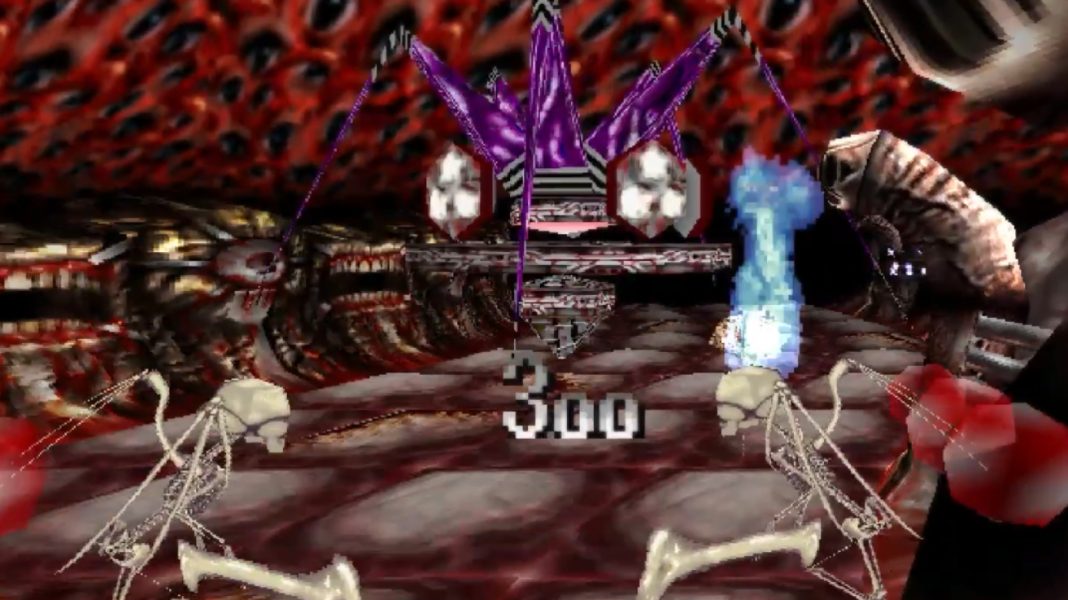
ParanoiaScape is a marvel of body horror and bizarre ideas. While far from being a sheer technical showcase for the PlayStation — that distinction would go to Metal Gear Solid later in the year — you can’t help but feel fascinated by what exactly you’re looking at. The floor is lined with gnashing mouths and puckering holes. The walls are stained with bloody teeth and piercing eyes. Writhing hands and stomping feet loom in the distance. That’s not to say anything of the gradual shift away from outright grotesqueness. The last third of the game veers away from guts and viscera and instead dives headfirst into the surreal, with wheels comprised of human legs rolling on by, rock formations capped by half-naked women towering over you in wide halls, and even a somewhat climactic finish capping off your descent through the mouth of madness. The unreal has certainly been made real.
RELATED: ‘Angel at Dusk’ Game Review: Body Horror Meets Bullet Hell
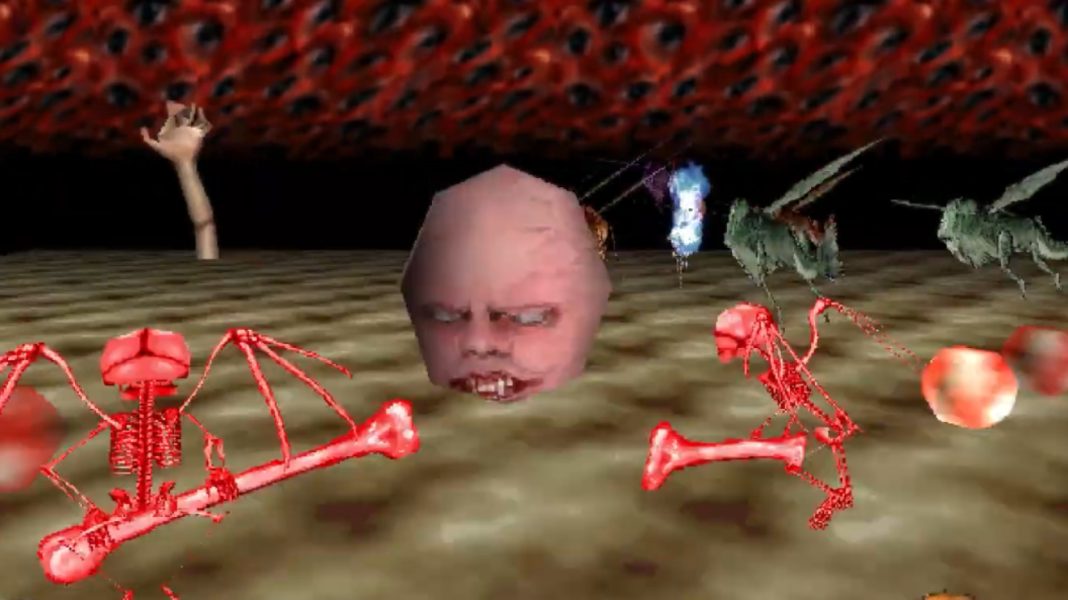
Actually playing ParanoiaScape is a beast in of itself. On one hand, I could argue that the unwieldiness and ugliness of navigating the fleshy confines is similarly felt in the way you navigate the game’s controls. And I’d say that it’s pretty apt. But this is still a game, after all.
The game takes place from a first-person perspective as you navigate the winding labyrinths of Hell. You’d be forgiven for thinking that you’re the pair of bony cherubs manipulating a pair of similarly calcium-dense pinball paddles, but no, you’re just slightly behind the camera. You’re tasked with moving forward down a deceptively tight corridor in every stage, bouncing a ball of glowing blue fire away from you and towards whatever nastiness might be blocking your way.
It’s pinball, yeah. Is it pinball in a superficial sense? Kind of? It’s admittedly hard to describe without getting hands on it yourself. For one thing, the way balls are handled is pretty unique. Like in regular pinball, letting the ball fall past your paddles means that it’s effectively removed from play. What’s different here, though, is that the area where the ball is removed from play shifts around as you move forward and back. As long as the ball stays in front of you, it’ll remain in play. As soon as you run out of balls, the game’s over, and your score resets. But you can continue where you left off with no penalty otherwise. The same goes for your life bar.
You’ll have to manage your life bar on top of your balls. Enemies will either beeline towards you or hurl projectiles towards you, and it’s up to you to either navigate around them, fling your ball right at them, or attempt to bounce back those projectiles to inflict some of your own pain. You can flick your paddles, as you’d expect, but you can also adjust their angle, allowing you to aim the ball more accurately in a certain direction. Flicking either paddle will reset them to their original position.
RELATED: ‘Labyrinth of the Demon King’ Game Review: Monsters and Matcha
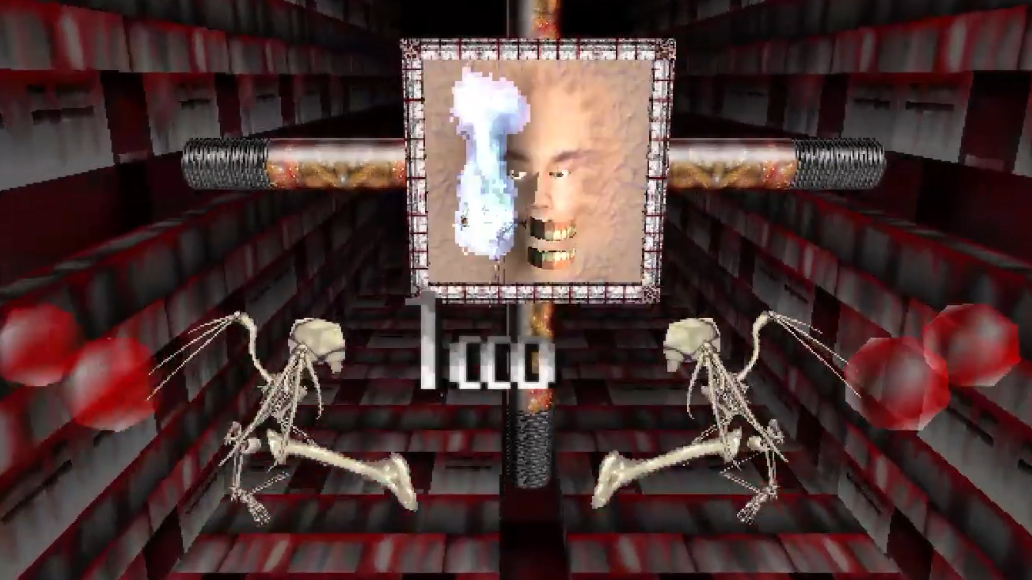
Every stage in ParanoiaScape shares a similar end goal, but they all have different ways of going about it. Some stages will place you in winding paths lined with sinews and entrails, with progression only being limited by your ability to weave through whatever nastiness is blocking the way forward. Some stages demand that you destroy everything in front of you, be they bony appendages or grimy insect hybrids. Others are outright boss fights, placing you in a one-on-one battle against a screaming face, or a carousel of needles and fleshy growths.
You certainly get a ton of mileage out of ParanoiaScape‘s odd setup. The game far from overstays its welcome, capping itself at barely an hour’s worth of total playtime if you’re rushing through its many challenges, and it thankfully keeps the entire experience fresh. The ability to maintain your score between stages also gives you some incentive for replays, though any rewards tied to a high score are presumably nowhere to be found.
If you’re at all a fan of George’s practical horror effects, you’ll soon discover too that the game is nothing short of a celebration for his entire body of work. Certain designs for environmental props and enemies are strikingly similar to his iconic effects in films like Society and Nightmare on Elm Street IV, including faces where rectums ought to be and humans morphing into slithering cockroaches. George himself makes a digitized appearance towards the end of the game to celebrate their progress going forward. The game’s title is even shared with the titular track from Screaming Mad George & Psychosis’ Transmutation; an album released a mere five years prior to ParanoiaScape.
The game’s sound design is similarly oppressive. Its music comes straight from Screaming Mad George himself, combining sample-driven industrial rock and pounding percussion together in a messy stew for the ears. It’s only made messier by how loud and layered the in-game sound effects are. Having gone through several noisy music phases in my life, I actually enjoyed the sensation whenever the ball got caught in a tight crevice, or when I kept getting struck by enemies over and over. For the most part. Sometimes it was a bit too much, admittedly.
Should You Play ParanoiaScape?
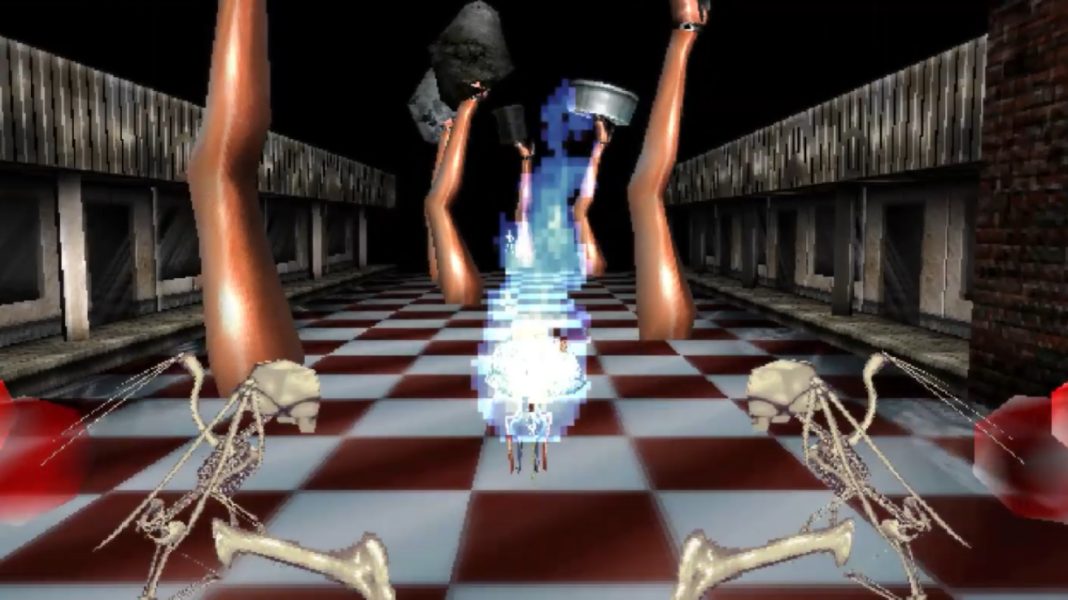
Overall, ParanoiaScape is a rough time, regardless of how good you get at it. The game’s technical performance is downright terrible at points, chugging into incredibly low framerates when more than a handful of enemies or moving assets are on-screen at once. The hit detection for both your paddles and the ball is questionable at best, and often times I felt as though I was completely whiffing what should’ve been guaranteed hits. It makes some bosses, like the blue brain monster in Stage 2-3, a much more prolonged and drawn-out experience as opposed to something brisker and more intense.
ParanoiaScape is obscure. It’s so obscure, it doesn’t even have a dedicated page on Wikipedia. And frankly, it’s obscure for a reason. Playing through it once you get past the shock of the viscera and leg-wheels and human cockroaches isn’t necessarily the most frictionless experience you can find on the PlayStation. Is it easier to play than Lifeline? Absolutely. But I’d argue the novelty isn’t as strong.
Conversely, I do find the aesthetics surrounding ParanoiaScape to be utterly fascinating. While this kind of biopunk, organic realm of fleshy nightmares isn’t a wholly unique setting anymore, especially now that you can find similar games in the indie scene, it’s surprising to see something with this much grotesque detail and strange irreverence on something like the PlayStation. Sure, you could see bodies being ripped apart and horrifying visions on home computers around this time. But on a major console? It’s nowhere near as common.
Should you ultimately play ParanoiaScape? Maybe? The cost of actually acquiring a copy might be prohibitive to some, but if do you manage to find a way to try it, there’s certainly something here. Underneath its warts, there’s something meant to embody a singular creative vision, a desire to defy reality in favor of something purposefully grotesque, scary, and maybe a little funny. From the same Los Angeles Times article I mentioned previously, Screaming Mad George put it best:
“I like the idea of doing something unreal but doing it so realisticly that everyone gets nauseated. . . It’s just total nonsense.”
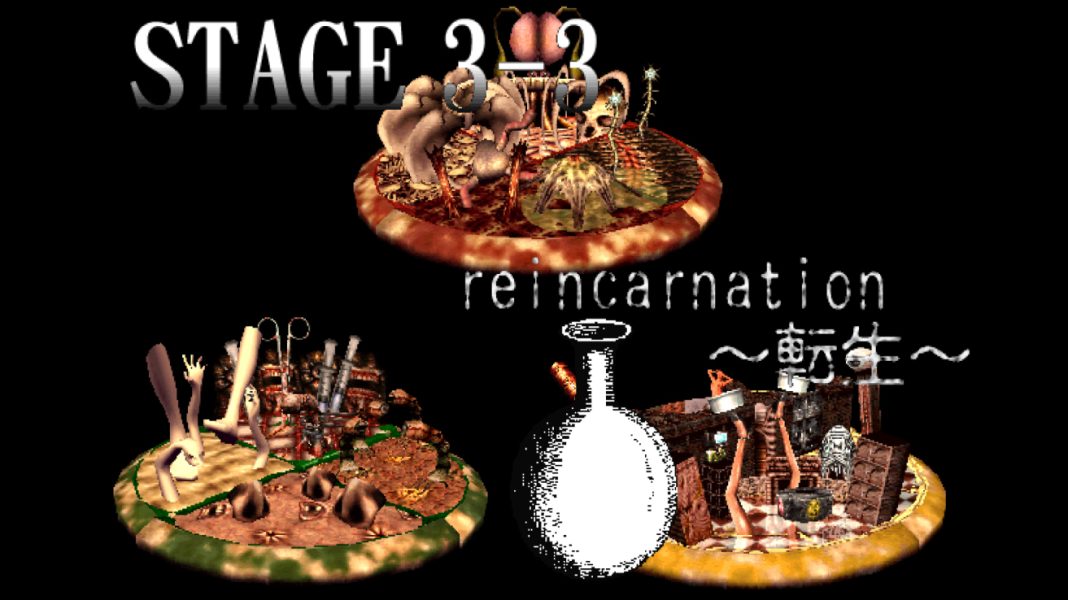
ParanoiaScape is available exclusively on the PlayStation.
We’re hardworking geeks who love to geek out, but we can’t do it without you! If you enjoyed this article and want to see more like it, please consider tipping our writers. Also, as an Amazon Associate, we earn from qualifying purchases.