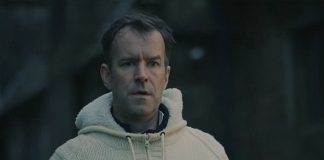











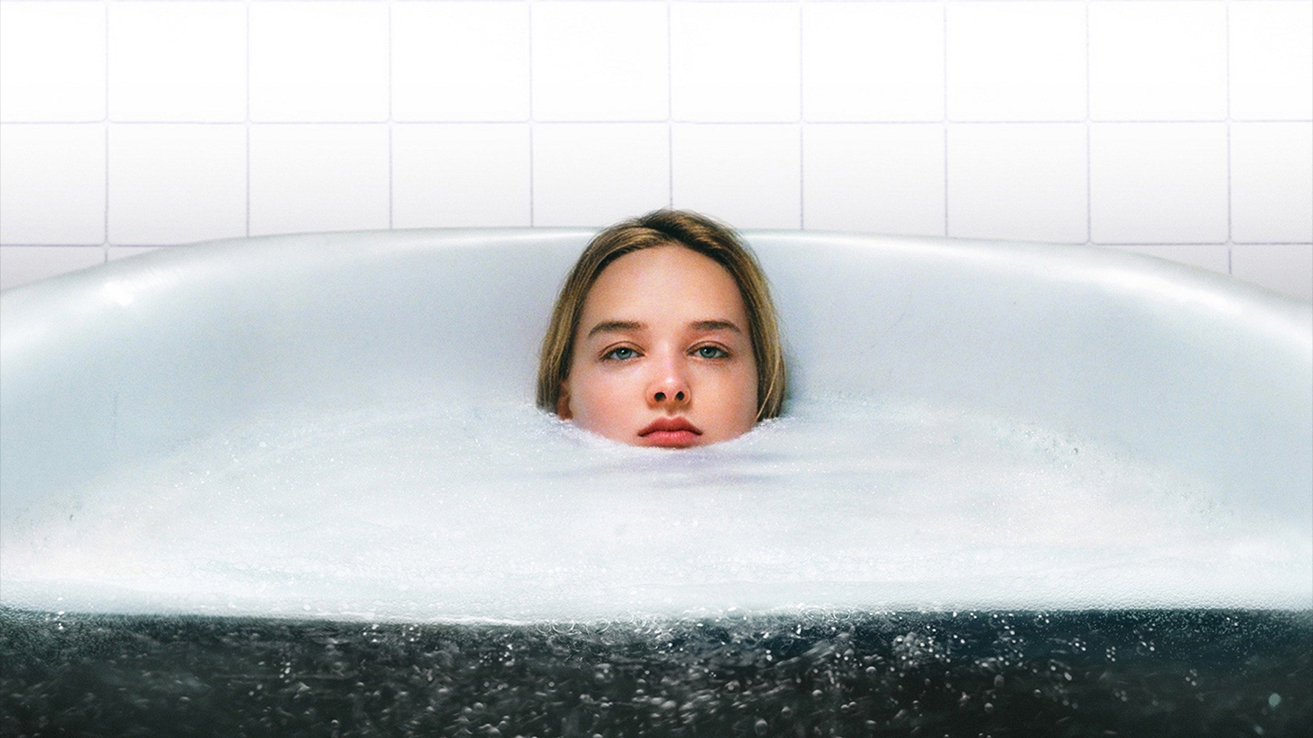
It’s been 15 years since Michael Lichtenstein’s horror-comedy Teeth was released, unleashing the mythical folk tale of “vagina dentata” to the horror fan masses, and becoming one of the more memorable dark comedy horror films of the late 2000s. While Teeth was great for a laugh at the time, and still is, a gloomy layer of themes covered the film, and in acknowledgment of its 15th anniversary, we’re going to take a look at those layers, why they made the film important then, and why the movie may be even more poignant in 2023.
Before getting started, I would like to set a sort of trigger warning for the content ahead. The themes I’ll be discussing are pretty heavy, and while I would never intentionally want to hurt someone or bring forth traumatic experiences with my words, I do feel the themes are important to address, and I promise to do so with respect for both the reader and the heavy subject matter.
For those that may be unfamiliar with Teeth, the film follows Dawn O’Keefe (Jess Weixler), a teenage girl and spokesperson for the Christian abstinence-focused program called “The Promise.” Having never experienced sexual acts on her own, Dawn finds out, through being sexually assaulted, that her body has a mutation known throughout world mythology as “vagina dentata,” a natural defense mechanism of lamprey-like teeth in her vagina.
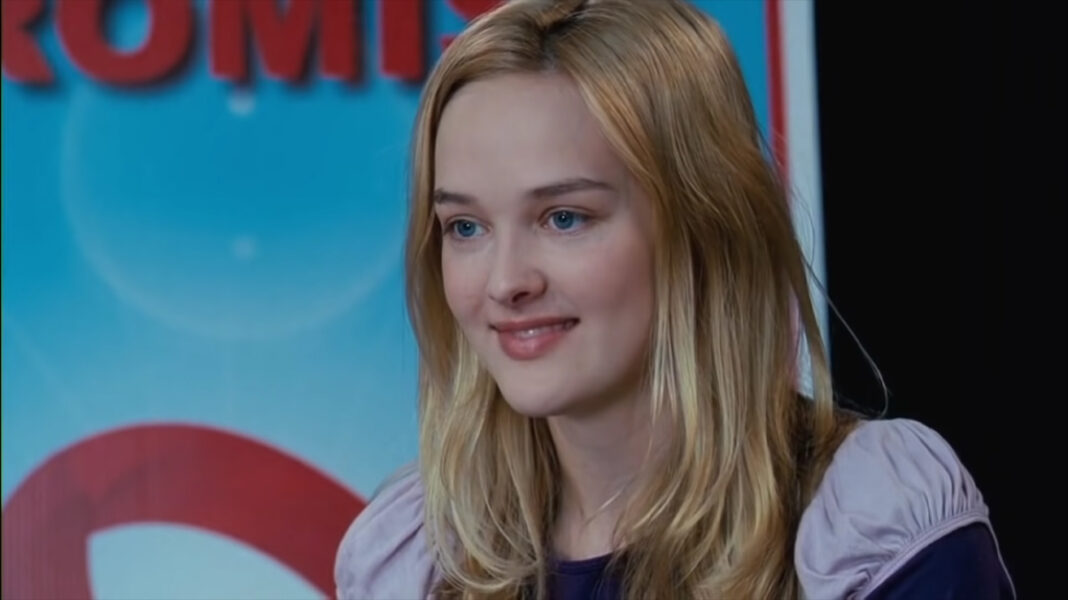
One of the most important aspects of Teeth was the time in which it was released. Teeth came out amongst a smattering of raunchy 2000s comedies like the American Pie sequels, The Girl Next Door, or Wedding Crashers; movies in which major (and “iconic”) moments were centered around the tricking or badgering of women for sex or other sketchy things like filming women nude without their consent. Teeth served as an almost antithesis of movies like these, clapping back that not only is consent the most important pre-requisite to sex, but there would be dire consequences if it wasn’t given, in the form of a man’s most emasculating result, the loss of his physical manhood. More on that soon.
RELATED: ‘The Kindred’ Blu-Ray Review: One of the ’80’s Best Monster Movies
The first important theme that Teeth points out is the religious oppression of sexual knowledge among kids and teenagers. The movie plays as if “The Promise” is a satirical group, almost too goofy to be in reality, but in truth, even today, many schools throughout the rural United States take part in programs like these. Coming from personal experience, schools in the Midwest will try almost anything to not have to actually educate teenagers about their own bodies, let alone their normal feelings about sex, and especially the acts themselves.
From abstinence agreements to promise rings, the education system simply rolls the dice in hopes that teenagers will have the awkward and stigmatized conversations with their parents about consent, sex, disease, and pregnancy. Spoiler alert – most don’t, and this, combined with a lack of reproductive health care availability in these areas, leads to booming numbers in teenage pregnancies, sexual assaults, and sexually transmitted diseases in small, religious, rural towns in America.

In Teeth, Dawn is so unfamiliar with her own body and senses because of the religious pressures from her parents, the program, and the community, that she simply has no idea what to do with her feelings of love or lust. In fact, knowledge of the female reproductive system is mocked in the film, as even the health teacher won’t say the word “vagina,” and diagrams of the vulva have been covered up in the school’s textbooks. Again, this is done for laughs in the film, but also a satire of a very real problem within the American education system regarding sex education, and the very real weight of religion that dictates our system and suppresses our knowledge every day.
Another main theme in Teeth is obviously the importance of consent and the horrific aftereffects of sexual assault. Overlooking the obvious surface consequences of a man realizing his worst nightmare with the loss of his penis, Teeth dives deep into the myriad of other effects that sexual assault has on its victims.
RELATED: ‘The Mist’ is Still an Emotional Gut Punch After 15 Years
Dawn’s first two sexual encounters were a result of assault, which then resulted in her attackers losing their penises. But her knowledge of sex and consent is so repressed, that her first instinct is to go to the police and admit what she’s done (accidentally, in a natural response), rather than report that she was assaulted, and her body acted in self-defense. Because no matter what, a man’s severed penis will always be more important to law and legislature than a woman’s bodily boundaries. The importance of r*pe and its effects will always be suppressed by those in power. Even now, as I type this, I’ve used sexual assault instead of r*pe, because Google sees the word r*pe as a buzzword that shouldn’t be in front of readers’ eyes.
Moving on, when Dawn goes to a gynecologist to help her learn more about her body, and figure out what’s going on inside her, she’s sexually assaulted by the doctor, and her dentata defends her body. At this point, there is nowhere Dawn can feel safe, which is a very real feeling for sexual assault victims. All facets of her life have been taken over by her fear. Her closest friends have sexually assaulted her, her doctor, a man who is supposed to provide her care, sexually assaults her, and her home contains religiously oppressive and judgmental parents and an obsessive, creep stepbrother who wants to sleep with her.
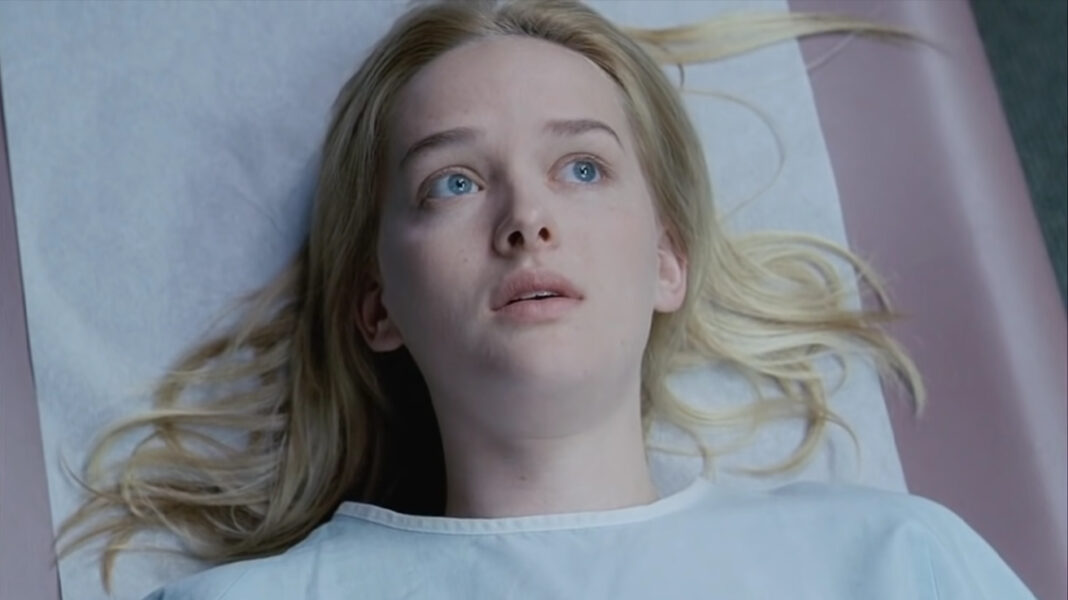
She quickly understands that no matter what, she’ll be seen as the villain, and it isn’t until she’s assaulted a third time; by her “friend” who drugs her, that she uses her vagina dentata in a purposeful way, to hurt her attacker. Granted, using sexual assault on the offense may not feel like the best message from a movie perspective; it’s the only power that Dawn has, and the only way she can finally get the point across that she will not be hurt like this anymore.
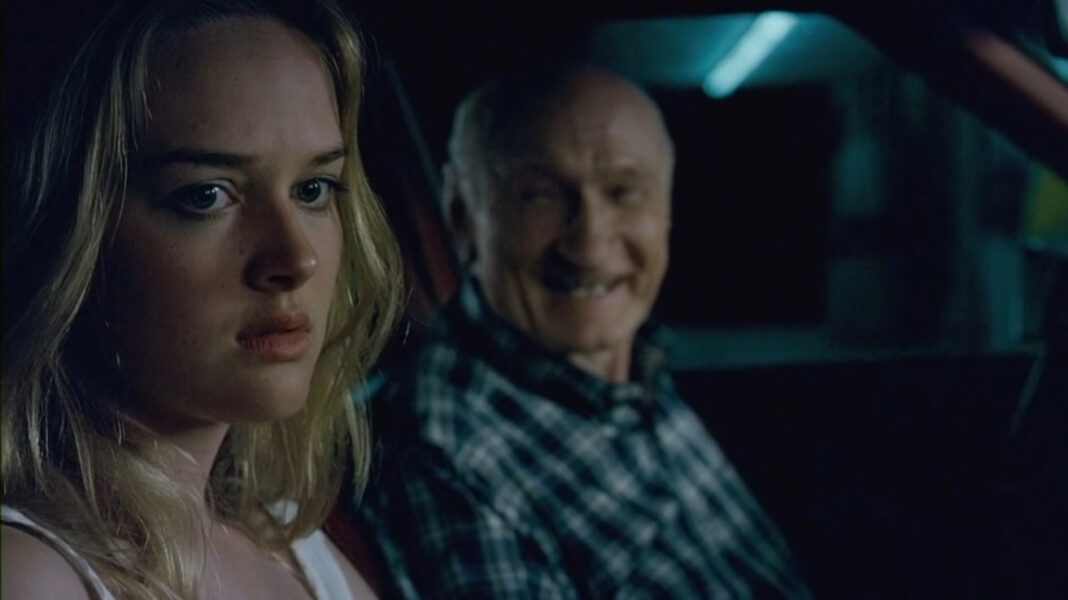
The film ends with Dawn leaving town with a stranger, who, after offering her a ride, won’t let her leave his car without sexual payment. With a grin, the audience sees where Dawn’s future is going, and that she is now taking matters into her own hands when it comes to assault, without consequence; a dream of revenge that most women don’t have the benefit of taking part in.
It’s interesting to me that Teeth isn’t remembered as fondly as it should be for its importance in themes. It came out almost two years before another film it’s compared to often, Jennifer’s Body; a feminist film that did poorly with critics and audiences upon release but has since gained a massive cult following. Teeth was mostly critically acclaimed upon release, being a huge hit at the Sundance Film Festival, with Jess Weixler winning the Special Jury Price for Dramatic Performance. However, as time has gone on, its popularity has gone in the opposite direction as Jennifer’s Body.
Maybe its lack of standing power has to do with its extremely graphic scenes or subject matter, which was handled in a much more publicly palatable way in Jennifer’s Body, or maybe it was the budget or the star power of Megan Fox. Either way, after 15 years, Teeth reminds us all that when it comes to sexual knowledge and oppression, boundaries, and consent, the world needs to be better.