









Welcome back to the dollar store bins’ unpredictable depths. Today’s question: How much longer will visual effects be relevant?
Of course, I don’t mean that literally. Those of us who appreciate–and insist on–art made by human hands will always have love for well-wrought physical, optical, or digital effects. But if you keep your nose in the low-budget trough, you’re already getting used to detecting “that AI odor,” and as the technology gets cheaper and better at rendering photorealistic moving pictures with little or no human effort, filmmakers both major and minor will use it. One of the many sad things about this inevitability is that it might make movies like Don’t Speak a thing of the past.
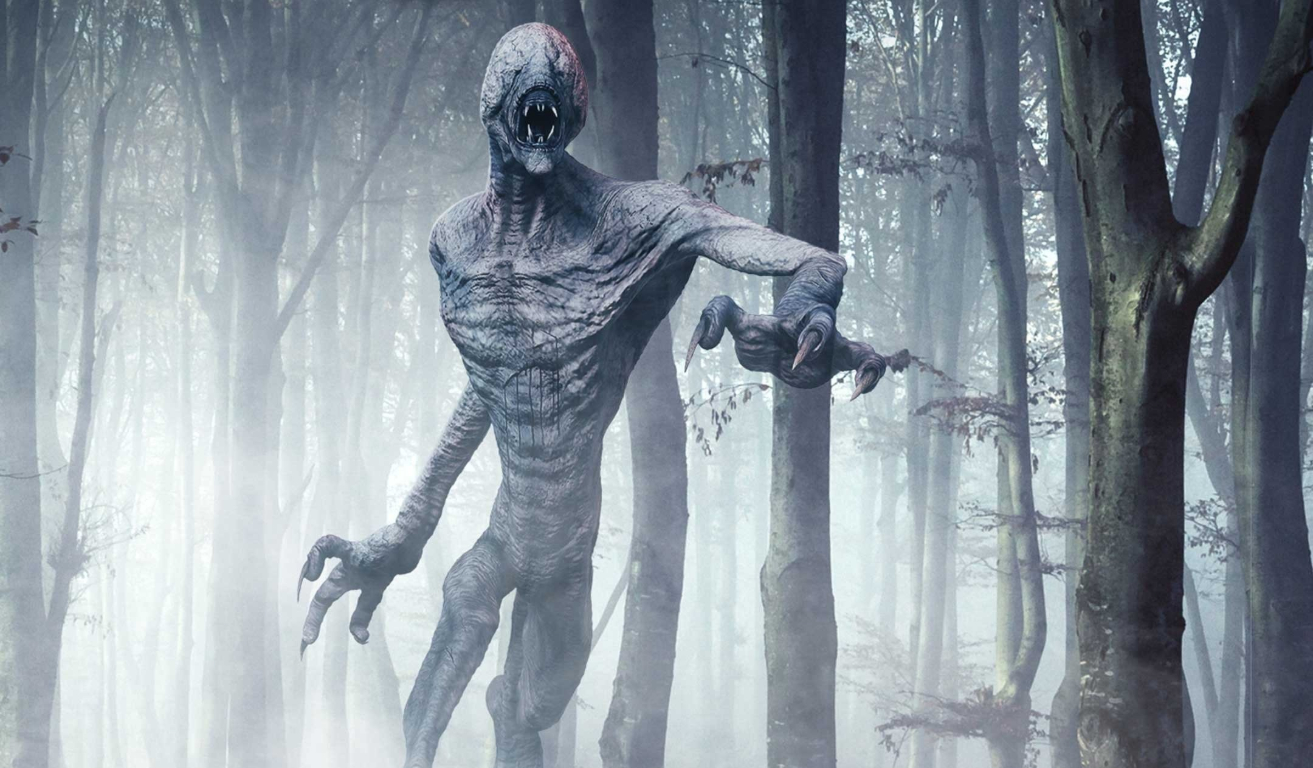
We’ve landed back in mockbuster territory, and this time we’re riffing on 2018’s A Quiet Place. A family of four–mom and dad Rita (Stephanie Lodge) and Alan (Ryan Davies), and their young-adult children Charlie (Georgina Jane) and Ben (Jake Watkins)–are traveling from the ‘burbs to the rural home of Rita’s parents. Along for the ride is Charlie’s boyfriend, Tyler (Will Stanton). They arrive at the farm to find not only it, but the entire village eerily deserted. The community has been wiped out by a hideous, vaguely humanoid blind creature that hunts by sound. If you encounter it, it either kills you outright or wraps you in a spider-like cocoon for later consumption. What is this monster, and is it connected to the military base the locals whisper about?
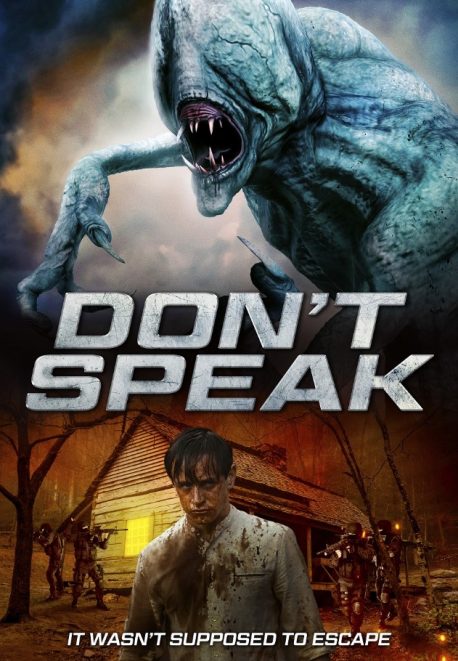
Don’t Speak was directed by actor Scott Chambers, who uses the name Scott Jeffrey for his directorial work, and was one of the producers of Winnie the Pooh: Blood and Honey, which kicked off the public domain character horror craze. I make no assumptions about Chambers’ stance on gen-AI, nor that of Proportion or ITN, the studios he works with. But you don’t make double-digit numbers of movies in a single year without knowing how to cut costs, and to expect that all the mockbuster factories will be principled enough to resist the lure of not having to pay VFX artists is naive.
Those with trained artistic eyes will always be able to tell when an image is robot-made, just as I, a writer and English teacher, will always be able to spot AI text–and no, it has nothing to do with em dashes. But the majority either don’t know or don’t care, and I suspect before long we will be so used to low-budget movies with robotically perfect VFX that handmade movies like Don’t Speak won’t get made anymore except as a niche, of a niche, of a niche. Either that or, as I’ve written elsewhere, AI images will lose all meaning entirely, and the pendulum will swing back to demanding humanity again.
I realize I’ve neglected the actual movie here, but there’s not that much to say. It’s slow-paced, probably due to a short film’s worth of story stretched into a feature, yet none of the characters are given time to become anything but crawler food. But Don’t Speak’s man-in-a-suit monster effects, though they crib significantly from A Quiet Place, are lovingly crafted. The goopy, latex-stringy creature and gore effects, created by confirmed human artists David Foxley, Chelsea Murphy, and Angel Kunev, convey weight, physical embodiment, and the hand of an author.
They also look far from convincing, and that’s just the way I want it. And for those of you who want to congratulate me for making it through this whole review without a No Doubt joke: I know just what you’re saying.
Misleading box art? My DVD cover makes the monster look a lot bigger than it is.
Verdict: Dollar Store Decent