






Ed Brisson has written for some of comics’ most recognizable characters, including Wolverine, Batman, Ghost Rider, and Predator. With Mad Cave Studios’ Hammer Head, the writer is publishing his first full-fledged horror comic. Illustrated by longtime collaborator Damian Couceiro, colored by Dee Cunniffe, and lettered by Patrick Brosseau, the series delivers the brutal thrills of an old-school slasher.
Ahead of Hammer Head #1’s release, Horror Geek Life spoke with Brisson about finally bringing the series to shelves, reworking its story and final girl, and introducing a new killer, Henry “Hammer Head” Elgin. He also discussed his love of slasher movies, the series’ fantastic cover art, and the other horror projects he plans to tackle next.
Hammer Head #1 goes on sale on Oct. 14, 2026. Check out our review of the first two issues.
HGL: Ed, it’s exciting to see you take on a slasher comic! After waiting nearly three years to share it, what makes now the right time to finally bring Hammer Head to shelves?
Ed Brisson: The honest answer is that the stars just happened to align. I wanted to do a horror project with Damian Couceiro, who is someone I’ve been collaborating with for 20 years now. He had an opening in his schedule and liked the concept, so we just set out to make it happen.
Part of it is that I’ve been away from doing creator-owned for a little while and have been trying to make a big push back into it. It’s where I started and was certain where I’d spend most of my energy, but somehow it got away from me for a few years.
In coming back to creator-owned, I was looking to scratch itches I hadn’t had the chance to scratch, and horror was the big one. I grew up a massive horror fan and had always planned to do plenty of horror, but haven’t really had the chance to do it on a scale like this.
Another factor into the “why now” is that I think publishers are more receptive to horror at the moment. I’d tried pitching horror in the past, but had been told by more than one publisher that horror was a hard sell.
But, with the recent resurgence of horror at the box office and a slate of successful horror comics on the shelves, publishers are now more willing to take that risk, and I’m more than willing to take advantage of that window being open to allow me to do projects I’ve been dying to do.
HGL: Did the story or any of its characters change much while you were developing the series?
Ed Brisson: Yes. The first draft version of this book was very different – it still involved the prison and Hammer Head, but had a very different approach. The version that it ended up being is what I had in mind for a sequel to the first idea, should the series do well. But as things progressed and I worked on it more, it became clear that what I was planning for the sequel was actually the stronger and more interesting idea, and so I went back and retooled the whole thing to focus on that concept instead.
The version of Jules that existed in the first version was very different, more of a crusader, someone who’d managed to pull her life together despite the horror she’s lived through. But that didn’t work for this current version, so her character went through a complete overhaul
because I needed to maintain the final girl aspect, but in a different form.
Henry “Hammer Head” Elgin was in the original, but had a completely different origin as well. There are some aspects that carried over, but the setting and what initially set off his murderous rampage were completely overhauled.
Between the two versions, the only characters to survive were Jules, Warden Sullivan, and Henry “Hammer Head” Elgin; everyone else was developed for this version. It’s not unusual for me, though. Sometimes I’ll work up a pitch or an idea and realize that it’s not working, but that the place that it leads is interesting, and so I’ll start fresh to strengthen what I think is working.
RELATED: Crystal Lake’s Linda Cardellini Explains How She Made Pamela Voorhees Her Own
HGL: What has the collaborative process with Mad Cave been like, and what made it the right home for Hammer Head?
Ed Brisson: Mad Cave has been great. They’re incredibly supportive and creator-friendly. I really like what they’ve been doing there and the chances that they’ve been taking – it feels like they’ve really been on the rise and I’m happy to be along for the ride. I’d already done Wild Animals with them in 2025, and we were looking for another project. Because I’d taken some time away from creator-owned, I was trying to be very deliberate with the type of project I wanted to pitch.
I love crime, and I love horror. Since I’d just done a crime book with Wild Animals, I wanted to ensure the next was horror. I’d already done some work on Hammer Head before pitching it to them, but had to set it aside in 2024 because of a long-term contract I was on.
But it was always there, gnawing at the back of my brain. I was desperate to get it going and already had Damian on board to illustrate, and so it was a pretty easy decision to pitch it as the next thing.
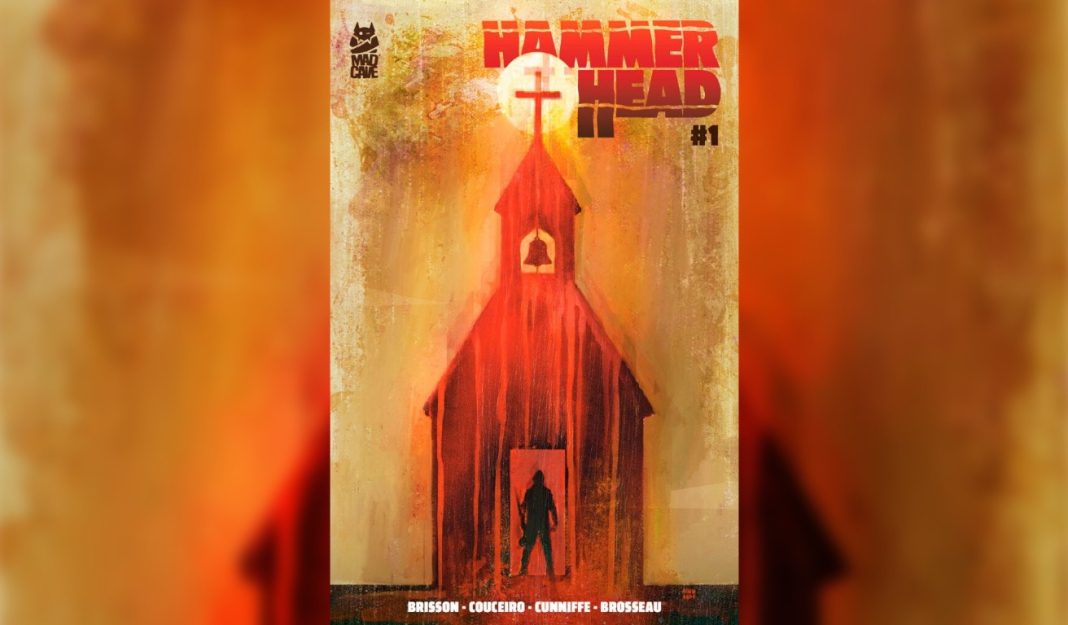
HGL: Can you also talk about collaborating with Damian Couceiro to develop Henry’s design?
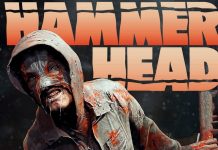
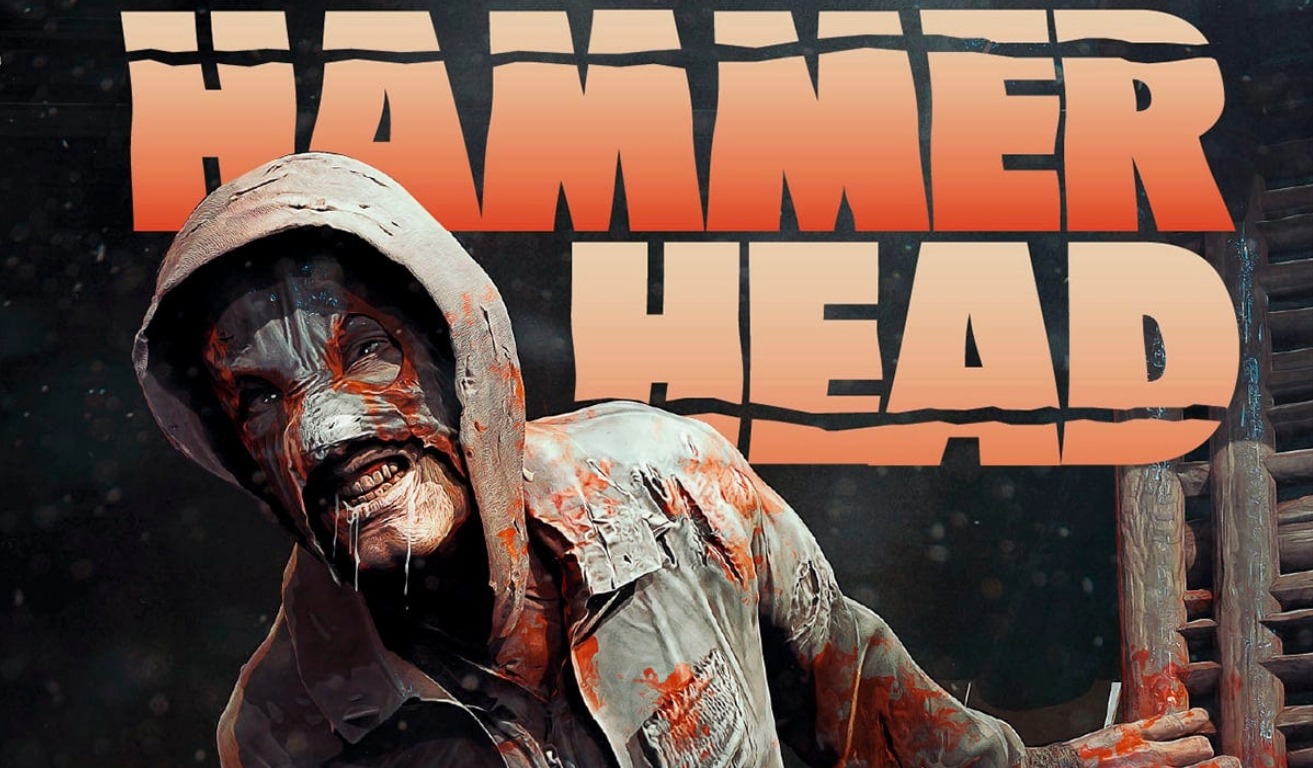
Ed Brisson: Coming up with the Henry “Hammer Head” Elgin design took a lot of back and forth. I came to the table with a few ideas – I didn’t want him to look like Michael Myers or Jason Voorhees. I wanted him to stand apart so that, even by just seeing his silhouette, you’d know who it was.
I had some ideas to how he would dress, and we had put together a huge trove of images of old Halloween masks as inspiration. Even though it didn’t make it to the final design, I was obsessing over Halloween masks from the early 1900s.
We knew we wanted him to be tall and lanky; it felt important that he should look as though he could barely lift the sledgehammer, let alone wield it as deftly as he can. In his designs, Damian made Hammer Head’s clothes just slightly too short for him, which is such a small detail, but subconsciously gives the design an uncomfortableness that feeds into what we wanted readers to experience every time he’s on the page.
Ultimately, we wanted Hammer Head to feel both fresh and familiar. We wanted people to look at him and know right away that he belonged amongst the likes of Leatherface and Jason, but still wanted to make sure he felt unique and not derivative. It’s a tough line to walk!
RELATED: 10 Friday the 13th Part VII: The New Blood Facts You May Not Know
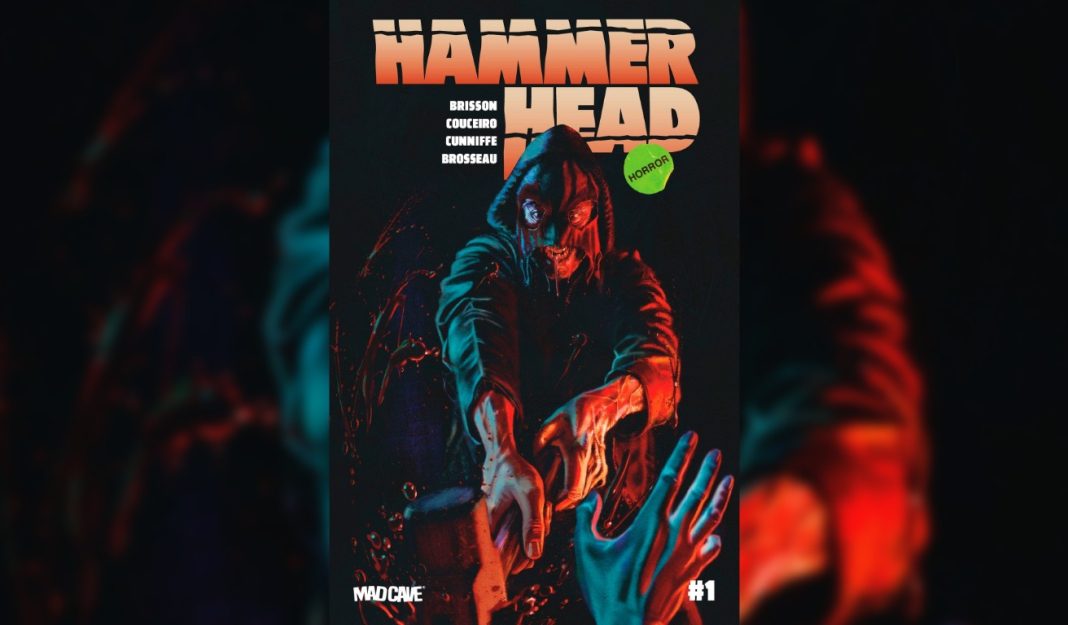
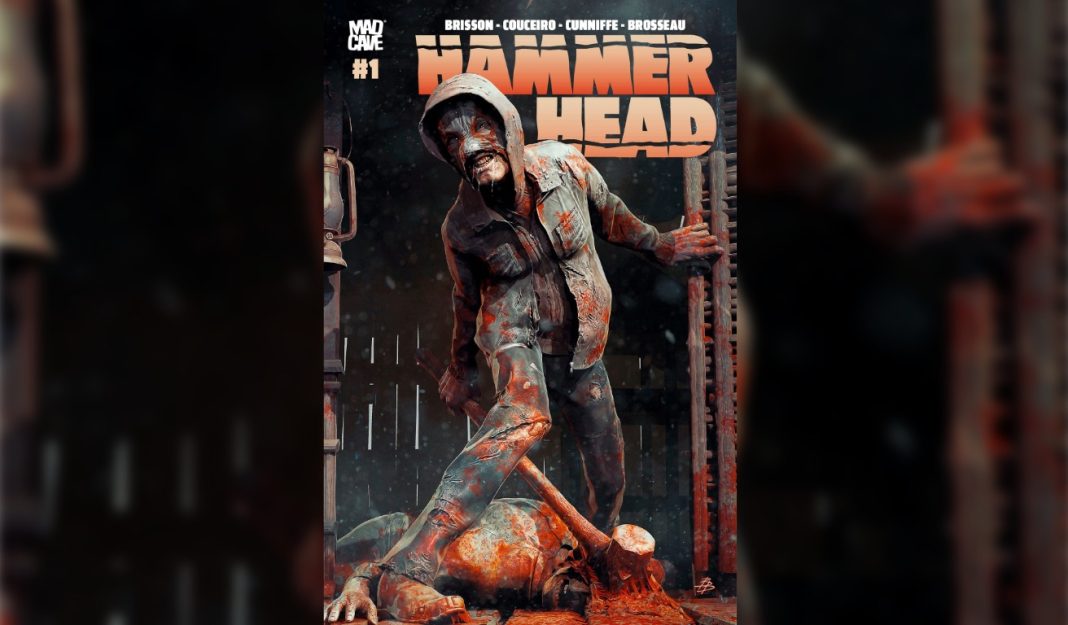
HGL: The covers are some of my favorite horror comic covers in recent memory. Can you talk about the artists behind them?
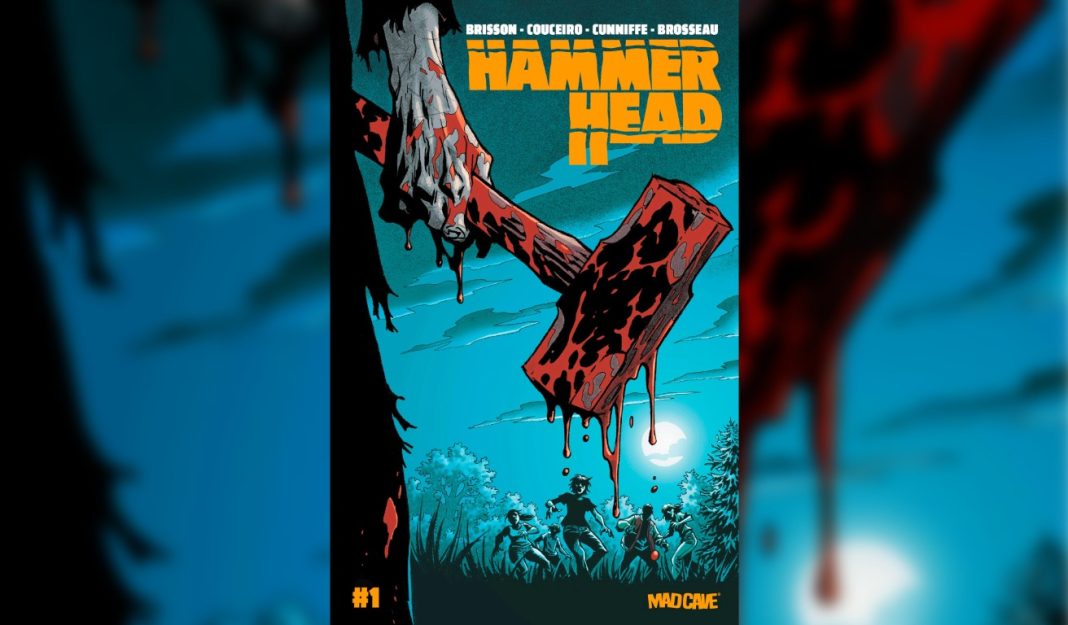
Ed Brisson: Damian has been handling the main covers and has created some of my favourite covers in our 20 years of collaborating. I jumped out of my seat in excitement when that second cover came in.
For the variant covers, we have Justin Coffee, who does a lot of Blu-ray artwork for newer rereleases. He lives a couple hours from me, and I’d met him at a party a few years back and thought it would be great to rope him into a cover. The Hammer Head #1 variant cover he did for us is his first-ever comic cover, which I’m very happy about. He’s since been hired on to do a few other covers for Mad Cave; looking at it, it’s not hard to see why.
We also have Bjorn Barends, who’s an incredible cover artist and did a few of the covers when I was writing Predator for Marvel. And lastly, we have Martin Simmonds, who folks may know from The Department of Truth and Universal Monsters: Dracula. All of the covers are incredible; I feel very fortunate to have these folks along for the ride.
HGL: It’s clear Hammer Head draws inspiration from classic slashers. What do you love about the subgenre, and how did you approach Henry Elgin as a distinctive slasher villain?
Ed Brisson: As a kid, there was a period I was banned from watching horror movies. Poltergeist, which was always on cable for a period in the ’80s, had given me intense nightmares, and so my parents decided I shouldn’t watch horror. Though, for some reason, they made an exception for black-and-white and British horror, which led me to Hammer films and Night of the Living Dead.
The ban didn’t stick for too long, as we had a VCR and First Choice/Super Channel (Canada’s answer to HBO). Since I was the only one who knew how to program the VCR, I’d set it to record things that aired when everyone was asleep and then watch them when no one was around (the joys of being a latchkey kid).
Because it was the mid-to-late ’80s, slashers were all the rage, and I threw myself into the genre with everything I had. So, for me, there’s a comfort to it. I was obsessed with Freddy, Jason, and Michael. I wrote fan-fiction about them all the time (before there was a term for fan-fiction). I’ve always wanted to do a project that played around in the slasher subgenre; it was just a matter of finding the right story, of not doing something that felt like cosplay or fan-fiction, but rather had something to say beyond just “look at these gnarly kills.”
The book is about lasting trauma, the expectations placed on victims, and the reliance on the prison industrial complex as some sort of solution to crime, rather than remedying problems at their root. As to Henry Elgin, I think the best slashers are those who you can sympathize with.
Jason’s backstory works so well because he was a victim, and everything he (and his mother) did after was a response to that. We knew that we wanted something like that for Henry, something where you can understand his rage, even if he’s taken his retribution well beyond any attempt to balance the scales.
HGL: Once Hammer Head concludes, will you continue writing horror comics?
Ed Brisson: As mentioned, with my creator-owned work, I’m trying to focus heavily on crime, horror, and some speculative fiction, like I did with The Displaced a couple of years back. In terms of my own interests, these are them. I grew up on a steady diet of horror and crime films and novels. I’ve watched every episode of The Twilight Zone about a dozen times over. These are the types of stories I love and the type of stories I want to tell.
I am currently working on another horror book that will be out in April (I believe), and Damian and I have a horror project that we started developing during the pandemic that we’ve talked about getting back to after Hammer Head is done. That one is very much a body horror book about addiction and untreated trauma. The designs Damian initially came up with are out of this world.
So, yeah, hopefully plenty of more horror from me for years to come.
Support independent genre journalism. Horror Geek Life is powered by passionate writers, editors, and fans. If you enjoyed this article, you can help us keep the lights on by buying us a coffee.
As an Amazon Associate, Horror Geek Life earns from qualifying purchases. Some links may be paid affiliate links, which means we may earn a small commission at no extra cost to you.