







When it comes to modern horror directors, none are as divisive as Rob Zombie. The comment section to any article or news regarding Zombie’s films is a battleground, with a generous portion of the comments insulting the director or calling for him to stop making films. To many fans, this response is deserved. The dialogue in his films is often criticized for its juvenile nature and overuse of expletives, the storylines have been described as shallow and pointless, and the acting skills of his wife and other cast regulars is often called into question. Despite all of this, whether you like him or not, Rob Zombie is the undisputed king of modern iconic villain design.
Zombie’s knack for awesome character design goes all the way back to his early days as a mere rock singer and album art illustrator for his legendary metal outfit, White Zombie. The liner notes to White Zombie’s albums (and later, solo act simply titled Rob Zombie) are chock-full of gruesome illustrations of monsters and madmen, all drawn by Zombie himself. It was evident from the get-go that Rob had an eye for scary-looking creeps and horrifying baddies. Take a peek at the booklets to White Zombie’s records, Astro-Creep 2000 and La Sexorcisto, and you’ll see exactly what I mean.

His talents as an illustrator even served as a heavy inspiration to a sequence in the feature film, Beavis and Butt-head Do America. In this trippy scene, Zombie-style creatures and characters unfold before the blockheaded duo’s eyes as they hallucinate in the desert. Though Zombie himself didn’t animate the sequence, the backing music is a White Zombie song (“Ratfinks, Suicide Tanks and Cannibal Girls”), and the characters are undeniably of his specific vision.
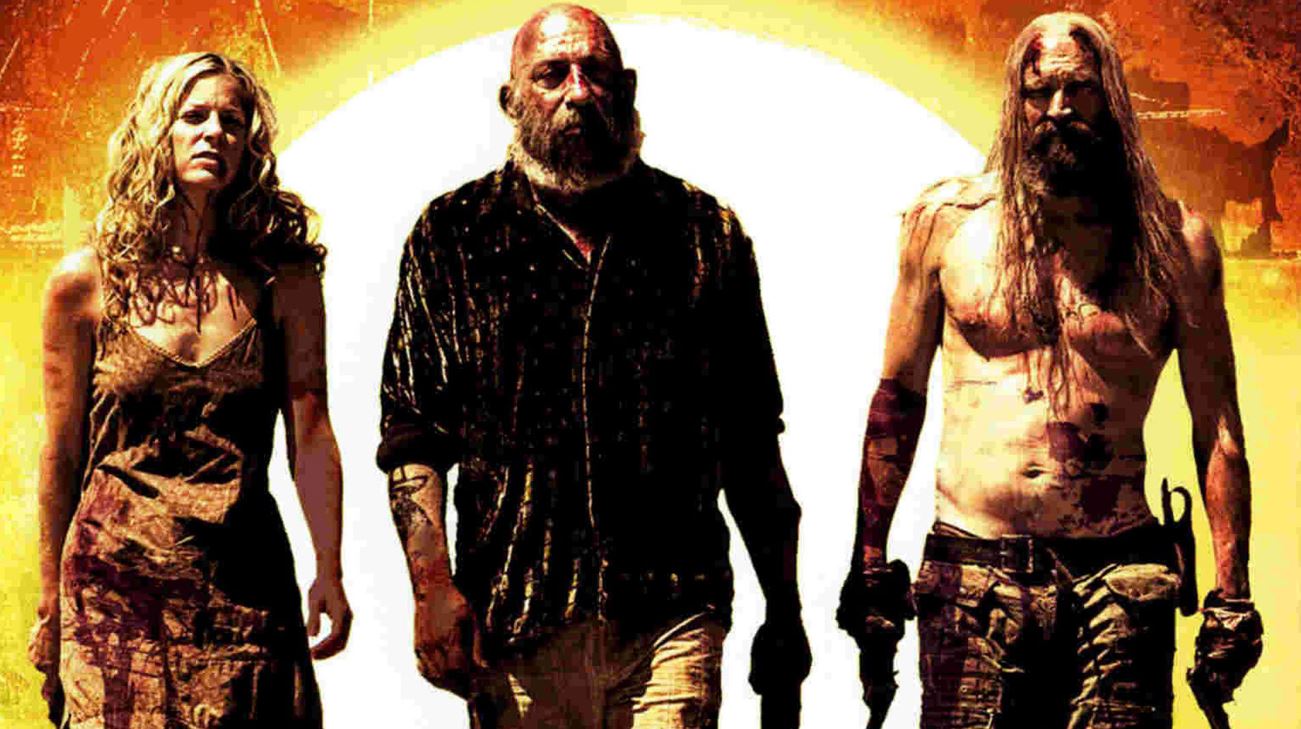
To see evidence of Zombie’s status as master of iconic cinematic villains, you need look no further than his first film, House of 1000 Corpses, and its sequel, The Devil’s Rejects. The two main antagonists of the films, Captain Spaulding and Otis B. Driftwood, are unforgettable and frightening. These films are often critiqued heavily for their scripts and it’s hard not to agree with the critics. The amount of cursing is unprecedented and unnatural.
As for the “look” of the villains, they’re beyond impressive. Spaulding, portrayed by genre legend Sid Haig, is a greasepaint-slathered clown who looks as disgusting as he is terrifying. Driftwood, played by Bill Moseley (Chop Top in The Texas Chainsaw Massacre 2), is a Charles Manson-like murderer whose dirty and unkempt appearance is startling.
The appeal of Spaulding and Otis is unparalleled. Merchandising on these films is huge, from shirts to masks to key-chains and figurines. If you’re still doubting the iconic nature of these characters, go to any and every horror convention in America, the amount of fans dressed as Captain Spaulding and Otis Driftwood that you’ll encounter roaming the halls will have your head spinning.
Now, onto a touchy subject…Rob Zombie’s contributions to the Halloween film series. Most fans find these films indefensible because, well, they are. Zombie picked up one of the most beloved horror film franchises and completely flipped it on its head. He obliterated any mystique that the character of Michael Myers had by giving him a lengthy and disturbing back-story that justifies Michael’s homicidal antics. He also, predictably, plagued the films with his trademark potty-mouth approach to dialogue. Most fans consider the films to be some of the weakest of the series, the second of which being the butt of many a joke within the horror community.
There is one redeeming factor to these movies, the design of Michael Myers. Whether you’re a fan of these films or not, it’s hard to deny that the way Myers looks in Zombie’s two entries is utterly menacing. He’s huge, he’s dirty, and he looks downright pissed. Tyler Mane’s portrayal of adult Michael in these films is the absolute high-point. And again, like Otis and Spaulding, Rob Zombie-era Myers merchandise and cosplayers are an insanely common sighting at your local horror show. In fact, of all the Myers’ designs, one of the most popular among costume enthusiasts is the tattered-masked filthy-looking Michael from Zombie’s much argued reboot films.
Zombie’s most recent film, 31, has been universally slammed by fans and critics alike. The crowdfunded feature about a gang of murderous clowns praying on a group of carnival workers as part of a deadly game of survival hosted by sadistic aristocrats is largely seen as derivative and sloppy.
Even in the face of a seemingly rushed script and poor acting, Zombie delivers yet again with villains that look horrifying. Particularly freaky-looking are a pair of mean ol’ clowns eye-rollingly named Psycho-Head and Schizo-Head (portrayed by Lew Temple and David Ury, respectively). The two are a revolting looking pair of scrawny weirdos with old rotten clown masks, body-paint, and chainsaws. Sadly, the duo are given obnoxious dialogue to work with and their menace all but disappears as soon as they open their mouths. Not surprisingly, the nasty-looking pair have been immortalized as latex Halloween masks from famous mask company, Trick or Treat Studios, and are also a popular choice for convention costumers.
Zombie’s films are a big point of debate. Those who love them have an endless passion for their gritty nature and over-the-top violence. Those who despise them are quick to attack their poor storylines and bad dialogue. One thing that isn’t debatable is the iconicism of his villains and their popularity among merchandisers and fans. While other films have been successful in introducing new horror icons to the world, such as Laid to Rest’s Chromeskull, Hatchet’s Victor Crowley, and Behind the Mask’s Leslie Vernon, none have broke the mainstream like Rob Zombie’s villains. With Zombie’s third installment to the Rejects series on the horizon, 3 from Hell, you can be sure that he has more unforgettable characters up his sleeve.