












When you think of the vast library of games on the Sega Genesis, there are likely a select few that come to mind. The blast processing found in Sonic the Hedgehog or the slick style of Streets of Rage are noteworthy candidates. If you’re a Genesis enthusiast, maybe you’d lean more toward the exceedingly rare Alien Soldier or ever-popular Gunstar Heroes. Despite ultimately falling out of favor when it came time to compete with the Super Nintendo Entertainment System (SNES) in the early 1990s, plenty of games in the Genesis library remain beloved to this day.
In fact, in spite of its comparatively limited hardware, the Sega Genesis was capable of some pretty stellar stuff. Some of the most graphically impressive Genesis games would become staples of the console based on just how much they pushed its limits. Panorama Cotton, for instance, would craft a pseudo-3D world without the use of polygons only a year after Nintendo’s Star Fox hit the scene. Gunstar Heroes‘ baffling number of sprites on-screen at once, in addition to an unprecedented level of graphical effects, is still amazing to look at more than three decades later. Of course, we also have to mention Comix Zone, a game that takes place inside a comic book. Aside from featuring some of the most vivid backgrounds and enemy designs found on the Genesis, along with stellar sound design, the game utilized the format of a comic book by having the player character literally jump between different comic panels. The margins between panels could even be busted open with the player’s punches. It was pretty interesting stuff for 1995.
The developer of Comix Zone, Sega Technical Institute (STI), crafted a reputation for pushing the Sega Genesis to its absolute limit. Aside from Comix Zone, their previous efforts took the forms of 1991’s Dick Tracy and 1992’s Kid Chameleon, with the latter being second only to Sonic as the console’s flagship platformer. While the team itself would ultimately be disbanded in 1996, for reasons we’ll get into later, they would leave one last little oddity on the Genesis prior to their closure: The Ooze.
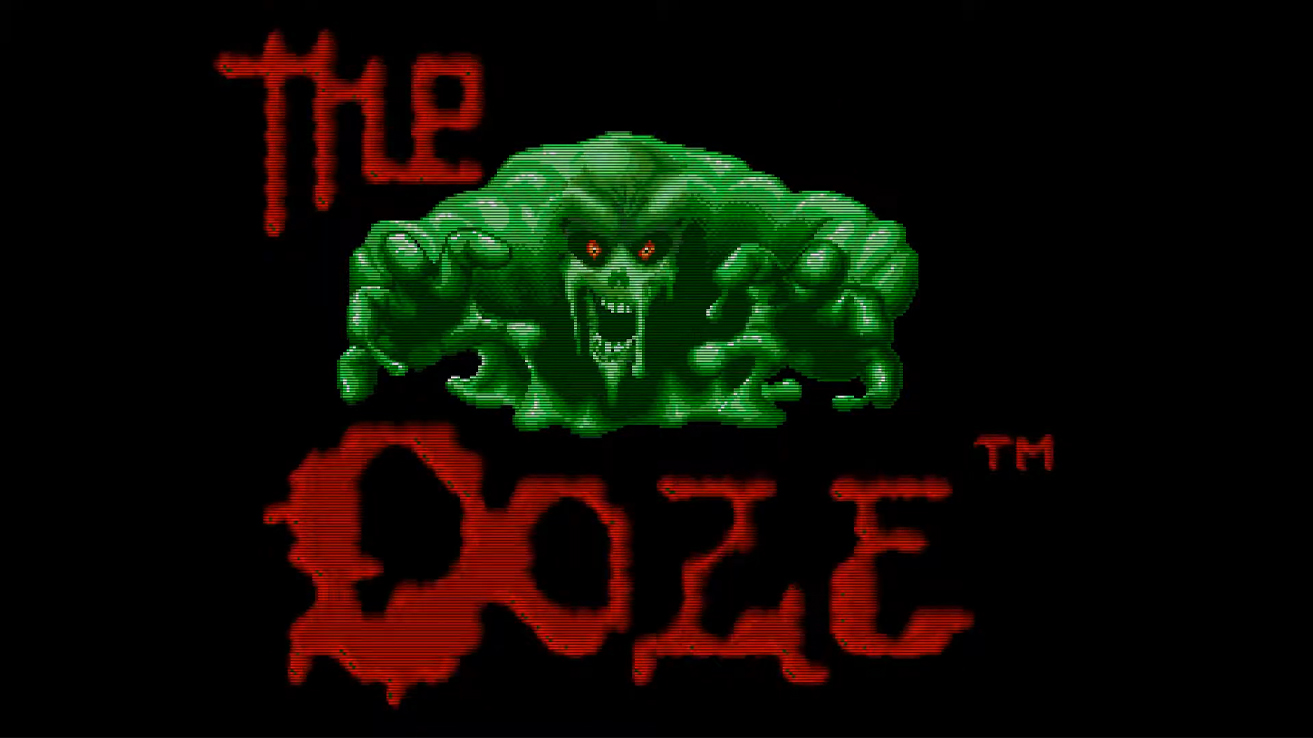
The box art for The Ooze gives an idea of what to expect from this oft-forgotten action game. Depicting a snarling, gelatinous green monster attacking a group of gun-toting scientists, The Ooze promises a radioactive romp through industrial environments and research labs, with one severely angry blob at the player’s control. For what it’s worth, The Ooze delivers on this premise — in theory.
The Ooze Is a Story of Revenge
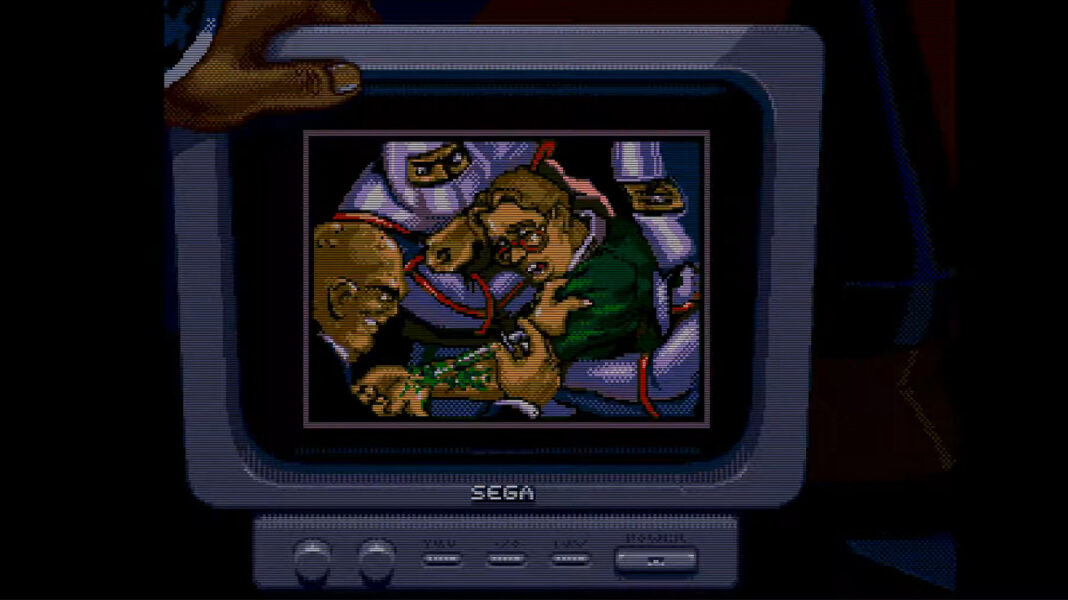
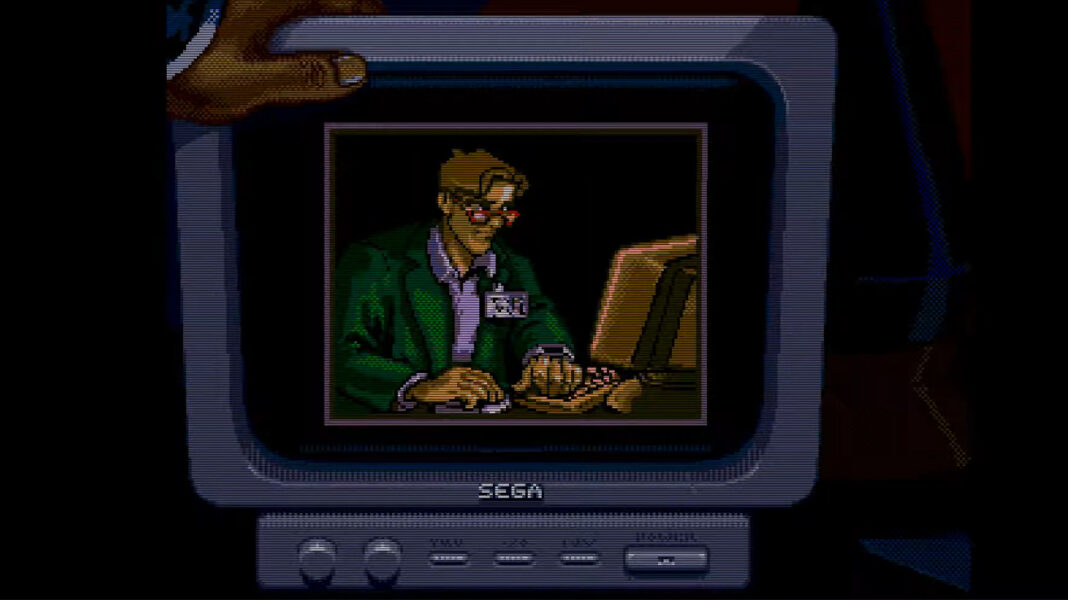
Before the game starts proper, you’re given a grim intro cinematic. From the perspective of a faceless figure peering into a television set, the game’s setup is established via a series of textless stills. Dr. Daniel Caine, a researcher at “The Corporation,” is making his rounds throughout his research facility before he makes a terrifying discovery. After formulating a toxic gas for his employer, he discovers the existence of “Operation: Omega,” a secret plan to release the gas onto the world. Seeing as how The Corporation has the only antidote, they would subsequently sell the cure to profit off of the world’s suffering.
Shortly after this discovery, Caine is apprehended by the Director of The Corporation, with two hulking guards in hazmat suits forcing Caine into captivity. From there, Caine is forcibly injected with a mysterious chemical before his body starts to liquefy into a green ooze. As his musculature and organs dissolve into corrosive muck, one of the guards forces his remains into a bathroom toilet, flushing Caine away as if he were nothing more than industrial waste.
RELATED: Top 10 Spookiest Horror Games on the Sega Genesis
But Caine is far from dead. Maintaining his sentience, Caine’s body is now nothing more than an amorphous blob of green ooze, with a monstrous, skull-like head forming at its center. Armed with abilities that allow him to spit acid at his enemies, punch foes with goo-laden appendages, and navigate the various plumbing systems of The Corporation, only one thing is left on his mind: revenge.
This grittiness found in the game’s premise translates to its presentation. The whole game is depicted with a surprisingly detailed art style, with harsh black outlines, limited but vibrant colors, and vivid character animation. Caine himself is arguably the most expressive of the entire cast, with his slick head twisting into horrifying grimaces whenever he’s damaged or inflicts damage onto others.
Similarly, the game’s soundtrack embodies the same kind of harsh bleeps and crunched guitars that most would come to associate Genesis with. Composed by Howard Drossin, who would also compose Comix Zone and the ill-fated 2010 Splatterhouse reboot, the soundtrack feels appropriate for The Ooze’s oppressive setting. Taking notes from industrial rock and metal, its nearly 20 separate tracks carry with them a similar vibe to contemporary industrial acts, with a signature musical motif stitching each of the game’s levels together. Though each track is admittedly short, the looping of each track is seamless enough to not be an annoyance. As things get less industrial and more high-tech in the game’s later levels, the transition is made more intense by an increase in tempo.
The (Unforgiving) Gameplay

But the most impressive element found in The Ooze has to be the titular puddle of muck himself. As unconventional a protagonist as he is, Caine’s ooze-like consistency isn’t just for show. Defeating organic enemies means you can incorporate their ooze-ified remains into your body, making the puddle expand with each enemy defeated. While primitive by today’s standards, there’s an attempt made to make your ooze twist and contort with the environment: your mass will compress and expand with the surrounding environment, large portions can be cleanly sliced off and reincorporated, and the utilization of floor-based hazards like floor-grates — which is admittedly a hilarious visual — makes for the closest thing to liquid physics the Genesis could muster. The size of your puddle even affects your attacks. You won’t be able to use your ranged attack if you don’t have the extra ooze to spare, and the range of your melee attack is proportional to how much of your body you can stretch around.
A series of power-ups Caine can collect also show off the game’s color palette. While some power-ups simply grant you the ability to respawn elsewhere on the map, others will give Caine a complete change in color along with granting him new abilities. Some give him an incredible speed boost, granting him a blinding yellow hue with complementary blue eyes. Others will turn him deep red, allowing him to instantly absorb any enemy he comes into contact with.
All these elements combine to form one of the most unique games on the Genesis, with an ambition that just barely exceeds the console’s limitations. Like Comix Zone, it would be a fascinating concept for a game that still lingers in your memory years after touching it for the first time. It’s one of the relatively few titles in the Genesis library that could truly benefit from a remaster, as what it brings to the table could be handled much more efficiently with modern technology.
A remaster would also fix The Ooze‘s critical shortfalls. Despite its unique premise and unconventional approach, The Ooze‘s capacity for fun runs out quickly. It’s unfortunate, but we can’t exactly ignore it, given how quickly these issues present themselves.
RELATED: ‘Toxic Avenger’ Reboot: New Plot Details and Images Revealed
The Ooze is just too unforgiving. A lot of other games from the era are difficult, but they’re not necessarily punishing. You’re often given ample chances to overcome your various obstacles, either through additional lives, unlimited continues, or even something as simple as a password system. Not so in The Ooze. You get three lives. You have no continues, no means to save your progress, and no passwords. Once you’re out of lives, it’s all over. This is by no means a short game, either. Caine’s glacial movement speed, combined with the ungodly amount of traps and difficult enemy placements, means you’re going to have to trawl through each level at a snail’s pace. Though you can utilize checkpoints to avoid starting a level other from the beginning, it only helps so much.
This isn’t inherently bad. If you’re rushing through every stage — a bad idea in most cases, as the game will try its damnedest to prevent that — the threat of starting over is more of an annoyance than a detriment. It only becomes outright bad when The Ooze emphasizes complete and total mastery of every stage.
To get the game’s “good” ending, you must grab fifty secret DNA Helixes hidden throughout its five major levels. If you miss a single one of these, you’re locked into the bad ending. Again, not an awful idea on paper: it’s a good way to force the player into mastering the game’s content. The downside to this is that it means exploring every single inch of every stage, as some of the Helixes are hidden inside bonus stages. These areas are not given any kind of indication of where they may be. Rather, you’re forced to ram your puddle of ooze into every nook and cranny of every map in the hope that you find one.

These timed diversions force you to take out a group of mutated rabbits, with one Helix granted for entering the bonus area and another for successfully clearing it within a time limit. Again, miss one, and you have to go back. Along with purposefully going off the beaten path into incredible danger to find those in plain sight, this ultimately turns what would’ve been a cartoonishly morbid action-adventure game into a dull slog. The intended way to finish the game is far less enjoyable than quickly rushing through it.
Your puddle of ooze is also incredibly fragile. While you can lose a substantial amount of mass and still slide around, a single blow to Caine’s head from any source of damage will instantly kill him. Now, maybe this is the wrong impression to have, but in a game where you’re incentivized to collect as much mass as possible and become an unstoppable force of destruction, why is this immediately made worthless by taking a single errant blow? It’d be like if the monster from The Blob could be killed by throwing a salt shaker at it. The only benefit of growing larger is having a slightly easier time fighting things, but you’ll just as quickly lose this mass through tiny mistakes or environmental hazards that can’t be avoided at a certain size.
The first level, the Toxic Dump, sets up a bizarre expectation for the rest of the game where you are rarely, if ever, hampered by environmental hazards or tight hallways. There’s a momentum to be found in your movements and actions, and that almost immediately vanishes in favor of stop-and-go progression and dangerous beelines away from obstacles as soon as the first boss is defeated. It feels more in line with what would be expected from a stealth game, but you’re often discouraged from directly circumventing enemies.
RELATED: Top 10 Spookiest Horror Games on the NES
The Genetics Lab, found a little over halfway through The Ooze, feels like an encapsulation of just about everything that’s wrong with the adventure as a whole. One level starts with a precarious scenario. Shortly after beginning the level, you’re greeted with an obstacle: a pair of pits with a glowing pole between them. It’s established early on that these poles can be clung to with your melee attack to pull your body between narrow gaps since it stretches your mass far enough to form a thin line. It’s a novel idea for traversing obstacles, and it’s fun to use when it works. However, if you enter the level with an insufficient amount of mass to clear the distance, you will immediately die.
A similar issue presents itself later, where if you have a significant amount of mass, surrounding pits and floor gates will immediately drain a significant amount of it away. Other times, your movement speed is too slow to pass through hazards, with one egregious example guaranteeing your death unless you find a power-up that is completely obscured by an obfuscating wall.
What initially starts out as a promising adventure slowly devolves into something brutally difficult, with an unfortunate amount of frustration littered throughout. What could’ve been an incredible power fantasy is actually an incredibly difficult game whose content doesn’t justify the immense time investment it ultimately demands. The Toxic Dump was fun, for what it’s worth.
The Ooze‘s Impact in the Gaming Industry
Was The Ooze successful, at least? STI had previously taken the world by storm with their efforts on Sonic the Hedgehog 2 and both Sonic 3 and Sonic & Knuckles. Even the critically maligned Sonic Spinball kept the studio afloat with its modest sales numbers. Did The Ooze see a similar financial return? The short answer is no.
The long answer needs a bit more context. You see, 1995 was a groundbreaking year for not just Sega but for the medium of gaming as a whole. It would be the year that the Nintendo Entertainment System (NES) — the Genesis’ first major competitor — would officially be discontinued. The SNES would be the single best-selling console in both the United States and Japan. The latter half of the year would see Sony’s foray into the home console market with their signature PlayStation, beating Nintendo to the punch by almost a year when it came to 3D graphics and disc-based storage, SEGA themselves were busy with their own disc-based system, the Sega Saturn.
You could argue that the Saturn would ultimately be one of the biggest contributors to STI’s eventual shuttering. There were a lot of moving pieces at play when it came to the Saturn, so we’ll boil it down to a few key points: the difficulty in developing for the Saturn, combined with the intense competition in the console market, the departure of multiple key staff members, and a failure to ultimately provide a new Sonic game, Sonic X-treme, ultimately left STI as a shell of its former self. The studio would be officially dissolved and repurposed into a product department towards the end of 1996.
Did The Ooze leave any meaningful impact on the gaming industry as a whole? Interestingly enough, yes. A designer for The Ooze, Stieg Hedlund, would have tremendous success in the industry following his stint with STI. He would later join Condor as a lead designer, whose work in the action-RPG genre would lead to one of the most famous games in the genre to this day. Did we say Condor? Sorry, we meant Blizzard North — the same studio responsible for Diablo and Starcraft, which he had an extensive role in developing.
RELATED: ‘Postal’: Looking Back at the Controversially Raunchy Game Franchise
Multiple artists, including art director Bob Steele and artist Alan Ackerman, would join Hedlund for Diablo II. Producer Michael Wallis would be involved with Blade & Soul and Eve Online, and Craig Stitt would play a role in the development of just about every PS2-era Ratchet & Clank game. There was clearly plenty of talent involved with both The Ooze and STI as a whole, and that talent translated into quality products later on.
Funnily enough, you can even find traces of what The Ooze attempted to accomplish in the decades that followed. The best example would likely be 2020’s Carrion, developed by Phobia Game Studio and published by Devolver Digital. Though it feels less like an unofficial Toxic Avenger game and more like a horrifying riff on Alien, a similarly unusual control scheme is utilized to bring a tentacle-driven creature to life. Games that are similar in spirit, like Maneater, Jaws: Unleashed, Prototype, and The Darkness, would also recapture the lofty promise of playing as a horrifying monster with unconventional powers.
Is The Ooze worth playing nowadays? Probably not. The aforementioned titles do ultimately re-create a similar premise found in The Ooze, with each one featuring its own modern conveniences — you know, like the ability to stop playing and save your progress. That being said, it’s worth at least taking a look at whenever you find a chance. It remains a forgotten oddity from later in the Genesis’ life, one of the last few projects to linger on in the era of 2D games.
The Ooze is available exclusively on the Sega Genesis, though it has seen numerous re-releases either on plug-and-play consoles or the Sonic Mega Collection released in 2002.
We’re hardworking geeks who love to geek out, but we can’t do it without you! If you enjoyed this article and want to see more like it, please consider tipping our writers. Also, as an Amazon Associate, we earn from qualifying purchases.