











For over a century, American action movie violence has relied on the same quiet lie. Not about how much violence exists, but how simple it is. The lie is encoded in the choreography of death. A man gets shot, spins as he hits the ground, and the story moves on. No one checks his pulse. No one screams his name. No one has to live with what just happened. The hero keeps walking, the music swells, and the audience is free to enjoy the moment without sitting in its wreckage.
Hollywood didn’t just invent this fantasy; it perfected it. Once you start paying attention to how different filmmakers treat violence, it becomes impossible to ignore how much of their ideology is embedded in where the camera lingers and where it politely turns away. Some filmmakers use violence as a tool. Others treat it as a wound. Those very choices train audiences to feel completely different things when the bodies hit the floor.
For modern American film, John Wayne marks the point where this lesson in movie violence truly begins. He wasn’t the first movie star to brandish a gun on screen, but he did become the template for how gun violence was meant to make us feel. In a Western starring Wayne, violence is functional. The bad guy draws. The Duke shoots. Bad guy drops. There is no lingering. You are not meant to think about the dead man, only about order being restored. The violence doesn’t feel brutal; it feels correct.
Wayne’s films taught generations that force, when wielded by the right man, is not tragic but necessary. The sheriff shoots the outlaw, and the frontier gets tamed. The world becomes safe again. Violence is framed not as a moral catastrophe but as a civic duty. Because the camera never remains with the carnage, neither does the audience. This is how you desensitize people without showing much blood at all.
Then Sam Peckinpah came along and basically told us that we are all lying to ourselves. The Wild Bunch looks like a Western but feels like a funeral. The movie violence is beautiful and horrifying all at once. Blood hangs in the air, and bodies collapse in slow motion. For the first time in American genre cinema, violence feels like something that poisons the world rather than fixes it.
RELATED: Sam Raimi’s R-Rated Horror Film ‘Send Help’ Highly Praised in Early Reviews
Peckinpah, a U.S. Marine and World War II veteran, understood something that John Wayne, who personified cinematic war heroism yet ironically never served, did not: that violence is something men are socialized into and imprisoned by, not something that proves their virtue. His characters are not restoring order; they are dying within it. The final massacre is exhilarating and devastating in equal measure. You feel the thrill and the sickness at the same time. Peckinpah shows you the drug and the overdose simultaneously.
Where action cinema is obsessed with forward momentum, horror is comfortable stopping. Watching. Letting silence do the work. The Texas Chain Saw Massacre, directed by Tobe Hooper, is often called gory, though it hardly is. What it actually does is make violence environmental. It’s in the heat, the noise, the decay, the way people are treated like livestock. When someone dies, the film stalls, forcing you to feel how death freezes the world around it.
Sally’s survival isn’t victory, it’s hysteria. Her final laugh feels nothing like triumph; it’s a mind breaking under the weight of what it just endured. Horror refuses the fantasy that survival equals closure.
Martin Scorsese drags that refusal into the urban landscape. His films are saturated with violence, and none of it is clean. In Taxi Driver, violence reflects how loneliness metastasizes. In Goodfellas, it shows how people get what they want and lose their souls in the process. In Casino, it illustrates how greed literally destroys everything. In The Irishman, it demonstrates how a lifetime of killing ends in quiet regret.
Scorsese lets violence feel seductive at first. You understand why the characters choose it and may even enjoy watching it happen, but then he shows you the cost. No one in his films is ever improved by violence. Even the winners lose something essential. This is the insistence of socially aware filmmaking: not that violence is never necessary, but that it scars, stains, and changes you in horrific ways.
Paul Verhoeven goes even further by making violence fun, and then exposes how grotesque that fun really is. RoboCop is violent, funny, and gratuitous, but it is also a movie about a society that has monetized law enforcement. Starship Troopers looks like a heroic war movie until you realize it is a fascist propaganda film.
Verhoeven is not asking you to stop enjoying the spectacle; he is asking you to notice that you are enjoying it. That is the difference between critique and celebration. The violence is not there to reassure you but rather to implicate you.
RELATED: ‘Scream 7’ Poster Pays Homage to ‘The Texas Chain Saw Massacre’
Sylvester Stallone modernized the John Wayne myth with muscles, sweat, and post-Vietnam rage when he took on the role of John Rambo. Different films, same core idea: the world is corrupt, institutions fail, and a righteous man will fix things with his chiseled, masculine body. Stallone bleeds more than Wayne ever did, but that pain isn’t a warning; it’s valor. Suffering becomes moral validation. The people he kills exist primarily to be killed.
Mel Gibson expands on this formula by putting extraordinary amounts of pain on screen, but his violence isn’t there to interrogate violence; it’s there to sanctify it. This is evident in The Passion of the Christ, Braveheart, and Hacksaw Ridge. Suffering becomes redemptive. Pain becomes proof of righteousness. His camera aestheticizes brutality into a religious experience. The gore deepens the myth instead of dismantling it.
Horror films tend to understand something that action cinema often refuses to, that violence is not a moment, it’s an atmosphere. It doesn’t just arrive, do its job, and then leave. It hangs in the air, contaminating spaces. It rewires people. Horror lives in the anticipation and in the aftermath, making you stay with dread before the blow and leaving you in shock after it’s over. It forces you to remain in the room instead of cutting away to a triumphant stride and a swelling score.
Action cinema perfected the strange trick of showing enormous amounts of violence while emotionally minimizing it. Dozens, sometimes hundreds, die, and the movie never asks who they were or what their deaths mean. They are obstacles. The audience is trained to read violence as spectacle and nothing more. When the hero does the “right” thing, bodies fall, and applause follows.
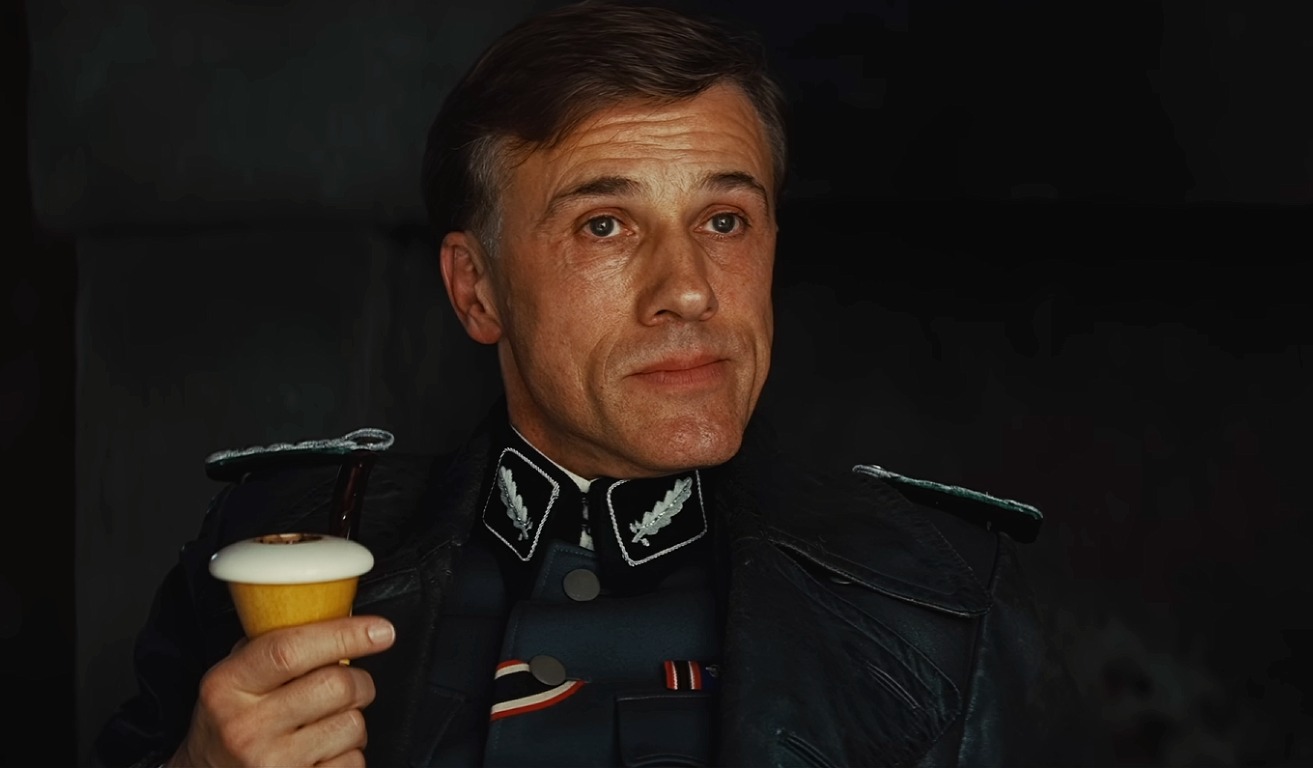
The violence in a Quentin Tarantino film lives somewhere between camp and celebration. It feels joyful, absurd, and rousing. Blood sprays. Heads explode. Audiences laugh. Sometimes it’s pointed, as in Django Unchained or Inglourious Basterds, where genre violence rewrites history into an emotional payoff. But Tarantino rarely lingers on the cost to ordinary people. His films are built around catharsis. When the bad guys die, it feels good, and that’s the design.
Wes Craven, on the other hand, understood movie violence as a cultural disease. The Last House on the Left offers no emotional cover. The violence is ugly, humiliating, and exhausting. Even revenge provides no relief. It doesn’t restore balance; it spreads the infection.
Craven carried that awareness into mainstream horror with A Nightmare on Elm Street, turning trauma into a monster that stalks you in your dreams. Scream implicates the audience directly, showing killers who perform violence using the language movies taught them. Horror stops reflecting violence and starts exposing how it’s rehearsed.
RELATED: ‘Night Patrol’ Review: CM Punk’s Vampire Cop Horror Flick Is a Messy, Uneven Ride
Jordan Peele updates this for a culture fluent in denial. His films delay violence to reveal the systems that make it feel inevitable. Get Out makes you uncomfortable long before blood appears. When violence erupts, it feels like a consequence, not a spectacle. The Sunken Place captures what violence actually does: trapping people inside themselves, forced to watch their own lives from a distance.
Nope turns that critique toward spectatorship itself. The most horrifying moments aren’t the attacks, but the urge to turn danger into content. Violence punishes those who insist on watching without regard for consequence. The spectacle consumes the spectator.
Here is the uncomfortable truth. The most dangerous depiction of movie violence isn’t the gory kind; it’s the easy kind. Wayne and Stallone didn’t desensitize audiences by showing too much blood; they did it by showing too little consequence. They made violence feel normal, efficient, and necessary. Peckinpah, Scorsese, Hooper, and Craven made it feel like something that breaks people. Even when it thrills, it is never innocent.
Movies don’t just reflect how we think about violence; they teach us how to feel about it. Horror asks you to sit with dread, guilt, and damage. It makes you see a discarded body not as an obstacle, but as an absence that echoes. Once you recognize that, it becomes very hard to watch the next John Wick come along and gun down countless people without wondering who the movie refuses to mourn.




An excellent and thoughtful post. The older I get, the harder it is to cheer for scenes where our Hero™ mows down a bunch of faceless mooks. I keep seeing those stormtroopers toppling over the railing with a scream, and thinking, “Who was that? Did his mother love him? We care about Luke’s fate, but not his?”
It would be a marvelous thing to see more action movies where the protagonist is really invested in avoiding or at least minimizing that sort of violence, while being portrayed as wise and strong for that choice, rather than weak. Maybe it would also help with the recent escalation of mook-swarm sequences, as directors throw more and more disposable enemies at their heroes for longer and longer fight scenes, until it all starts to feel meaningless and devoid of peril? I wonder…