




During the late 1980s, Stephen King had a decade of published work under his belt. Already established as one of the most prolific horror authors of all time, it was a pretty natural transition that his acclaimed works were optioned for the silver screen. In 1982, King took his first stab at screenwriting with Creepshow, contributing to the horror anthology with adaptations of two previously published stories (Weeds, The Crate) and three written specifically for the screen.
He would go on to write more adapted and original content for Cat’s Eyes (1985) and adapt the feature script for Pet Sematary (1989). Yet, he had never written an original feature entirely for the screen. Following the success of Christine (1983) and Stand by Me (1986), Columbia Pictures was ready to back King in writing a wholly original script with a budget of $15 million.
And thus, Sleepwalkers came to be.
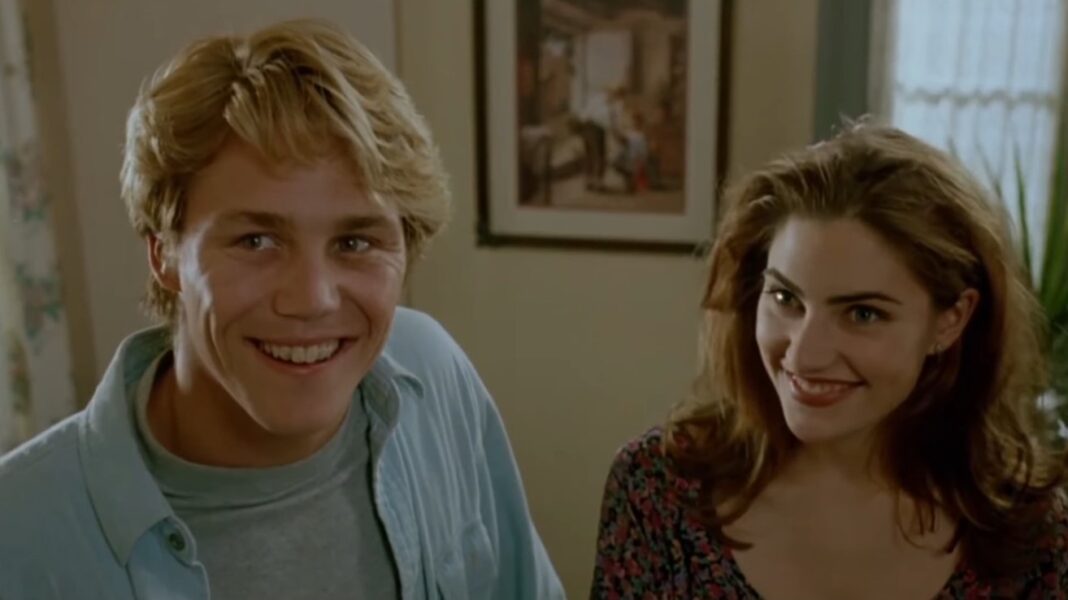
Now, Sleepwalkers wasn’t completely original but actually adapted from an unpublished King story. Never seeing fans’ eyes gives an adaptation certain amounts of freedom and play, not beholden to the rigors of reader scrutiny. What comes out of it is one of the most endearing slices of cult cheddar out of the early ‘90s. Though critically panned upon release, Sleepwalkers won the box office its opening weekend and turned a clean gross of $30 million nationwide.
And, of course, new life has been sucked from virginal audiences who see the name “Stephen King” on the Scream Factory Collector’s Edition Blu Ray and blind buy this opus of horror-humor to celebrate all its camp and glory. Because that is exactly what Sleepwalkers is — a wild and disturbing jaunt of outright cult appeal, and we are here for it.
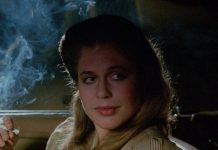
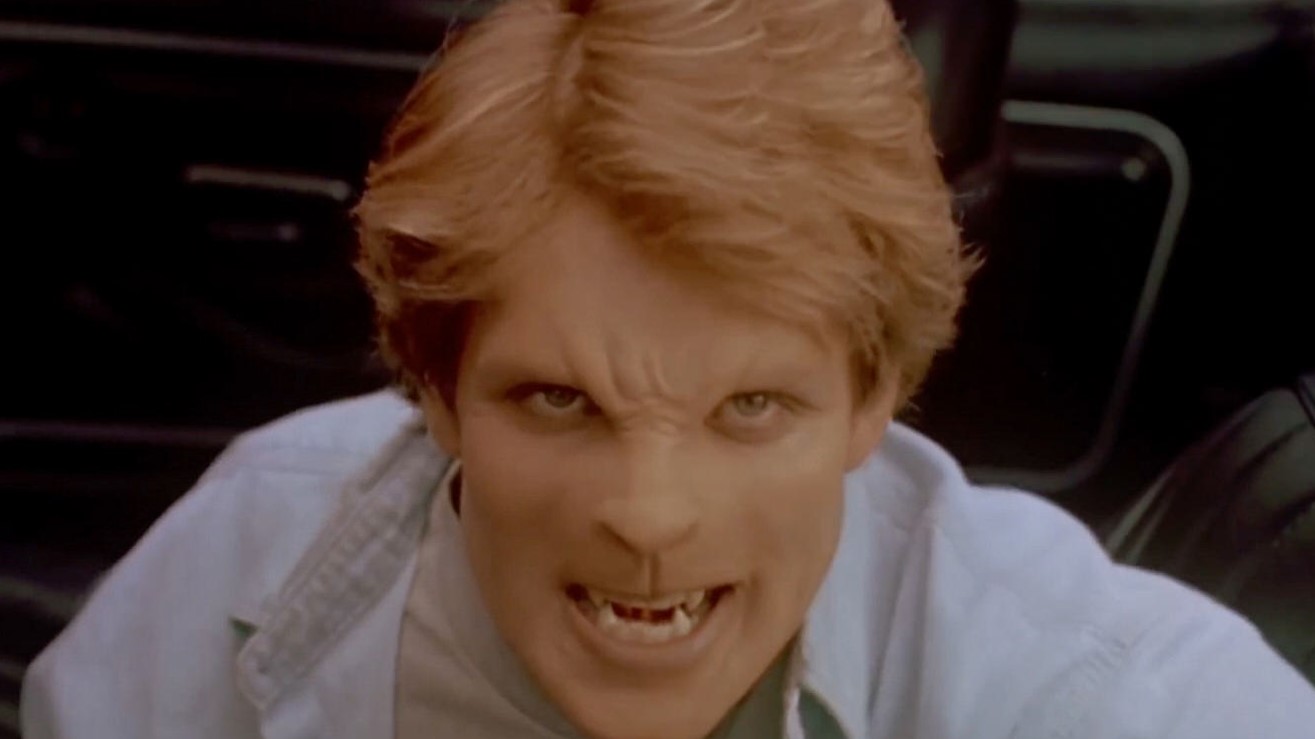
Charles and Mary Brady (Brian Krause and Alice Krige, respectively) are the last of a dying race of anthropomorphic “energy vampires” who take on a cat-like visage when feeding. In their desperate attempts at survival, they flee to Travis, Indiana, after being found out in Bodega Bay (by an uncredited cameo by Mark Hamill, no less). In Travis, Charlie sets his sights on Tanya (Mädchen Amick) to steal her energy and give it, quite literally, to his ailing mother.
He woos Tanya but fails to take her energy while tips the film into chaos. The local police are alerted to the danger of the family. This includes an intrepid police cat, Clovis, because, oh yeah, the Werecats’ only weakness is actual cats. In a final showdown, the town cats and police band together to defeat the Bradys once and for all.
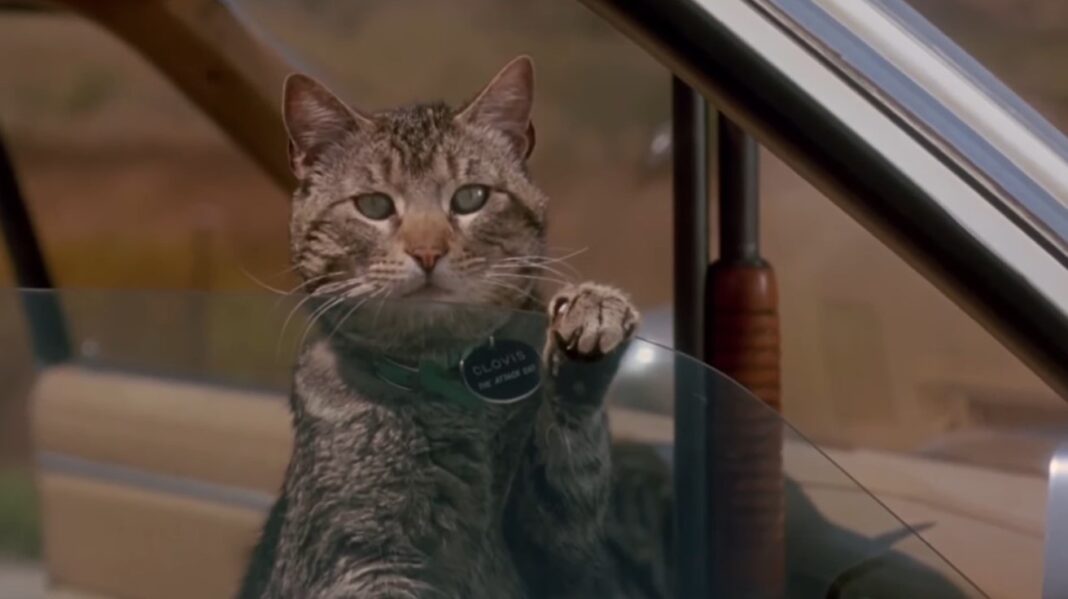
The underlying elements of Sleepwalkers build into a truly terrifying premise. They seek the life force of virginal females to sustain their race. It’s a revisit to Jerusalem’s Lot and Silver Bullet, with Cat’s Eyes thrown in the mix. But instead of outright spooky vampires turning people or trolls stealing energy from children, there’s incest and cats. Lots and lots of cats. 126 cats, to be exact (don’t worry, we’ll talk about the incest later…)
While the joke about “herding cats” is often applied to impossible tasks, Sleepwalkers accomplishes this with a true herd of industry-trained felines. This was an unfortunate turn for Mädchen Amick, who was allergic to cats but didn’t share this until production began. But she saw it out, and the climax is pretty spectacular, with an exceptional number of cats stampeding down a street to save Tanya and dispel the Werecat race forever. Director Mick Garris recalled that Sparks, who played hero-cat Clovis, was a particular delight, being the “Robert De Niro” of cat actors. Garris, too, is allergic to cats.
Speaking of Garris, he wasn’t the original studio choice for King’s first original work. Columbia originally had Rupert Wainwright in mind, but when he came to his meeting, his ideas and changes so greatly deviated from King’s script that the studio recognized they wouldn’t be able to call it a “Stephen King” feature if they kept Wainwright on. So, King handpicked Garris, fresh off Psycho IV.
RELATED: HBO WELCOMES HORROR FANS BACK TO DERRY WITH ‘IT’ PREQUEL SERIES
With King’s common theme of “ordinary monsters” paired with Mick Garris’ mantra of “Norman Rockwell goes to Hell,” a match for the ages was born. Garris was perfect for Sleepwalkers, understanding the respect of the created word and bringing only minimal ideas that only served to better clarify and disturb. This, of course, has led to one of the most fruitful partnerships King has had in the Hollywood sphere, with Garris and King working together on multiple made-for-TV miniseries: The Stand, The Shining, Quicksilver Highway, Desperation, and Bag of Bones, plus feature film Riding the Bullet.
It all started here — with what would be considered a “low-budget” horror flick compared to the other films taking place on the studio set at the time. Columbia was also shooting Francis Ford Coppola’s Dracula and Stephen Spielberg’s Hook at the time, and Sleepwalkers flew under the radar with little studio interference. It was a playground of horror hijinks that earned the film four consecutive NC-17 ratings from the MPAA before finally cutting out some particularly gruesome moments to get its R-rating (including Charlie removing a corkscrew from his eye and Mary spitting out some police fingers she bit off).

It also led to one of the more infamous aspects of the film — an incestuous relationship between the Sleepwalkers. Within the first 10 minutes of the film, Krause’s Charlie sweeps the woman he just called “Mother” off her feet and carries her with kisses to the bedroom. It’s not just implied, but later on, plastered on the screen. It’s one of director Mick Garris’ proud additions to the film, which he will often gleefully boast of when interviewed about the project.
And while completely cringeworthy, the physical and emotional love they share adds a sense of tragedy to their plight. They literally only have each other, and in the pearl-clutching scenes of their affection, we also find an air of sadness. It’s one of the unspoken triumphs of Sleepwalkers. Our protagonists are the villains, and there is a connected tragedy to their alone together plight. While they are monstrous, we are brought into their somewhat miserable existence that comes in the trappings of immortality.
Of course, this feeling doesn’t last long. Once Charlie reveals himself in his attempt to suck the life from Tanya, it’s a completely bonkers daylight horror that careens into the realm of Critters 2 madness. It’s almost like the narrative knows this, as Stephen King ‘Hitchcocks’ himself into a small cameo accompanied by Clive Barker (the first and only time these two horror virtuosos appear on screen together) and Tobe Hooper, marking the turn from gothic tragedy.
RELATED: 10 STEPHEN KING SHORT STORIES THAT DESERVE A FEATURE FILM
It’s like King, Barker, and Hooper walk in and say, “ya know what this movie needs?” then turn the “schlock and awe” dial to eleven. From car chases and corn-cob impalations to feline fatalities and corkscrew brutalities — it’s filled to the brim with insane gags and grue.
Coming off the tail end of ‘80s practical effects, the Werecat visage is one of the great accomplishments. It stands up to the test of time, as do the mutilations we’ve come to expect from horror gore. The VFX department uses the state-of-the-art “morphing” technology seen in Michael Jackson’s “Black or White” music video. Though that effect is still endearingly ‘90s, marking the flick with a dated stamp. This does nothing to reduce how ridiculously enjoyable this film is when taken at face value.
Sleepwalkers is not a subtext of a greater whole. It is not burdened by elevated ideas or symbolic posturing. It is horror made with the express purpose to horrify: with disgust, with jumps, with supernatural creatures, with cringe-worthy relationships, with unlikely heroes, with damsels and demons. If you’re looking for this film’s “grand design, ” there isn’t one. But that doesn’t mean it isn’t worth the cozy rewatch one afternoon while drinking Diet Coke through a Red Vine. In fact, that’s exactly what you should do soon to celebrate the 30th anniversary of Sleepwalkers.
And if you have a cat, go ahead and give them a big snuggle today for Clovis.






Nice article and mainly true! In fact Columbia hired me and told me they planned on doing re-writes. In fact had already hired a writer. I moved into a production office on the Columbia lot and started pre-production. Then one day I was called over – King had found out somehow that a new writer had been hired (can’t remember his name right now, nice enough guy but I certainly didn’t hire him!) and was pissed! They panicked a bit and asked me to call King to call him down. I did but it didn’t do much good. A week later I quit the movie and head on home. I gave it a few days and then emailed King to say no hard feelings, sorry it didn’t work out, best of luck with the project etc. etc. He had no idea that I had left. Again the studio just never bothered to call him… Side note: I then ended up working with the same producers Mark Victor and Michael Grais on a picture at MGM based upon The Outer Limits. That’s a whole another story into itself!
Thank you SO MUCH for the clarification, Rupert! I don’t think this information is out in the stratosphere (at least from my research), so now it’s forever solidified in horror film history. But now we’re all going to be left wondering, “what would have been different had Director Wainwright helmed Sleepwalkers 30 years ago….”🤗