









Do you remember the first time you heard about Blacula (1972)? I do. It was some time in the 1970s. I was not even ten years old, and a friend asked me if I’d ever seen it. He was, for sure, pulling my leg. At its most innocent, it sounded like another white kid’s idea of a clever joke. There was no IMDB or Google for him to prove it, and we left it at that. Years later, I would hear the term blaxploitation.
Now, it’s time to celebrate the 50th anniversary of this diamond in the rough. For this piece, I won’t debate blaxploitation films but discuss Blacula on its merits as a retro horror.
The first requirement to enjoying Blacula is an appreciation for the art form as presented in its time. William Crain had little experience as a director, only having sat behind the camera for an episode of the ’70s television series Mod Squad before taking on Blacula. He’d go on to direct episodes of S.W.A.T., Starsky and Hutch, and later The Dukes of Hazzard. Crain mingled with some of the most iconic titles of the ’70s, IPs that would resonate for decades. Character sets that were eternal. He had his hand in a few of the entertainment productions that would become retro franchises, rebooted for new audiences decades later. He knew where the gold was.
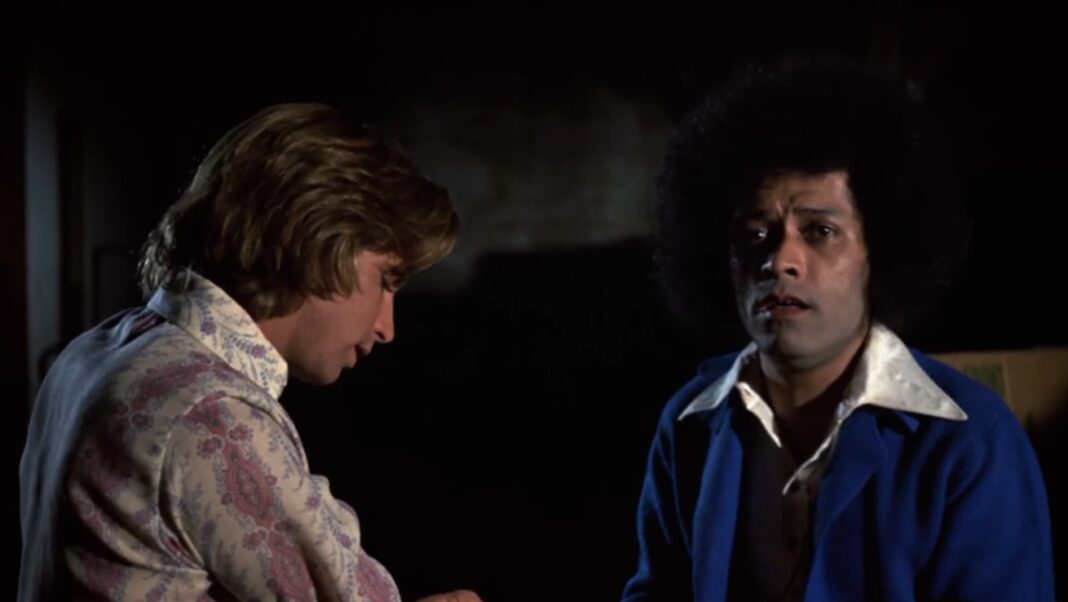
It is a surprise that writers Joan Torres and Raymond Koenig have no writing credits outside of Blacula and its superior follow-up, Scream Blacula Scream (1973). I guess genius has its limitations. Though the dialogue is often too formal and contrived to be taken seriously, the concept of who Blacula is has the bones for a greater iteration. He is Prince Mamuwalde (William Marshall), an African diplomat on a mission to stop the slave trade.
RELATED: ‘SHOCK WAVES’ RETRO: A NICHE ZOMBIE NIGHTMARE THAT STILL FLOATS
A 1780 Count Dracula (Charles MacAulay) is his host and nemesis. Dracula’s refusal escalates quickly into abduction and murder. Mamuwalde is bitten and left in a locked coffin for almost two hundred years so he can think about what he’s done. Dracula, for whatever reason, believes the slave trade has merit, and Mamuwalde should be punished for even thinking slavery should end.
Mamuwalde’s wife, Luva (Vonetta McGee), is left to die in the locked room while listening to her husband’s anguished screams as he thirsts for human blood inside his horizontal prison. The plot takes the coffin to 1972 Los Angeles, where Blacula is accidentally set free. It becomes a Dracula-esque love story as Mamuwalde finds Tina (also played by Vonetta McGee), the woman he believes is the reincarnation of his beloved Luva.

It’s a slow-paced film, like many movies of the time. The art form rarely considered how camera angles and blocking affect tone and mood. Being a low-budget film, there were probably not many takes to choose from, so line delivery often feels like a student film. The hook still remains, though. There’s a voyeuristic feel to watching the characters interact. From the get-go, we want to see where Blacula goes and how he gets there.
Whether it’s Dr. Thomas (Thalmus Rasulala) with the “Scientific Investigation Division” casually discussing his supernatural theories with police or Tina’s unexplained reversal of fear toward Mamuwalde in a nightclub after she thought he was stalking her. Suspension of disbelief applies itself like a peripheral wrecking ball. Motivations fall apart all around the characters off-camera constantly. You might be able to blame the strange pacing on editing and inexperience in the director’s chair, or you might want to blame the unnatural dialogue. Still, Blacula’s hypnotic charm doesn’t allow you to look away.
RELATED: ‘GOD TOLD ME TO’ (1976) BLU-RAY REVIEW: A LARRY COHEN MASTERPIECE
His powers of enchantment are more clearly illustrated in Scream Blacula Scream (co-starring the immortal Pam Grier), so you are left wondering why anyone does anything. The only character who is believable in his assessment of others is Skillet (Ji-Tu Cumbuka), the most over-the-top blaxploitation representative in the entire film. This swanky cat is the only one who admits aloud that Mamuwalde is “one strange dude.” Jedi mind tricks just don’t work on him. Ironically the character who is most a caricature is the most real among the cast. Still, you can’t look away.
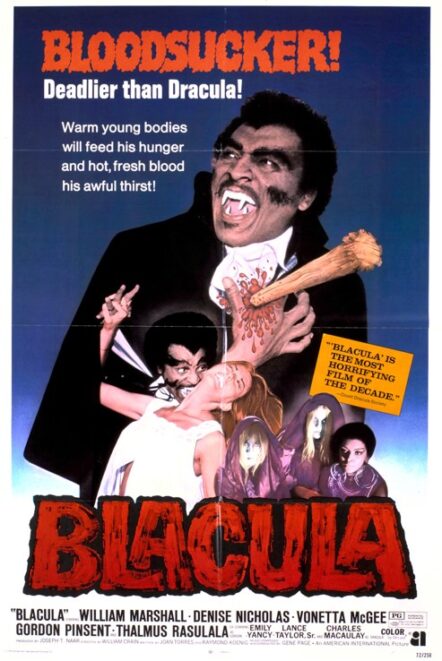
Payoff and closure come after a low-key climax complete with electrocution, multiple fatal falls, and a fast-paced walk chase. Gordon Thomas pursues his suspicions as Blacula finally acts like a proper anti-hero. After being denied the love of his undead life, he’s cold and determined to end his pain. Knowing the sun has risen, he exits a water treatment plant through a staircase to the roof. With a comedic bit of foreshadowing, you can’t miss the “No Smoking” sign he passes under just before he relinquishes his body to our life-giver, the sun. Just when he gets going we’ve lost him. No worries, though. Blacula returns in the sequel with a bit of voodoo and brings the action this time.
The best feature of Blacula is the funk and soul-based soundtrack, although it’s entirely the wrong music to take a vampire seriously. But this kind of music will never be right for horror unless it’s a parody.
While watching Blacula fifty years later, I hoped Mamuwalde might be resurrected with modern talent, but I fear it would be treated the way so many ’70s movies and television series are treated — as a farce. The skeleton is there for a serious franchise; however, Deon Taylor, director of horror-comedy The House Next Door: Meet the Blacks 2 (2021), is set to helm the reboot of Blacula. We’ll have to trust he knows what he’s doing with the character. But instead of laughing at him, I want to see Mamuwalde be taken seriously. Time will tell if Hollywood will bring Blacula back from the ashes one more time.