











Still I remember, long and far,
The crooked path, the untamed star.
And wonder if in some lost year,
That jagged stone might reappear.
Remember when Amnesia: The Dark Descent took the world by storm? Granted, the idea of a first-person adventure game with puzzles and horror elements wasn’t exactly novel. The same developer of Amnesia already pioneered their winning formula with the Penumbra trilogy only a few years prior. But it was something that resonated with horror fans on a much deeper level than you’d think. Your inability to fight back against the monsters in the dark, paired with an engrossing narrative and some genuine brain teasers, made for a game that was as memorable as it was terrifying. Naturally, its success would inspire dozens upon dozens of imitators and successors for more than a decade since.
Caput Mortum, developed by WildArts Games and published by Black Lantern Collective, initially seemed like one of these games to me. An isolated setting in Europe? Check. A first-person perspective that allows you to manipulate objects in the world to progress? Check. A control scheme and atmosphere heavily inspired by classic dungeon crawlers? Check . . . wait, no, that’s different.
Much like how Labyrinth of the Demon King attempted to meld dungeon crawling elements into a survival horror context, Caput Mortum inserts some unique ideas into its own fresh world of madness. I was admittedly surprised by quite a few things in this interesting horror game. Without any major spoilers, I’d love to share just how much I enjoyed my time with it.
A Brisk Horror Adventure
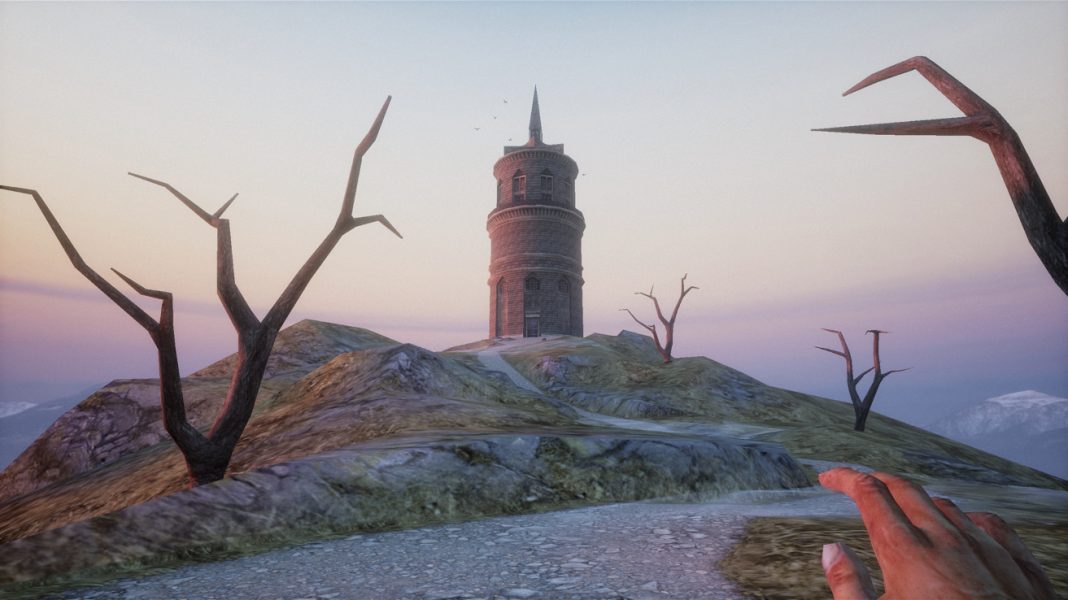
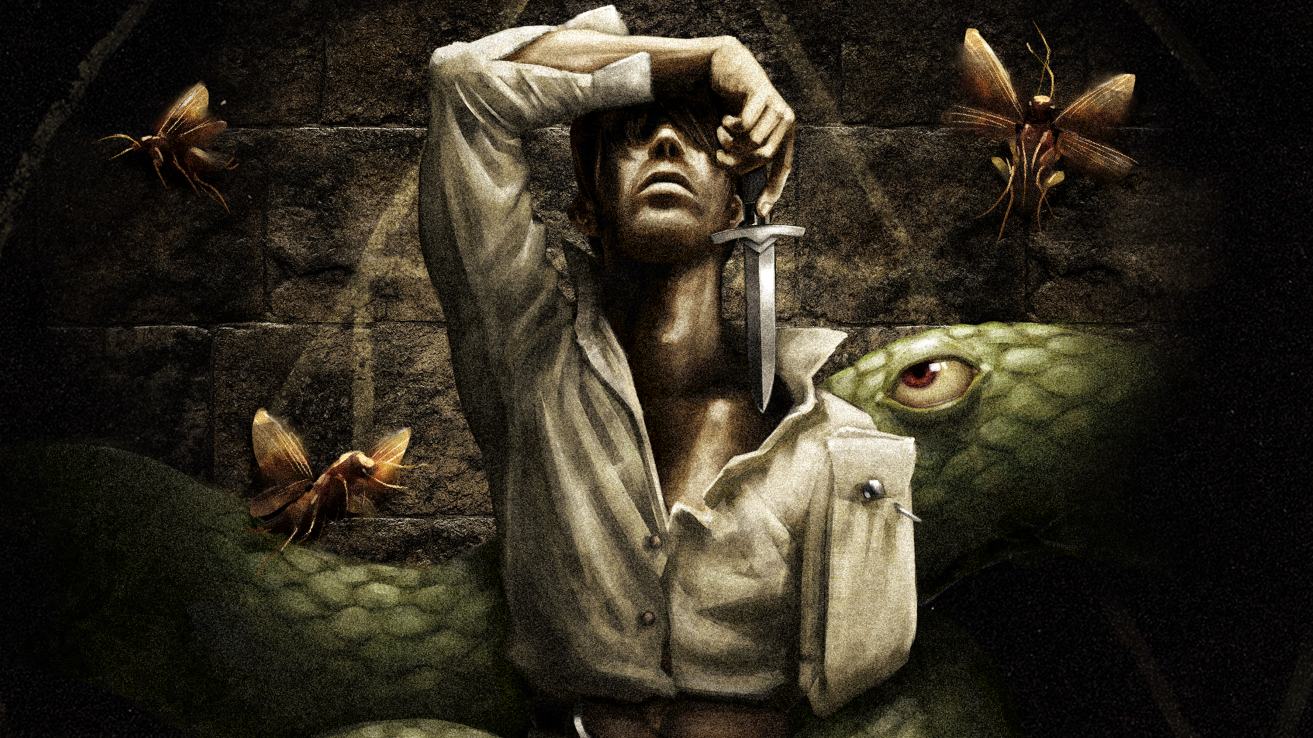
Caput Mortum wastes no time in getting started. It’s 16th-century France, and you — a nameless, one-armed traveler — find yourself at the base of a strange tower located in an abandoned village. Rumors of a mysterious evil plaguing the village all place the evil’s source deep within the tower’s recesses. But as far as you know, nobody has ever really explored its confines and lived to tell the tale. Whatever may have drawn you here, sinister as it may be, compels you to explore the tower. What’s inside? What horrors could’ve led to the village’s demise? Will you even be able to tell your tale once you solve the mystery? As the sun’s light disappears, you can’t help but feel a chill up your spine as you descend deeper and deeper.
Caput Mortum is a brisk horror game that’s split into numerous distinct sections. While you aren’t able to manually save in Caput Mortum, each and every section you come across will autosave for you once you enter them, with each one taking a modest amount of time to complete. Though it’s not the most elaborate of journeys, I do appreciate the variety here.
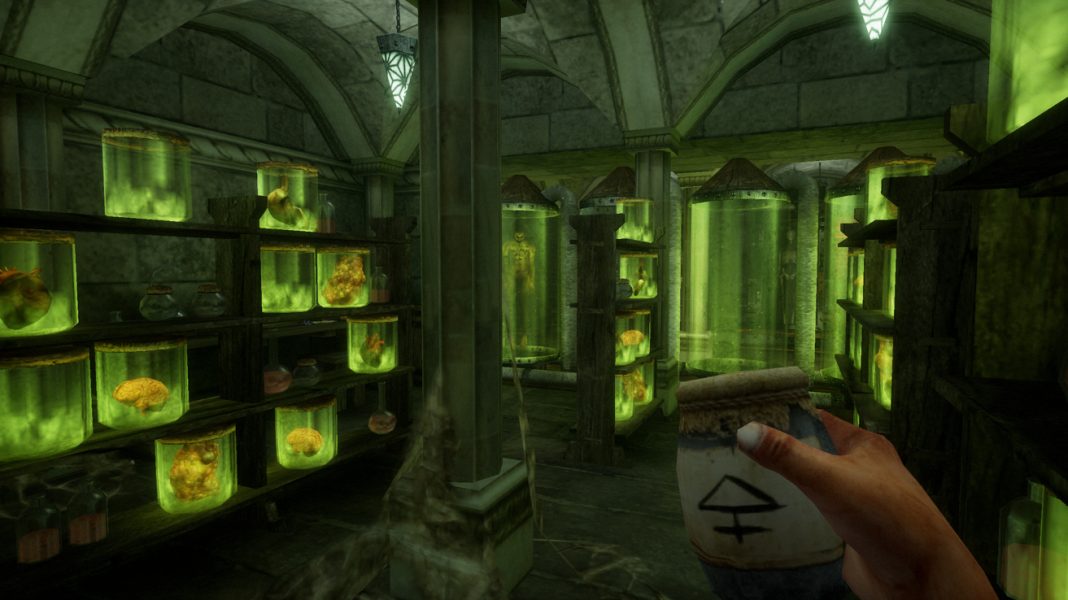
You really run the gamut of interesting environments to explore. There are the usual rotting alchemy labs, pitch-black tunnels, and other dungeon-adjacent areas that you’d expect to find in a decrepit medieval tower. But there are also some more exotic locales that I absolutely will not spoil for you here. I’ll just say that things open up after a certain point, and I was genuinely bewildered as to where things could go next.
RELATED: ‘Order 13’ Game Review: Warehouse Work Has Never Been More Scary
Each of these environments all felt really unique in their challenges and puzzles, too. An early area resembling a university of sorts, with lodging for students and educational materials scattered everywhere, is mostly free of monsters and other grotesque nasties that you’d rather not encounter. Minus one, of course. Dubbed the “classmate” in the game’s achievements, it’s a deceptively friendly foe that just wants to play hide and seek and patty-cake with you. But if you don’t want to play along? He’ll just beat you to death.
His presence is marked by a tense sting and slapping footsteps, and should you be quick enough to turn around and face him, all you have to do is keep your distance and raise your hand to match his. Follow along for long enough, and he’ll flee to a handful of different hiding spots until he wants to find you again. It’s fun stuff, and it’s a nice little way to transform a standard horror encounter into something new with the game’s unique control scheme. I’d also be lying if I said that the classmate’s first appearance didn’t startle the bejesus out of me with how quick he was.
The game looks pretty fantastic too. While its graphical settings are a bit nebulous, being broken into broad categories like “Low” or “Epic” without any means to manipulate individual components, there’s a nice balance of unsettling models and retro textures to create an oppressive, but performance-friendly world to explore. I especially liked the lack of prominent UI elements. It’s on you to check your health to see if you need to be topped off, and your inventory management amounts to just carrying around a handful of weapons, healing items, and a single miscellaneous item. It’s simple, but it’s effective. Some accessibility options are available as well, including the ability to turn off camera shake and adjust the game’s field-of-view.
Even the game’s controls are interesting. Caput Mortum has a handful of different control schemes that’ll dramatically change the way you play, with the default scheme being what I stuck with. Bear in mind that the game was originally designed for use with a controller. With said controller, the triggers turn you left and right, the shoulder buttons look up and down, and the thumbsticks move you around and position your hand around the screen. You can swap this to a more traditional keyboard and mouse setup, or even something that more closely resembles the controls in FromSoftware’s King’s Field franchise. After all, the similarities are more than just a coincidence. In an official developer diary post on the game’s Steam page, Gab — a developer at WildArts — outright confirmed as much when discussing the how the game’s original control scheme came to be:
“The idea came when I first tried King’s Field 4 for myself. I loved the vibes and found the experience of relearning a control scheme in a hostile and spooky environment super refreshing! It reminded me of how much scarier and tense games were when I was little and unsure of my gaming skills. This felt like the perfect starting point for a horror game!”
One-Handed Horror
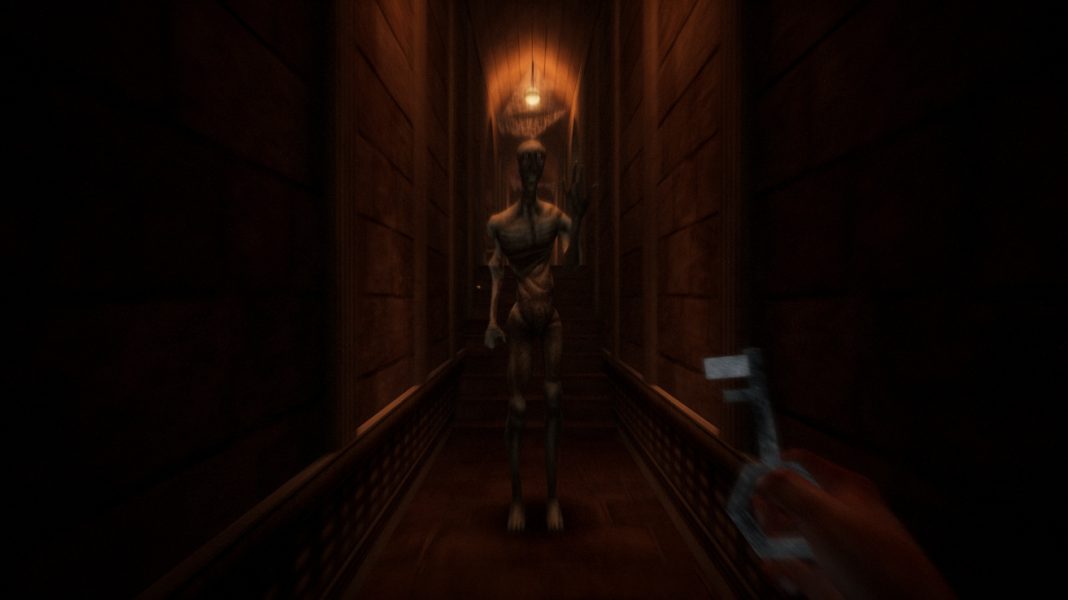
Caput Mortum‘s controls are definitely what took me by surprise the most. As mentioned previously, the protagonist is seen with only one functioning arm, with the game making use of this by putting it in constant play. It’s a bit hard to explain, but think of it like this: much like how you’re constantly moving around 3D space, your hand is constantly moving around the boundaries of the screen instead of being stuck towards the bottom. Grabbing a dagger and swinging it isn’t a simple, binary task anymore. Now, you have to equip the dagger, deliberately position your hand to make contact with your foe, and then swing. The same goes for grabbing items or interacting with the world. You’ll have to make sure your hand is placed on or very close to what you need in order to do what you need to do.
Maybe it was just because of my past experience with unconventional control schemes, but this felt surprisingly intuitive after a brief adjustment period. Caput Mortum rarely demands exact precision out of you, and the few times it does, you’re usually in a situation where that’s the key thing you need to focus on. This isn’t like Lifeline, where the controls inhibited the flow of action on top of making fights against multiple foes unintentionally frustrating. Instead, while you do feel some limitations in what you can do, the game is purposefully designed around these limitations to elicit a bit more tension out of you.
You can actually fight back in Caput Mortum, and some sections highly encourage it. You’ll find a handful of different weapons to play around with, and each one has some additional utility outside of combat, like being able to smash through weak wooden boards or light torches on fire. Enemies are scarce, but they hit fairly hard, and you’ll often be pitted against them in a one-on-one bout with just enough room to maneuver around. The scarcity of enemies makes each and every one feel more significant as a result, with only a handful making repeat appearances in the tower.
Caput Mortum‘s length is the one thing that I can’t help but feel a little disappointed by. Not because I was misled into thinking that it’d be longer, no. But part of me wishes that this fun horror adventure had more to explore, more to encounter, or maybe just more unique ways to use your hand. Several of the game’s puzzles actually use your hand in some fun ways, like using it to trace a specific pattern or physically wipe away grime to reveal a crucial hint. I would’ve loved to see more of that. The puzzles that are present at least are somewhat challenging, but not overly obtuse or frustrating.
There’s thankfully some replay value here, though. Specifically, completionists can look forward to a handful of difficult achievements to grab. One that pulled a genuine smile out of me was “Untouchable,” which demands that you complete the entire game without taking a single point of damage. I would’ve never expected something like that in a game like Caput Mortum, but I absolutely appreciated the inclusion.
RELATED: ‘Elvira: Mistress of the Dark’ Horror Adventure Game Revisited
Should You Play Caput Mortum?
While I do wish that Caput Mortum was longer, I think that feeling is actually a good thing. I really enjoyed my time with Caput Mortum, as brief as it was, and how it put a different spin on what would’ve otherwise been yet another entry in a wave of horror games that ape their respective influences. Not that that’s a bad thing. But being unique certainly helps.
Overall, I’d happily recommend Caput Mortum. It was a relatively easy-going game for me, but for those less intimately familiar with the horror genre, it’ll definitely provide an ample amount of chills and thrills in a brisk package. I was able to finish my first playthrough of Caput Mortum in just two extended play sessions, but if you want to take your time and really take things in, along with going for achievements and everything else, you could easily double that depending on your overall proficiency. Either way, you’ll definitely get your fill here. I enjoyed just about everything Caput Mortum had to offer, and I’m sure you will too if it grabs your attention.
Caput Mortum is currently available on Steam.
We’re hardworking geeks that love to geek out, but we can’t do it without you! If you enjoyed this article and want to see more like it, please consider tipping our writers. Also, as an Amazon Associate, we earn from qualifying purchases.