










“Your service to France won’t go unnoticed, son. Everything is set now. Before you go over, I’d take some time to . . . get right with God.”
I initially missed the bandwagon when it came to CONSCRIPT. Not intentionally, mind you. I was enamored by the idea of a survival horror game set firmly within one of the most grisly, terrifying, and downright sadistic conflicts in human history, where the limits of decency and the true horrors of geopolitical conflicts met rapid advancements in military technology and wanton cruelty. The near-total absence of supernatural elements was like a cherry on top of it all. But, given that CONSCRIPT recently received a hefty content update in the form of CONSCRIPT: Director’s Cut, I feel like I have an opportunity to give this indie horror title a proper shot.
Co-developed by Jordan Mochi and Catchweight Studio, and published by Team17 (the same publisher of Trepang2), CONSCRIPT: Director’s Cut not only revitalizes an already strong core experience with plenty of streamlined settings and accessibility options, but it goes on to add a ton of intended features that were originally meant to ship with the game’s original release. But do these changes make CONSCRIPT a must-play horror game? That’s for me to know, and you to eventually find out.
It’s Time to Go Over the Top
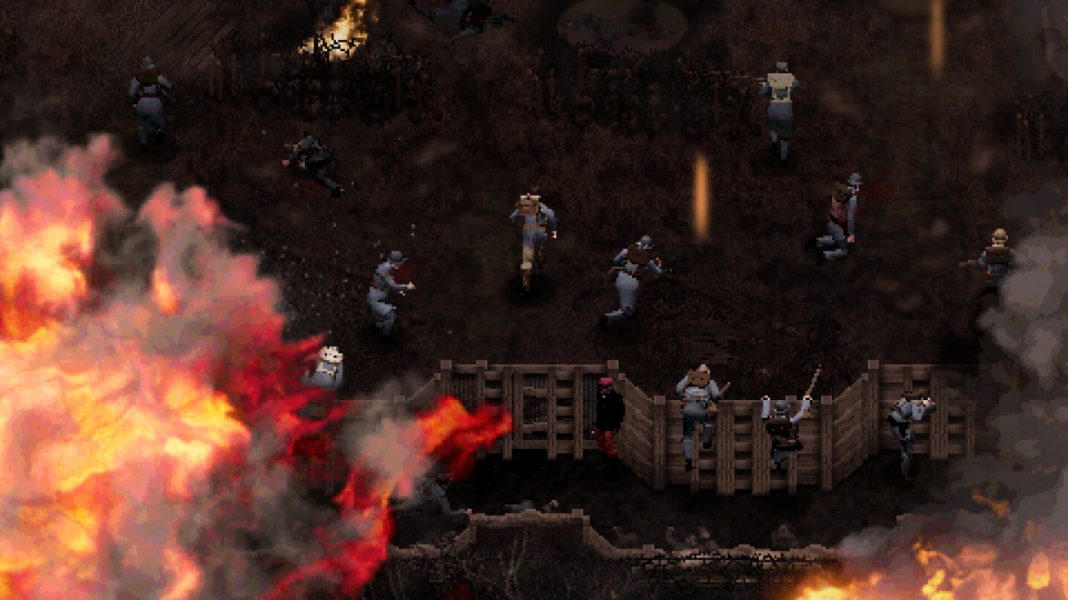
I’m not a huge history buff, admittedly. So, I can’t really get into the who, what, where, when, and why of the Great War. CONSCRIPT: Director’s Cut doesn’t necessarily go into it either. It’s a story that’s deliberately intimate in scope, using its setting as a grisly backdrop and a means to explore the horrors of war instead of an authentic retelling of historical events.
You are Andre, a lowly, ordinary French soldier stationed alongside your brother at one of the bloodiest battles of the Great War — the Battle of Verdun. It probably goes without saying, but things aren’t looking too good. The landscape has been blasted into a pile of burnt ashes and smoldering flora. The scent of burnt flesh, lingering chemicals, and spent sulfur hangs in the air like a dense fog. Screams of the dying are only ever drowned out by the concussive blows of mortar strikes. In the middle of it all, you’re tasked with fending off the growing advancements of the German army, fighting over the same tract of land back-and-forth until a victor is ultimately declared.
But where is your brother? After a sudden attack leaves you battered and bloodied, your brother has seemingly gone missing, either taken to a separate base on the front line or to a dangerous fortification on the other side of enemy territory. The war? The enemy? Your own commanding officers? Nothing matters compared to finding your brother and bringing him back home safely. Abandon your post or fight alongside your worried brothers in arms — either way, you’re going to have to go over the top to do what must be done.
CONSCRIPT: Director’s Cut is structured like a classic survival horror game, albeit with breaks between certain story beats with defined chapters. There are six chapters in total. They’re bookended with flashback sequences to before the war, with each chapter taking you through damp trenches, blasted homesteads, destroyed city streets, and even through the heart of enemy territory, all while carrying some delightfully morbid atmosphere all throughout.
You really can’t exaggerate how miserable the world of CONSCRIPT is. Piles of spent mortar shells clatter as you clamber over them, mountains upon mountains of dead livestock and soldiers alike line in-progress mass graves and gas-riddled farmhouses, and distant gunshots and screams occasionally ring out in the quietest of moments. Things are just as quiet as they are loud sometimes, and those moments of high intensity broken up by contemplative treks through tunnels and save rooms make for a thoroughly engaging horror experience. The few times you do escape the madness via dream sequences, there’s a sinister undercurrent beneath them. As soon as you lay your head down to rest, you know exactly what you’ll be heading back to as the world turns to darkness.
RELATED: ‘Labyrinth of the Demon King’ Game Review: Monsters and Matcha
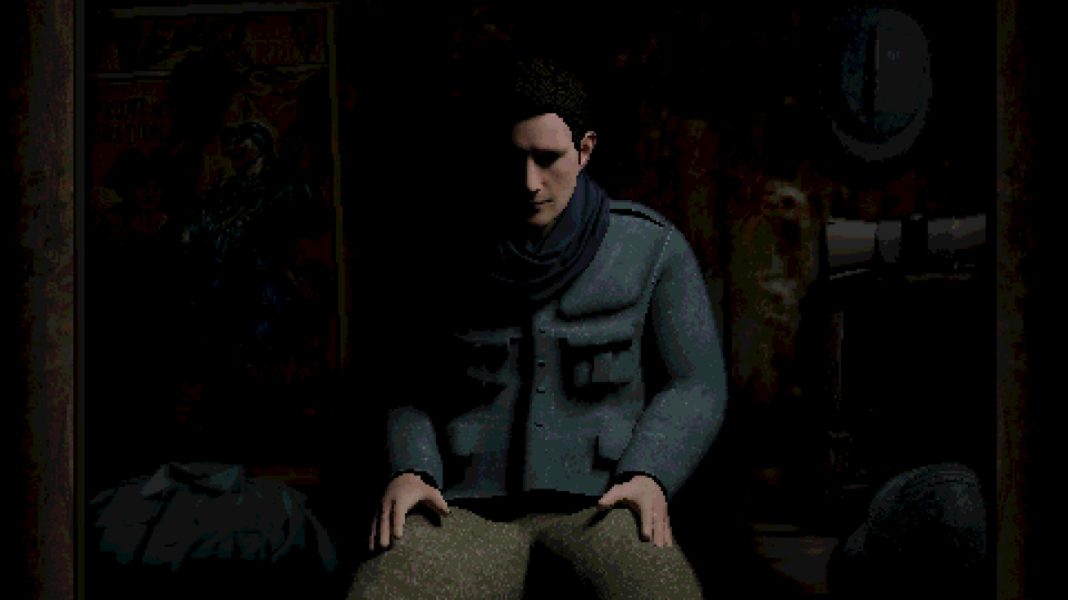
Visually, CONSCRIPT is gorgeous. A wonderful melding of retro aesthetics with the browns and greys of Verdun makes the blues and yellows of the French and German forces really pop. Jumpscares are few and far between, instead relying more on detailed environmental storytelling, NPC interactions, and the occasional use of prerendered cinematics to really tap into your emotions. Combine that with some gorgeous character illustrations, defined enemy silhouettes, multiple costumes to unlock for Andre, and some deliberate design choices in the game’s UI, and you have something that really uses both its setting and visual limitations to its advantage.
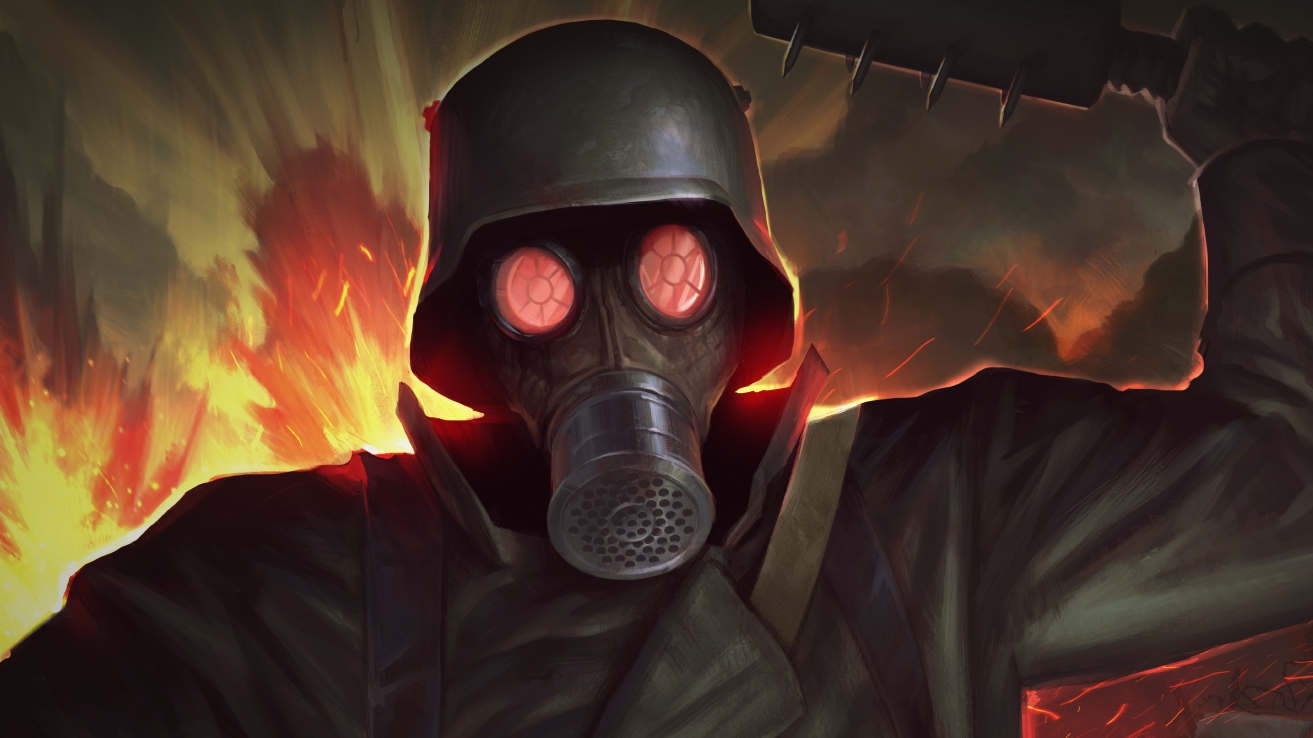
Something to really commend, though, is the near-total lack of supernatural elements in CONSCRIPT: Director’s Cut. The amount of bizarre or seemingly otherwordly moments can be counted on one hand here, making their occasional inclusion all the more harrowing and bizarre. Instead, CONSCRIPT relies on the very real terrors of the Great War to tap into your fear. The threat of diseased rats feasting on corpses you leave behind lingering in the shadows. Hulking trench raiders with full sets of armor and medieval axes climbing over the trenches in the distance. Lone flamethrower units skulking through trenches, ready to light up anything that’s still breathing. It’s really refreshing, at least in an aesthetic sense. You’ll be reminded that the Germans are just as human as you are every now and then, too. You can occasionally stumble across family photographs or other sentimental heirlooms on their bodies alongside their military provisions.
Surviving in the Trenches
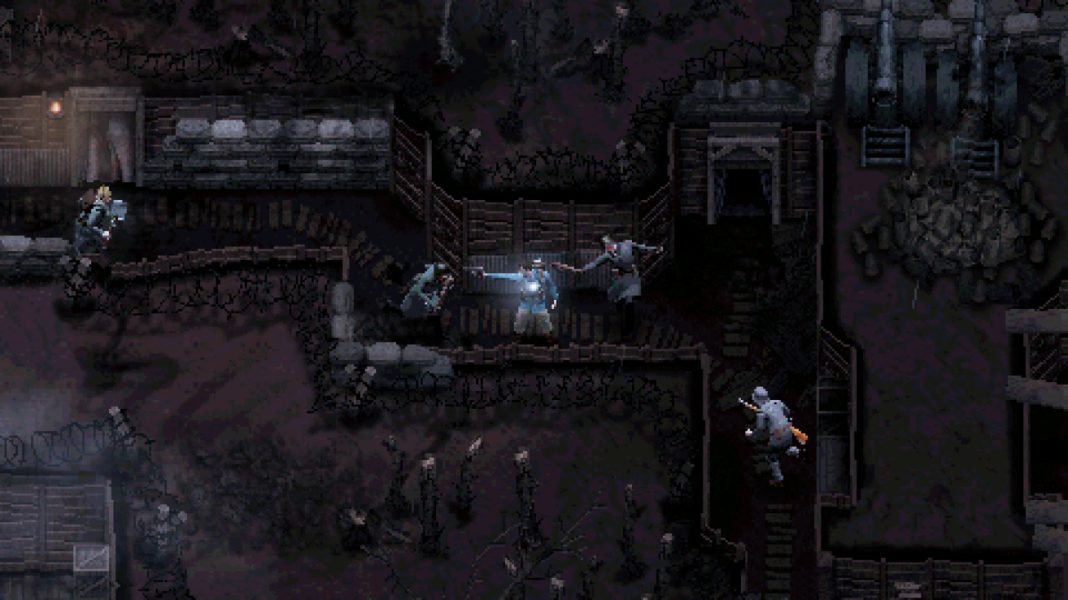
But how does CONSCRIPT: Director’s Cut play? Aesthetics are only one part of what makes a great survival horror game, after all. Thankfully, I’m happy to report that CONSCRIPT features just about everything you would expect and then some. It even has a scoring system, and a damn good one at that.
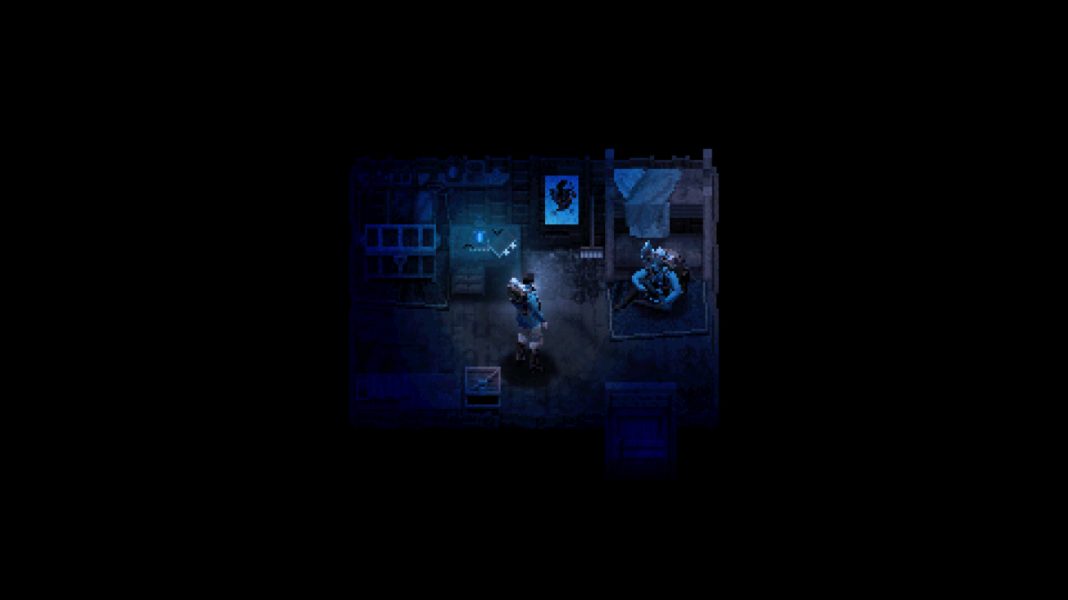
CONSCRIPT is a top-down survival horror game, wherein you’re tasked with exploring the surrounding environment, collecting items to progress, solving puzzles, and dealing with whoever comes in your way. Fight, flight, either one works here, as your supply of weapons and ammunition is fairly finite, as is your ability to save. Jotting down your exploits in your journal is the only way to manually save your progress, and these are usually located in dedicated save rooms in the company of a nameless, faceless man in an elongated gas mask.
But don’t worry. Out of the many faces you’ll find in CONSCRIPT, he’s one of the only friendly ones you’ll consistently find. He’s a shopkeeper of sorts, allowing you to trade items and discarded cigarettes for inventory upgrades, different types of gunpowder, crafting supplies, and other useful items. This is a surprising deviation from the norm when it comes to survival horror games. You have a lot more freedom in being able to choose what specific resources you want to have and when, and what to prioritize when it comes to improving Andre’s survivability, sharing more in common with something like Resident Evil 4 than Silent Hill. In fact, the shopkeeper himself is a walking reference to the former, and you can even combine loose gemstones and jewelry together for better value the same way as you could in Resident Evil 4.
Speaking of which, since you’re in a war zone and all, CONSCRIPT: Director’s Cut features plenty of fighting — and plenty of consequences for engaging with it. You have a selection of guns that need to be aimed first before firing, which can take anywhere between a second to multiple seconds depending on the gun’s speed and number of upgrades. A pistol will be faster to aim than a shotgun, for instance. Some weapons, like your trusty rifle or a pump shotgun, also demand that every subsequent round be manually reloaded into the chamber, an extra detail that adds more tension to your terrifying combat encounters.
But seeing as how we’re in the Great War, melee weapons are just as prominent as guns and are arguably even more useful in a pinch. Trench shovels, pick axes, dedicated raiding clubs, and wood-splitting axes are everywhere across the battlefield, begging to be sunk into someone’s head or chest cavity. Just be careful though. Any melee weapon that isn’t your knife will break after a set number of uses.
But the dead don’t just go away. If you don’t burn any bodies you leave behind, or take care of nests via grenades, you’ll have to contend with rats. These little vectors of disease gradually migrate towards any dead bodies you leave behind, and while they’re weak on their own, any bites you sustain from them run the risk of infecting you with a deadly disease, lowering your max health until you can effectively treat yourself with a first aid kit or disinfectant bandage. You can use some basic stealth to circumvent combat, sure, but you can only consistently avoid enemies for so long.
Inventory management is key to avoiding situations like that. Each item in the game takes up one slot in your inventory, whether they’re stockpiles of ammo, healing items, or keys. The difficulty you pick at the start of the game adjusts not only health and damage values, but also how many inventory spaces you start out with, meaning you’ll have to more carefully choose what to bring along and what to leave behind. If you want to burn bodies, you’ll need to lug some fuel and a lighter with you. If you need to navigate dark rooms full of deadly gas, you’ll need your torch and a gas mask. Weapons? Ammo? That’s up to you. Just be aware that you’ll occasionally have to enter arena-like areas that won’t allow for progression until you kill everything that’s coming your way. A notable battle towards the beginning of the game puts a necessary key for progression behind a pair of heavily armored knights.
Though the game borrows heavily from the Resident Evil games, I do wonder if it does borrow a bit too much when it comes to progression. Across all six chapters, you’ll be ferrying keys, trenching tools, water pumps, valves, and emblems, to places that need keys, trenching tools, water pumps, valves, emblems, and so on. And more often than not, you’ll be doing this from one side of the entire map to the other or using a key to open a door to get a key to open another door. In longer play sessions, the constant juggling of key items does admittedly start to wear on you, especially if you just so happen to miss one key item in an errant room you didn’t check.
RELATED: ‘Sorry We’re Closed’ Game Review: A Bad Breakup Turns Survival Horror
But each chapter is fairly straightforward to navigate at least, especially with the numerous shortcuts introduced in the Director’s Cut. In fact, the Director’s Cut addressed numerous critiques of the game’s original release. New upgrades like dedicated slots for your inventory staples (i.e. your gas mask, torch, and lighter) can be bought at the shopkeeper. A set of map markers can be used to mark key points of interest on the map, instead of just committing areas of the map to memory. Shortcuts in Chapter Three and Chapter Five make navigation much quicker if you know where to find them, making what used to be the game’s longest chapters by a mile feel more digestible. Additional item boxes — which you can store items in — have even been added into certain areas to cut down on running back and forth significantly. Accessibility options, like starting the game with maximum inventory slots, unlimited sprinting whenever you’re not in combat, and refilling your health to a limited percentage outside of combat, were also introduced here, and you’re free to turn them off and on as you please.
What you get here is a good mix of fighting, exploration, and puzzle-solving:
- Fighting boils down to positioning yourself well and timing your attacks to deal as much damage as possible, either by landing precision shots with your firearms or by hitting multiple foes with your melee weapon simultaneously. Your stamina gauge limits the amount of time you can sprint away or dodge roll away from enemy attacks, adding a bit more deliberation and importance to your overall positioning.
- Knowing what’s coming and how to best optimize your inventory is crucial for cutting down your overall playtime, especially when you discover that some items are so heavy, they’ll actually keep you from sprinting. Likewise, keeping a few inventory spaces open in case you find additional crafting supplies or unique items is a must if you’re trying to get by.
- There’s a bit of critical thinking involved with the game’s puzzles, just like how there was in Caput Mortum. There’s nothing completely unreasonable, but reading through the notes you collect, observing the world around you, and occasionally jotting down important details will definitely do you more favors than not.
When you start to master what CONSCRIPT has to offer, you can go for the illustrious S+ rank, the highest achievement the game has to offer. You see, CONSCRIPT doesn’t tally up specific goals achieved like in Silent Hill or Resident Evil. Instead, it uses a unique system to grade you through a combination of your saves, healing items used, and your overall playtime. It’s a fun means of giving you some wiggle room when it comes to netting one of CONSCRIPT‘s rarest accomplishments. If you don’t use any healing items or saves, you’ll have much more time to work with. If you do want the luxury of healing, however, you’ll have a fraction of the time to beat the game.
If I had any complaints about CONSCRIPT, they’d mostly be centered around how the game handles its boss bottles. Or rather, the lack thereof. A big part of CONSCRIPT, and a piece of what determines what ending you’ll get, is the number of times you willingly abandon your post to avoid participating in some of the game’s largest battles. In these, you’re locked into a single area with traps, deadly gas, and waves of German forces to tackle until the bullets stop flying. These are essentially a stand-in for bosses — which is fine, I can’t say I’m really disappointed by that. But I do wish there was something a bit more climactic to work with. Maybe a hallucination of a monster, or one of those early, primitive tanks — historical accuracy be damned — could’ve popped up from beyond the trench lines. Chapter Six does thankfully more than make up for this, but I refuse to spoil anything about it.
Should You Play CONSCRIPT: Director’s Cut?
Admittedly, there are plenty of games you could play that all draw similar inspirations from Resident Evil. What does CONSCRIPT do to differentiate itself from games like Sorry We’re Closed? Or SIGNALIS? Or Alisa? Or Tormented Souls? It’s a good question to ask, after all.
CONSCRIPT does have a few things going for it. A scoring system being one of them. Survival horror games are at their best when they incentivize you to master them from top to bottom, and with how strict CONSCRIPT is in terms of this, I can’t help but give it some extra props. Multiple endings and different story routes are cool and all, but give me a grade to work for instead. Even Bloober Team managed to put a ranking system in Cronos: The New Dawn — even though it was inexplicably missing in their remake of Silent Hill 2.
I’m not that hard to please. At least, I’m not that hard to please if I’m enjoying myself. CONSCRIPT pushes all the right buttons for me already, but its focus on the Great War, the emphasis on manmade horrors, its engaging survival horror gameplay, and the showcasing of just how bleak no man’s land is really added to my overall enjoyment. The setting alone hooked me. But it’s nice that there’s some real meat on these bones once you look beyond the surface.
CONSCRIPT: Director’s Cut is available on Steam. As of writing, the original version of CONSCRIPT is available on the Epic Games Store and GOG. The game is also available on Xbox, PlayStation, and Nintendo Switch.
We’re hardworking geeks who love to geek out, but we can’t do it without you! If you enjoyed this article and want to see more like it, please consider tipping our writers. Also, as an Amazon Associate, we earn from qualifying purchases.