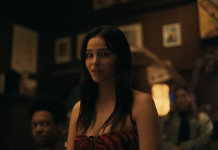


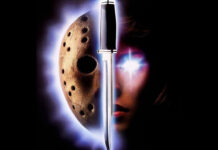








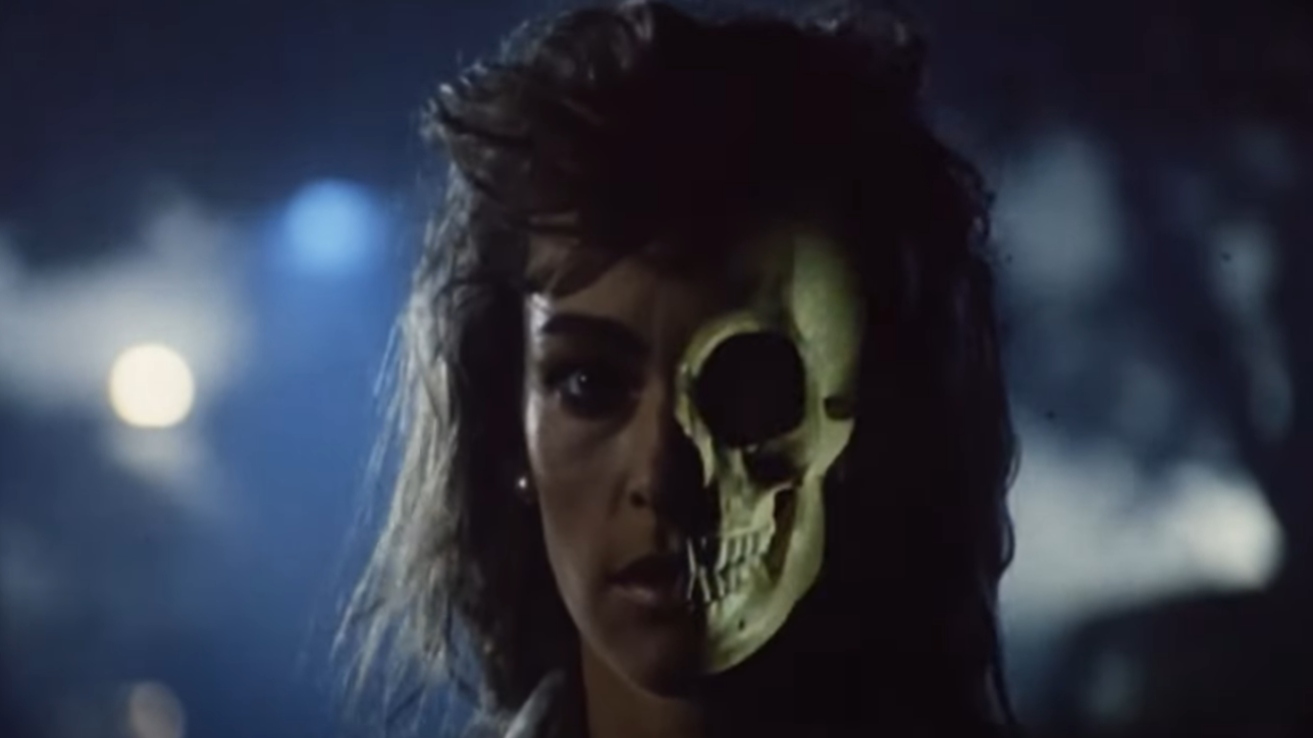
There are horror movies that become classics because they were impossible to avoid. Cable staples, video store fixtures, movies you absorbed through cultural osmosis, whether you wanted to or not. Then there are some movies that fade into obscurity, not because they failed outright, but because they never fit neatly into a marketable box that made them easy to categorize, defend, or revisit later. The Kiss belongs squarely in that latter group.
Released near the end of the ’80s horror boom, The Kiss is a deeply uncomfortable supernatural thriller that blends possession horror, body horror, sexual panic, and suburban rot into something far more cynical and unsettling than its reputation suggests. This is not ironic trash or kitsch. It is a movie obsessed with contamination, inheritance, and the weaponization of intimacy, and it was doing that work at a moment in American culture when fear around bodies, fluids, and desire had reached a boiling point. Its long-standing obscurity feels less like a natural outcome and more like a failure of preservation, because beneath its pulpy exterior, the film is doing real thematic labor.
The story opens with a disturbing prologue set in 1963 in the Belgian Congo, where two sisters are separated amid political violence. One survives under circumstances that immediately feel wrong, bound to an ancient talisman and an act of intimacy that functions less like affection and more like violation. The title is literal. The kiss is the transmission. What follows is not simply a curse but a mechanism, something that moves forward through contact and adapts in order to survive.
When the film shifts to late-1980s suburban America, the contrast is intentional. Teenage Amy lives a comfortable, emotionally restrained life with her parents. Her father is rational and confident in his ability to solve problems, while her mother carries a quiet dread that manifests as distance and avoidance, fear that has been sealed away rather than confronted. This is a household built on the belief that the past can remain buried if it goes unnamed. That belief collapses quickly.
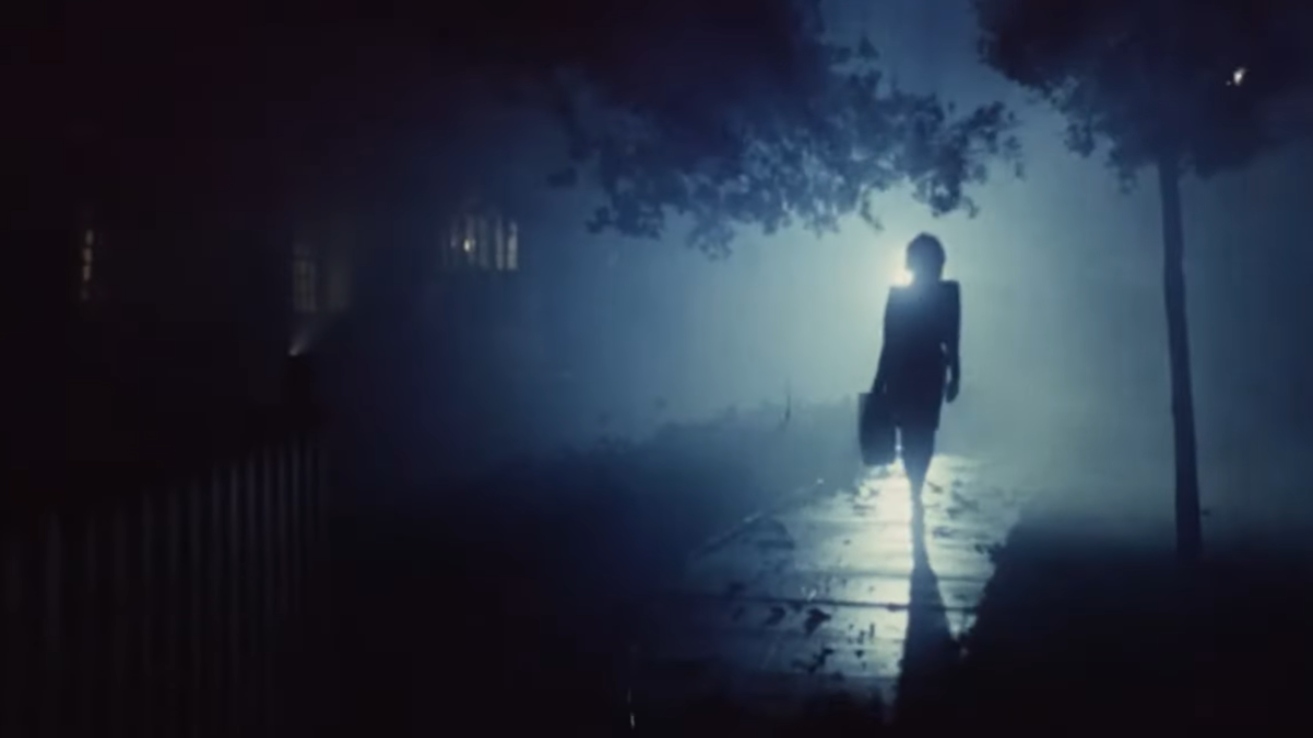
A call from the past reopens old wounds when Amy’s Aunt Felice, her mother’s estranged sister, resurfaces as a glamorous international model and insists on reconnecting. The reaction is not awkwardness or resentment but immediate terror, signaling that whatever happened years ago was far more than ordinary family trauma. When sudden tragedy creates an emotional vacuum, Felice steps into it effortlessly, presenting herself as comfort, stability, and continuity at the exact moment the family is least capable of questioning her intentions.
From there, The Kiss becomes a slow-burning invasion story where the battleground is the home and the weapon is intimacy. Felice does not stalk hallways or lurk in shadows. She integrates, seduces, and normalizes the abnormal. Men fall under her influence, authority figures dismiss warning signs, and Amy becomes increasingly isolated as the only person responding with appropriate alarm. Accidents mount, bodies fail in inexplicable ways, and the film makes it clear that whatever Felice is, she is not merely dangerous. She is contagious.
Related: ‘The Bewitching’ Book Review: A Three-Headed Tale of Whispers & Witchcraft
Meredith Salenger’s performance as Amy is one of the film’s most undervalued strengths. Amy is not written as a precocious Final Girl or a passive victim, but as a teenager whose coming-of-age is forcibly accelerated by horror. Early on, she believes adults will eventually explain what is happening and restore order. As that faith erodes, she realizes that denial is often a survival strategy for adults and a death sentence for children. Her arc is not about sudden bravery but about recognizing that waiting for permission is no longer an option when her body and identity are at stake.
Joanna Pacula’s Felice is the kind of villain horror rarely commits to anymore. She is not theatrical or rage-driven. She is entitled, persuasive, and utterly confident in her right to access other people’s lives. She weaponizes desire and social ease, manipulating families and systems with precision. What makes her disturbing is that she frames violation as affection, invasion as love, and corruption as connection. She does not force her way into the family. She is invited.
Related: ‘Iron Lung’ Review: A Horror Success Far Beyond the Box Office
That distinction is crucial, because The Kiss is fundamentally about how evil persists through consent and complacency rather than brute force. The curse at the center of the film behaves like an organism rather than a personality, migratory and opportunistic, treating bodies as temporary housing. In that sense, the film quietly belongs to the same evolutionary branch of horror that would later explore transferable evil in movies like The Hidden and Jason Goes to Hell, where the monster survives by jumping hosts rather than maintaining a fixed form. The Kiss was already working with that logic years earlier, framing evil as a process instead of a single entity.
The film is inseparable from the cultural anxieties of its era. It is obsessed with transmission, bodily fluids, and the idea that desire itself can be destructive. The late 1980s were dominated by the AIDS panic, misinformation, and moral judgment disguised as concern, and horror films absorbed that fear whether they acknowledged it explicitly or not. By turning something as benign as a kiss into a vector of death, The Kiss transforms affection into threat and intimacy into exposure. Felice embodies that anxiety perfectly, a nightmare convergence of beauty, confidence, and danger.
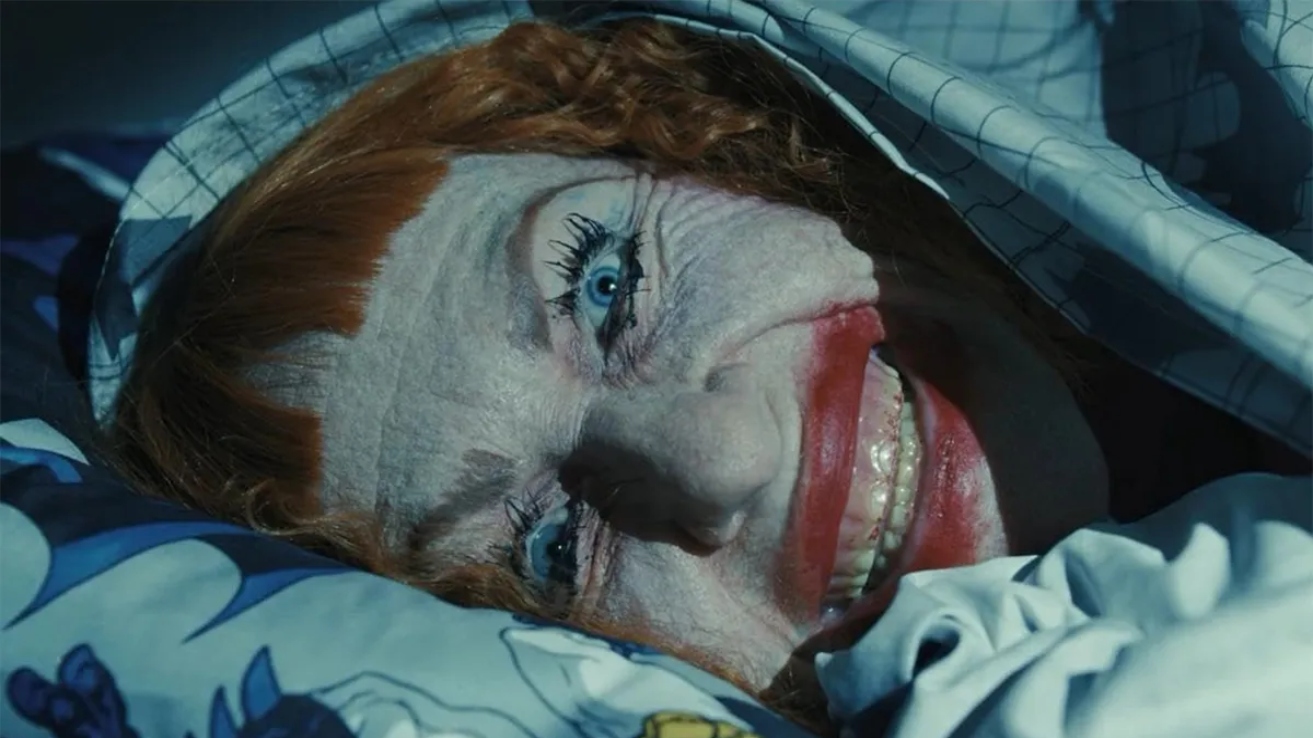
That thematic framework makes it especially interesting to compare Aunt Felice to Aunt Gladys from the 2025 horror hit Weapons. In Weapons, Gladys arrives under the guise of familial care, presenting herself as a vulnerable relative seeking refuge while quietly revealing herself as a parasitic witch who feeds on others’ vitality through manipulation and control.
Both characters enter narratives as solutions rather than threats, exploiting emotional gaps and social expectations to gain access. Felice uses beauty, confidence, and sexuality to bend a family to her will, while Gladys weaponizes frailty, gratitude, and communal trust, but the underlying mechanism is the same. Invasive evil that survives by being welcomed inside.
Where Gladys’s power in Weapons is overt and ritualistic, Felice’s is social and emotional, but the effect is similar. She reconfigures relationships from within, turning love into vulnerability and trust into liability. Both characters are frightening not because of how loudly they announce themselves, but because of how convincingly they insert themselves into lives that are already fragile. Their resonance reflects the fears of their respective eras, with The Kiss channeling late-’80s anxieties about intimacy and infection, and Weapons reflecting modern fears about corrupted caretaking and weaponized community trust.
Related: ‘The Night Birds’ Book Review: A Tale of Brutal & Atmospheric Witchy Horror
When The Kiss leans into physical horror, it does so without hesitation. Practical effects are pushed hard, bodies malfunction in grotesque and confrontational ways, and the film understands that discomfort is part of its power. It is not always elegant or subtle, but that excess feels true to both the era and the film’s worldview. This is not horror meant to soothe or impress. It is meant to linger.
Part of why The Kiss has remained overlooked is simple availability. It never received the kind of boutique physical media restoration that transforms forgotten titles into cult staples, and without consistent streaming visibility or sustained critical advocacy, it has drifted into obscurity. That absence has done the film a disservice, because time has been kind to its ideas even if distribution has not.
Messy, mean, and frequently unsettling, The Kiss is also bold and thematically rich in ways that make it more interesting than many better-remembered studio horror films of its era. It is a movie about inheritance, about how families pass trauma alongside bloodlines, and about how evil survives by being welcomed inside under the guise of love. It understands that the most frightening monsters do not break down doors. They sit beside you, smile, and ask for a kiss.
If there is a moment for The Kiss to be rediscovered, it is now, not as a novelty but as a missing link in late-’80s horror’s evolution toward contamination, possession, and transferable evil. It has been hiding in plain sight long enough.