












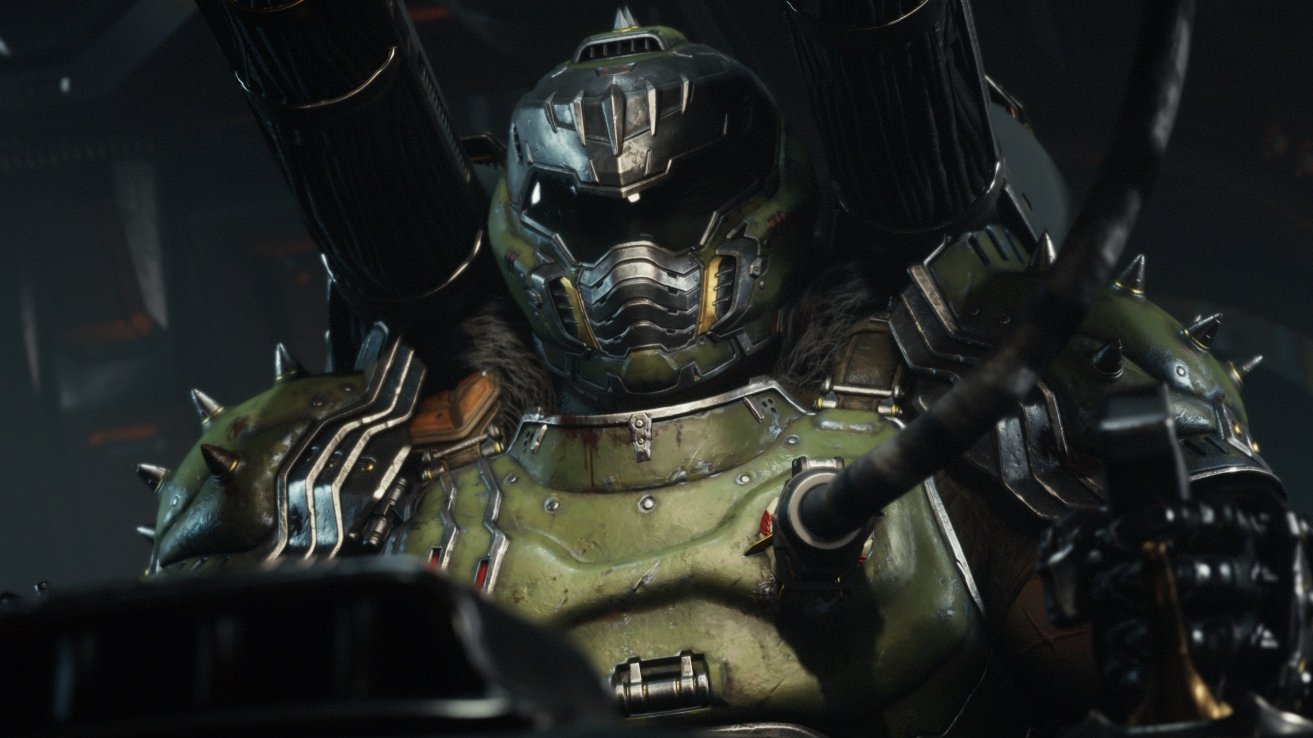
This article contains spoilers for DOOM: The Dark Ages and DOOM: The Dark Ages | Revelations
It’s hard for me to be impartial when it comes to DOOM: The Dark Ages, a dark fantasy-themed prequel to the current generation of DOOM games. I’ve played just about every major game its developer, id Software, has put out ever since their heyday in the 1990s. I’ve had a love-hate relationship with the newer direction the studio’s been taking their flagship series ever since DOOM (2016).
Not only that, but id Software was also recently subject to mass layoffs as part of a sweeping restructuring of Microsoft’s gaming division, per GameSpot. It’s a tough place to be if you want to view the Dark Ages from an unbiased perspective. It certainly doesn’t help that the layoffs came on the eve of Revelations, the long-awaited story expansion for The Dark Ages.
With everything that’s been going on, I saw fit to kill two birds with one stone. Why not tackle DOOM: The Dark Ages and Revelations back-to-back? I had a passing interest in The Dark Ages since it originally debuted last year, and, seeing as how Revelations became something of a swan song for many talented developers at id Software, it only felt appropriate. Is this medieval take on DOOM worth taking on? Or should it have been left in the past?
Going Back in Time (Sort Of)
If you’re scratching your head at the idea of a medieval prequel to DOOM, you’re not alone. In fact, if you haven’t really followed much of the expanded lore found within DOOM Eternal, you’re probably going to have no idea what’s going on by the time the ominous opening text fades away. I certainly didn’t. But I’ll try to give you the broad strokes.
The Dark Ages takes place on the planet Argent D’Nur, where two opposing factions — the forces of Hell itself, and the humanesque Night Sentinels — struggle for survival. Outside the two factions are the Maykrs, a mysterious alien race who have taken you, the infamous Doom Slayer, as a weapon to assist the Night Sentinels in their deadly conflict.
But when a monstrous demon lord named Ahzrak learns of a powerful artifact that can end the war, the Doom Slayer finds himself caught up in a war against demons, distrusted by the Night Sentinels, and the nebulous motivations of his Maykr watchdogs as things go from bad to worse.
Lore and other storytelling bits have been expanded even further compared to DOOM Eternal, which was already a strange deviation from the single-track focus of DOOM (2016). 22 chapters, cutscenes bookending almost every chapter, codex entries and lore being more important than ever to understand what’s going on, it’s all fine if you’re into the new narrative direction that DOOM has been going in. I’m not.
Frankly, I really couldn’t care less about anything that’s going on that doesn’t involve fighting demons. Revelations only doubles down on this, and it also introduces some narrative ties to the Doom Slayer’s past that I really couldn’t help but roll my eyes at. We’ll get to that. At least you can skip cutscenes to your heart’s content.
The other big focus here is on how the Doom Slayer plays. If you’ll remember, DOOM Eternal was divisive, to say the least. The focus on a high volume of actions per minute and the slashing of max ammo capacities led to a gameplay style more akin to spinning plates while jumping on one leg than to something more traditional.
It was frenetic and punishing. Maybe a little too punishing. id Software reversed course a bit with The Dark Ages, and they’re now emphasizing the Doom Slayer’s tank-like nature. How are they doing this? Two words: the shield.
The shield is to The Dark Ages what the glaive is to Krull. You can’t really imagine one without the other. The shield does everything. You can throw it to stun enemies, do some light platforming with it, and hit distant switches to solve puzzles. You can charge towards enemies in the distance to inflict some moderate damage on larger foes or knock away entire crowds of smaller foes. The most important thing it does, though, is parrying.
Enemy attacks are now split into two broad categories. There are those that can be blocked, and those that can be parried. Blocking an attack negates all damage from the front, though blocking too many attacks will force you to put your shield away for a few moments. However, attacks with a green hue can be parried as soon as they make contact with you, slowing down time, stunning the attacker, and eventually unleashing a variety of other effects as you progress through the story.
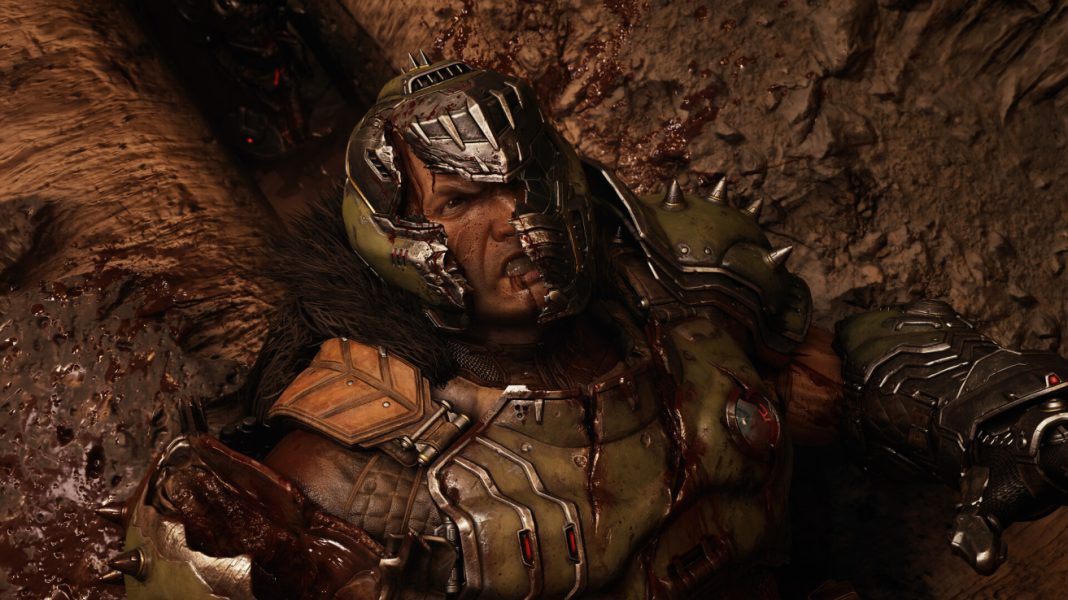
Parrying is the difference between life and death here. You can’t really ignore it, much like you can’t ignore chainsawing weaker demons for ammo in DOOM Eternal. Don’t like the idea of parrying? You’re not going to like DOOM: TDA.
The shield pairs with the additional emphasis on close-range combat. You have several melee weapons to work with now, like the armor-regenerating flail or the ultra-powerful dreadmace. New additions to your arsenal, like the Pulverizer and Ravager, demand that you get up close and personal to be fully effective. You’ll rarely be more than a few feet away from any potential threat, and even if you are, there are ways for your foes to quickly close that gap.
RELATED: ‘TUMOR NECROSIS FACTOR:// amen’ Game Preview: A Rail Shooter in 2026
Armor is now a dedicated mechanic as well, tying to the game’s medieval theme once more. Tougher demons have a layer of armor that’ll absorb a great deal of damage before you can attack their fleshy bits underneath. Dealing enough damage to armor, however, allows you to “superheat” it until it turns bright orange.
A quick shield throw will pop all that armor off. You’ll often see rows of shield-carrying demons succumb to a domino effect of superheated armor explosions, or segments on larger demons peeling themselves off one at a time. I don’t really have a strong feeling about it; it’s just another way to use the shield.
Combine that with a lack of verticality in a lot of levels, another deviation from DOOM Eternal, and the emphasis on sprawling, battlefield environments, and you can certainly see where the tank metaphor fits into DOOM: TDA‘s gameplay. That and the giant mech. And the dragon.
Mechs, Dragons, and Other Fluff
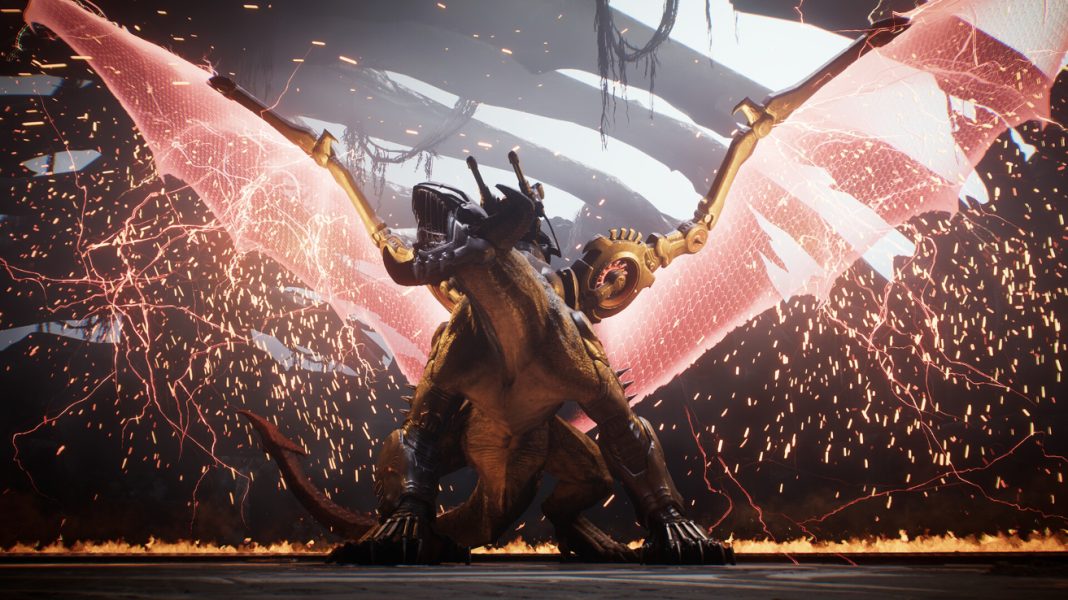
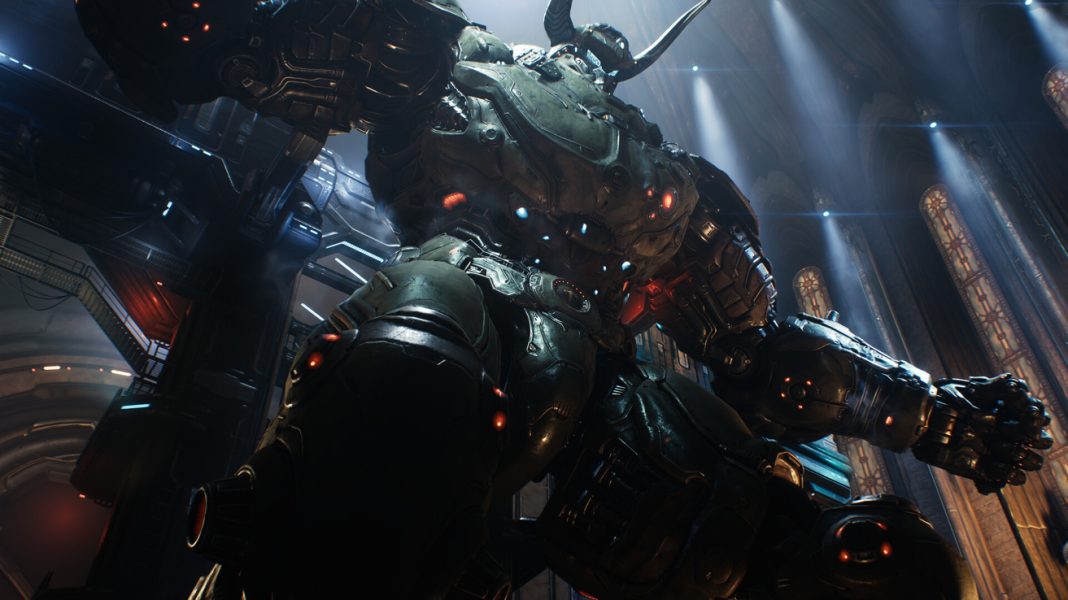
In another deviation from what you’d expect, DOOM: TDA has multiple different gameplay types. You have the regular Doom Slayer stuff, sure. But you also have the Atlan. And the dragon, Serrat.
Though it does feel like a tech demo for the larger environments and ray-traced lighting in id Tech, the Atlan and Serrat force the Doom Slayer to rely on two distinct means of fighting demons. The Atlan is a full-on first-person fistfight against kaiju-sized demons. Ducking and weaving, one-two punches, and special combo finishers are all here and accounted for. It’s bog standard. But it works, and as a small distraction from the main game, it’s entertaining enough.
Serrat gets significantly more attention, allowing you to tackle giant airships and chase down smaller vessels in the sky. Not only that, but most chapters featuring Serrat also let you touch down on the ground and take off into the skies to tackle different demons.
While I wasn’t really too fond of Serrat himself, I do have to admit that the nearly seamless transition between these detailed external areas and dense interiors once you hop off him is nothing short of incredible. Combined with the destructible environments and ray-traced lighting, I have to say that The Dark Ages is easily the most visually impressive of the new DOOM games.
The level of detail is simply gorgeous; demons are blown apart into gory chunks with clearly defined damage locations, and every wrinkle and pore on the Doom Slayer’s face is clearly visible. Not that I want to see his face, but still.
It’s impressive, yes. Is it readable? Well, not as much. While I admittedly don’t have the best hardware for a game like The Dark Ages, I have to admit that the dulling of colors to fit the darker, medieval theming makes everything blend together a lot more. It’s brown demons against brown walls and grey rocks with only searing reds and greens and sometimes blues to draw your eyes towards. It’s a far cry from DOOM Eternal, where the almost cartoonishly bright colors echoed the similar silhouettes of familiar foes from the classic games.
The game is backed by a score that. . . I don’t really feel all too strongly about. Finishing Move Inc. handled the soundtrack this time around sans the involvement of the talented Mick Gordon (due to a controversy that’s way too detailed to get into), and while it certainly fits the fantastical theming, nothing really stood out to me here. There’s no singular standout track to my ears, nothing like Gordon’s “The Only Thing They Fear Is You” in DOOM Eternal.
I’m sure others can appreciate what’s on offer here, but I just didn’t really click with it. It’s not as if Finishing Move Inc. isn’t talented, either. Their previous highlights include contributions to Grounded and Halo Wars 2, as well as composing the score for The Callisto Protocol.
There’s at least a somewhat consistent adherence to its weird, imaginative science-fiction setting. You’ll be ransacking castles, demonic war machines, jagged cliff sides and dense forests, and all kinds of supernatural, inter-dimensional plains and other nastiness. It’s nice. Some chapters do blur together a bit in my memory, but others I can still clearly remember solely from their environmental design.
A special trip to Hell towards the end of the game will be a fun treat for longtime fans of the series, even if it’s for mostly superficial reasons. Your weapons are also all uniquely rustic and ramshackle, and even a staple weapon from the series, the BFG-9000 (short for Big F***ing Gun) has a fantasy-themed equivalent in the Ballistic Force Crossbow, or BFC.
Secret hunting has seen a decent facelift too. As in the original DOOM games, you’re encouraged to look around for extra supplies to make your journey easier. If you have a keen eye, you may even find hidden puzzles or other ways to access bonus goodies. Puzzles involving blocks, switches, valves, dog statues, and grapple points lead to collectible toys, codex entries, weapon skins, and gold to purchase weapon upgrades, which you’ll definitely need on the game’s harder difficulties.
Maybe I shouldn’t call them “secrets” at all, since they’re all readily available on the map the moment you load into a chapter. Oh well. Actually getting to some of them can be a decent challenge, and Revelations thankfully removes their instant presence on the map for you to find them naturally. As it should be.
Shielded From Aggression
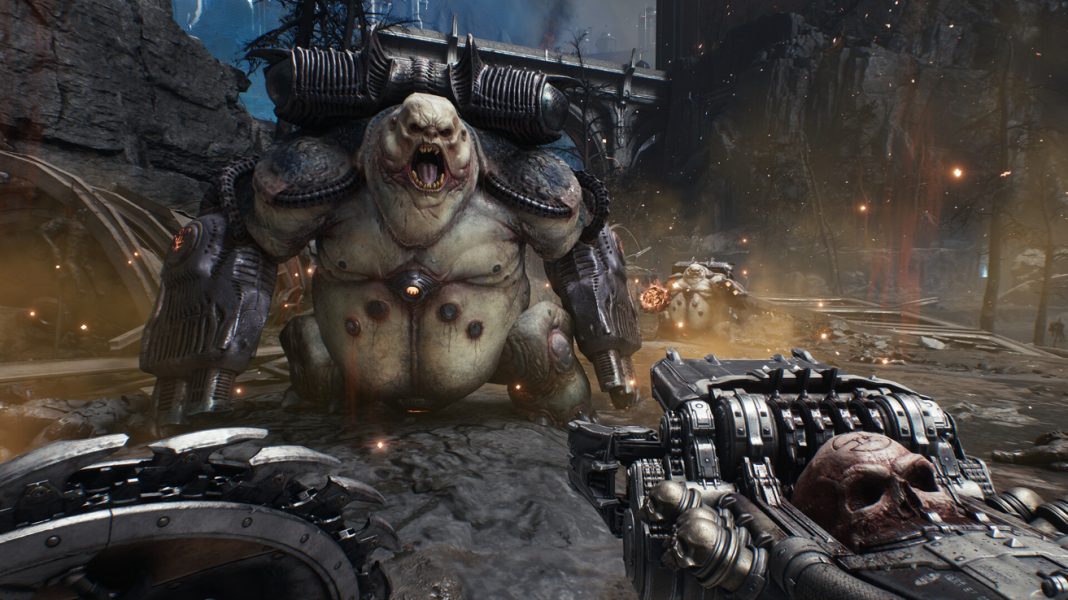
The Dark Ages has a big problem for me. Truthfully, this even extends to the other newer DOOM games to varying degrees. But I especially felt it here.
There’s a formula to fighting in the new DOOM games. You’re tossed into an arena, the doors shut behind you, demons teleport in. Kill them all to proceed. Sometimes more waves come in, or maybe there’s a unique stipulation to deal with. The Dark Ages toys around with this fairly frequently.
One stipulation involves lowering the morale of a single, incredibly strong demon before it can take damage. Or there’s another one involving a demon that can boost others’ health and attack speed. Or maybe there’s just an Arch-vile nearby. More on that later.
But either way, just about all combat encounters worth remembering all take place in these isolated zones, where you’ll have to take down smaller foes for health and generate ammo whenever you can via melee attacks or other means. Rinse and repeat for 22 chapters. Or around 30ish hours.
In a lot of the other boomer shooters I’ve played, many battles are memorable not only for the enemies you fight but also for the specific order or sequence in which you fight them. They’re often static, just waiting for you to arrive. Do you have to kill all of them? Not necessarily.
You could, but you don’t have to. And especially in the older DOOM games, where there’s an expectation to beat an entire level with only the pistol you start with, chances are you can’t even really achieve that to begin with.
RELATED: ‘Halloween: The Game’ Gets Burning Questions Answered by Dev
But in The Dark Ages, battles eventually become killing most of the demons there before another batch comes in. And then another. And then another. And any consideration of what gun to use due to a potential lack of ammo, or a need to consider fighting anything at all, just goes out the window. It makes every fight feel the same after enough time, exacerbated by the insistence of parrying attacks sometimes every other second.
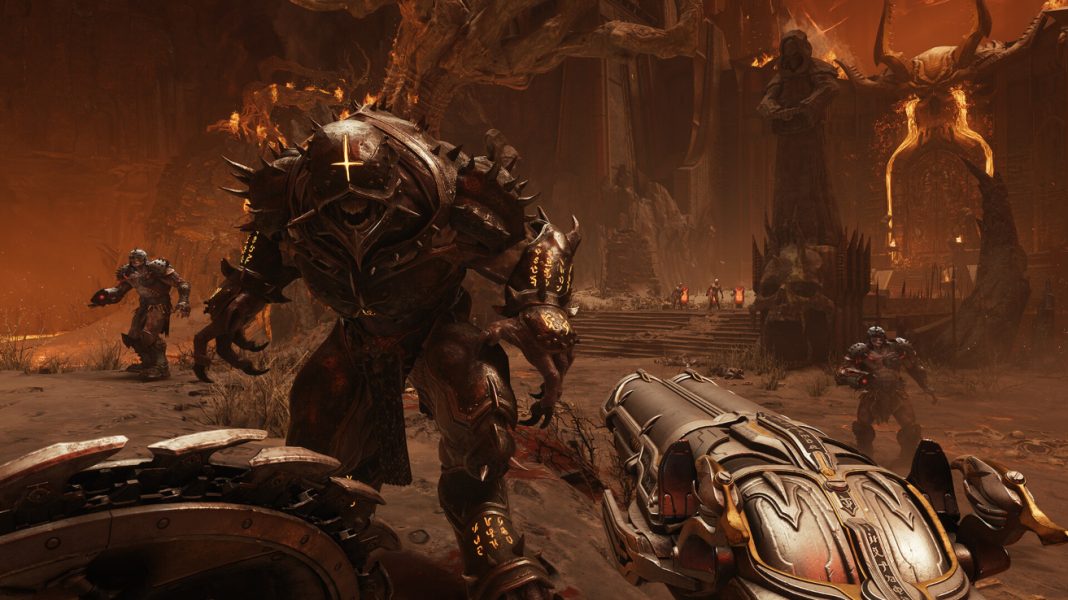
Because of all this, the weapons themselves don’t really have many meaningful differences, aside from one designed to damage enemy armor and an explosive crowd-control armament. You get a handful of types to work with now that are (with exceptions) split into two categories, each one serving a somewhat redundant purpose outside of their fully upgraded forms.
Plasma weapons bust energy shields, shotguns deal consistent close damage (with the double-barreled shotgun barreling over its single-barreled counterpart), the Chainshot shatters armor, the Impaler shreds bosses with consistent head shots, explosives are for crowds and massive single-target damage, and the Skullcrushers do what the shotguns do, mostly, just with the ability to regenerate some of your health or move really fast. They’re cool. But they don’t really fulfill a specific purpose in my arsenal.
Using the Atlan and Serrat felt more like a welcome distraction than anything that added to the experience, as did the scant few times the Doom Slayer positioned himself behind a turret. Yes, in a bid to innovate, we’ve gone back to one of the most reviled segments of the sixth and seventh generation of gaming: turret sections. Why? It’s the sort of thing that would’ve been ripped out of the ground and tossed aside as a joke in DOOM (2016).
The same thing goes for the greater emphasis on storytelling, including dingy flashback sequences. Oh yes, please, enlighten me on the valuable backstory of Flynn Taggart, a man who was sent to Phobos after accidentally blowing up a girl in a hospital who had a bunny doll. It’s so much more interesting than Doomguy being pissed that demons killed his pet rabbit. Make sure to scrawl an old DOOM II cheat code into his shotgun for the player to see as an extra little wink and nudge.
I don’t mean to sound bitter, but really? That’s what we’re doing now? Are we turning the Doom Slayer from a one-dimensional powerhouse into someone with traumatic guilt? For God’s sake, one game ago, he was referencing that infamous DOOM comic about ripping and tearing a Cyberdemon’s guts out before espousing the dangers of radioactive waste on the environment.
The game’s bosses weren’t all that exciting either, but that’s been a recurring issue across all the newer DOOM games. Mostly. Quite a few in The Dark Ages start out as regular bosses with expanded health bars before being relegated to regular appearances as tougher enemies. Conversely, the game’s more elaborate one-on-one battles are often trivialized by consistent headshots with the Impaler. That and parrying.
This is a minor complaint too, and I can see the upsides of it being here, but the presence of difficulty sliders is a little strange to me. Instead of a fixed difficulty setting, you can adjust just about everything to your heart’s content. Is the parry window a little too big? Crank it down a bit. Are demons a bit too easy to fight? Ramp up their health values. The sheer number of settings is nice, but I can’t help but feel that the game was designed around them rather than around a single, unified vision.
Compare that to something like INCISION, which was punishing, sure. But without compromising its difficulty, it was able to do something truly unique without having to consider the potential issues of being too tuned against or for the player. Again, this is a minor, fringe thing. I’m sure just about everyone else will appreciate the ability to tweak and fine-tune things.
Revelations About How the Shield Wasn’t Enough
I was surprised to see that DOOM: TDA was improved slightly by Revelations, a separate campaign expansion set directly after the events of The Dark Ages. I won’t go into an entire game’s worth of setup, but here’s the gist. The Doom Slayer takes the fight to the High Council of Hell itself.
He gets absolutely dominated by a demon that doesn’t look all that much more powerful than anything else he’s killed so far; then he awakens in a frozen hellscape with a strange ally and a new spear. Collect three keys throughout three trials to open a way back, beat up what beat you up, then go back to your previous demon-slaying rampage.
It’s structured a bit differently than the original campaign. Instead of a linear series of chapters, you’re now able to tackle three sprawling levels that you can later revisit from a central hub. The hub itself also houses a handful of battles, puzzles, and items to find. There’s also the spear, which briefly supplants your shield before becoming a part of your arsenal alongside it.
The spear fundamentally changes how you play. We’re back to DOOM Eternal now (with parrying), for better or worse. You can dodge in any direction now instead of blocking, and if you charge up a meter tied to the spear, you can unleash one of three devastating attacks, each with unique properties: a powerful thrust, throw, or slam. You can still parry with the spear, even, provided you master the timing of its swing rather than the more consistent timing of just pulling your shield up.
Revelations insists on you learning how the spear works. So much so that you don’t really get a chance to acclimate to it through gradual escalation. You’re thrown into some pretty hectic fights from the word go, and yeah, you should be prepared for that given that you’re assumed to have beaten the base game. But there’s really no underselling just how dramatic a change it is. You’re even strong-armed into learning how to use it further through Revelations, almost completely gimping your shield and all of its earned upgrades for a time.
I did get used to it eventually, at least, and I even preferred the spear over the shield for a majority of the expansion. The only time I would ever switch to the shield was for bosses, since parrying is still something you really can’t afford not to have down pat.
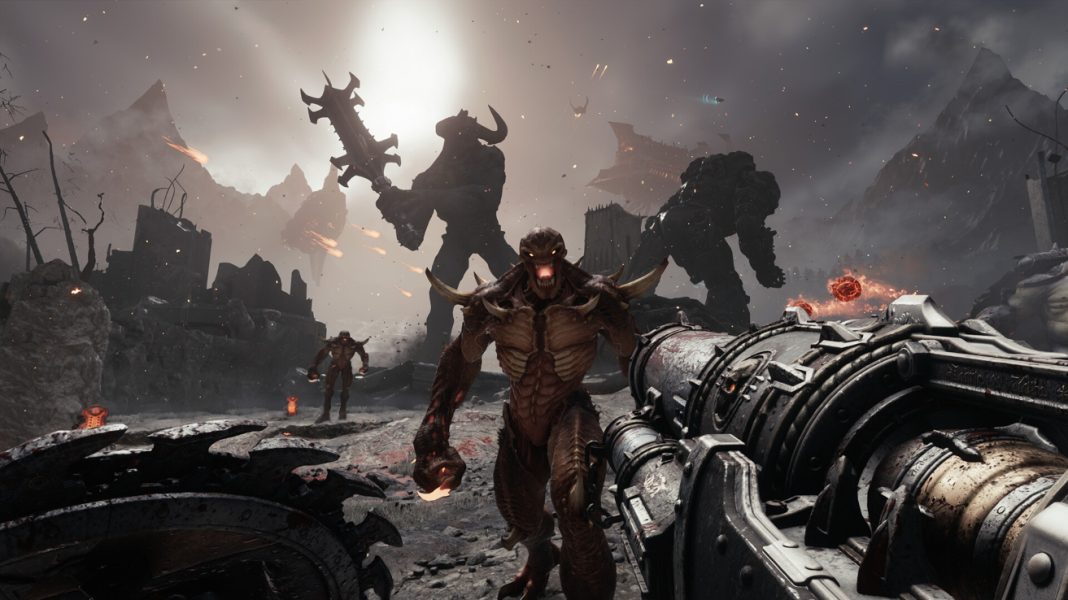
What you get is a weird mishmash of TDA’s tank-like gameplay and Eternal’s aggression, and it’s better. Mostly. There’s definitely a lot more mobility with the spear. You spend a lot more time in the air and above and below foes throughout Revelations. It lets you play far more aggressively, and it rewards you heavily for doing so. It’s refreshing, but it’s still The Dark Ages. Weapons are still the same. Enemies are still the same. Mostly.
The Arch-vile came back. And it’s arguably the single most obnoxious iteration of the demon in the entire franchise. It wasn’t enough that it brings additional demons to life via a lengthy summoning sequence. Now, it teleports all over the battlefield (which is much larger and takes longer to navigate, remember), is almost completely enclosed in armor during its summoning sequence, and it spams projectiles that you can’t parry your way through.
RELATED: ‘Total Chaos’ Has New Game+ Now, And It’s Exactly What I Wanted
The fact that the BFC is now entirely gone from your arsenal in the expansion just to make the Arch-vile something you have to actually deal with only makes these design decisions more tedious to deal with. Ignore every single other thing barreling your way and hit it with every powerful weapon you have until it goes down.
The final boss of Revelations was thankfully more satisfying than the base game, even if I don’t like how the beast was contextualized. In fact, after beating him, you get many additional challenges to tackle in the endgame. You get to revisit the three major areas you’ve already explored to tackle retro levels like those in DOOM (2016), along with additional challenges that can lead to a secret final boss.
You can even unlock the shotgun from the flashback sequences for use in the main expansion content. Is it as cool as being able to play DOOM or DOOM II if you collect enough hidden floppy disks? Eh, that’ll be up to you. Either way, it’s still something to work for.
Should You Play DOOM: The Dark Ages?
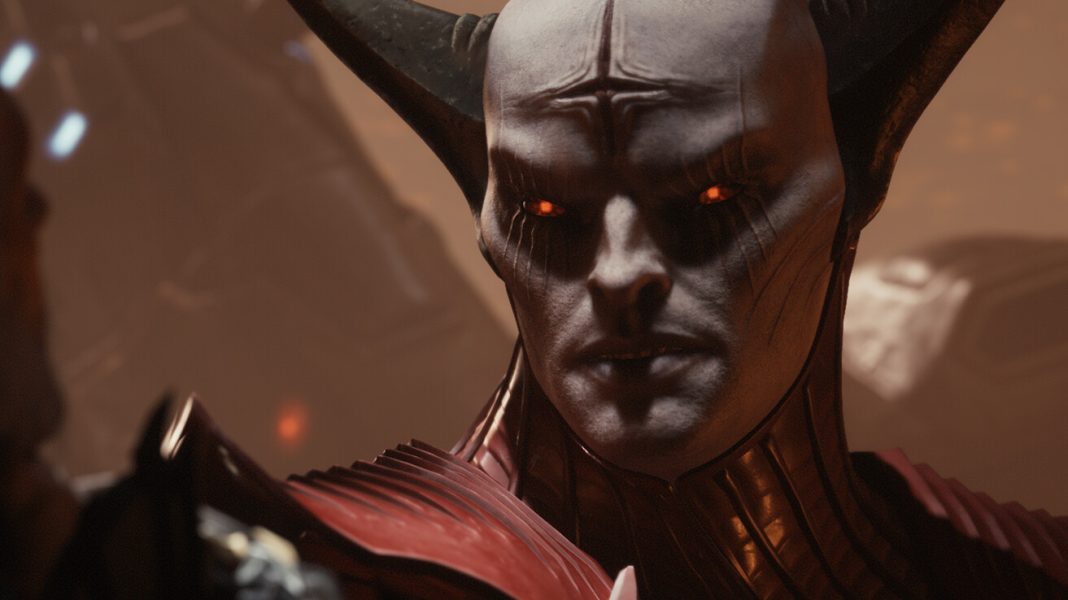
I’m conflicted. Really, I am. On the one hand, The Dark Ages feels like an effort to shake things up for the sake of shaking things up, rather than meaningfully expanding upon a specific gameplay direction. The abundance of crap that you’d never find in a DOOM game prior to The Dark Ages, like turret sections and vehicles, reminded me of something like Quake 4 instead of what came before.
Not to knock Quake 4, but there’s a distillation of what works in DOOM and what doesn’t. It’s why every boomer shooter made in the past six years partially mimics what DOOM brought to the table.
But I can’t, in good faith, call the Dark Ages outright terrible, either. Because that’s simply not true. It’s a technical powerhouse. It’s accessible. There’s still some fun to be had in killing demons for hours on end, because that, in and of itself, is a fun thing to do. The shield is a fun novelty at first, as is the spear.
The expanded scope is nothing short of awe-inspiring if you’re used to the more traditional levels found within DOOM (2016) and DOOM Eternal. I especially can’t call The Dark Ages outright bad in the aftermath of the layoffs at id Software. My inner fanboy just can’t be that callous.
I’ll say this: if you enjoy the newer DOOM games, preferably DOOM (2016) over DOOM Eternal, then you’ll probably have a good time with The Dark Ages. Since it frequently goes on sale, you’ll certainly get your money’s worth. Would I recommend The Dark Ages if you enjoy boomer shooters that more closely mimic the classic DOOM games, aping their level design and encounter design while getting down to basics? Probably not.
If you’re somewhere in-between, I’d say what The Dark Ages does right might just outweigh what it doesn’t. At the very least, you can still see plenty of gory chunks whenever you blow demons apart.
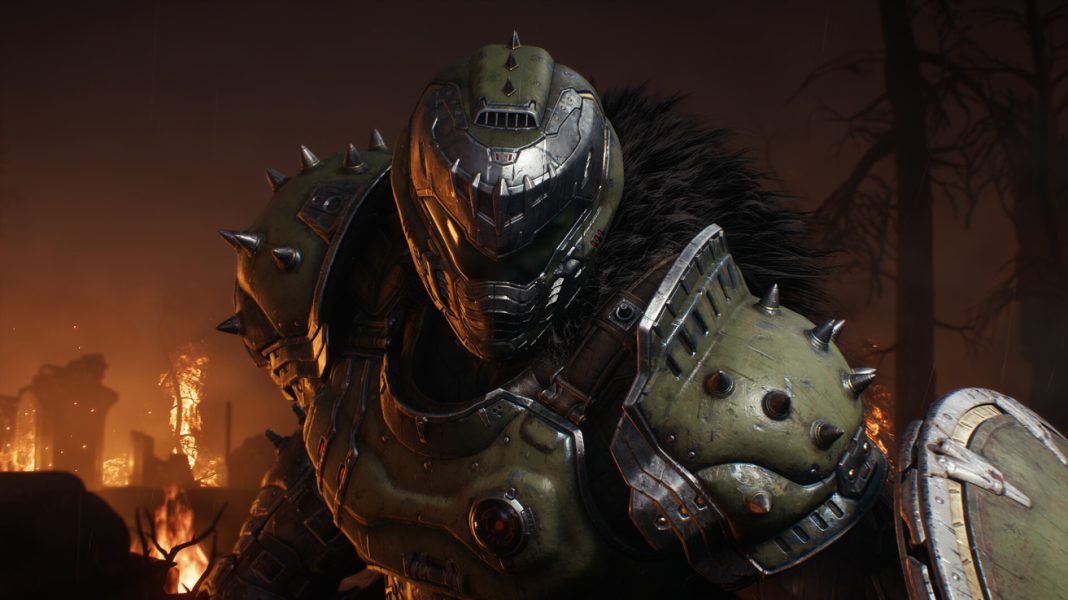
DOOM: The Dark Ages and DOOM: The Dark Ages | Revelations are available on Steam, Battle.net, PlayStation 5, and Xbox Series X|S.
We’re hardworking geeks who love to geek out, but we can’t do it without you! If you enjoyed this article and want to see more like it, please consider tipping our writers. Also, as an Amazon Associate, we earn from qualifying purchases.